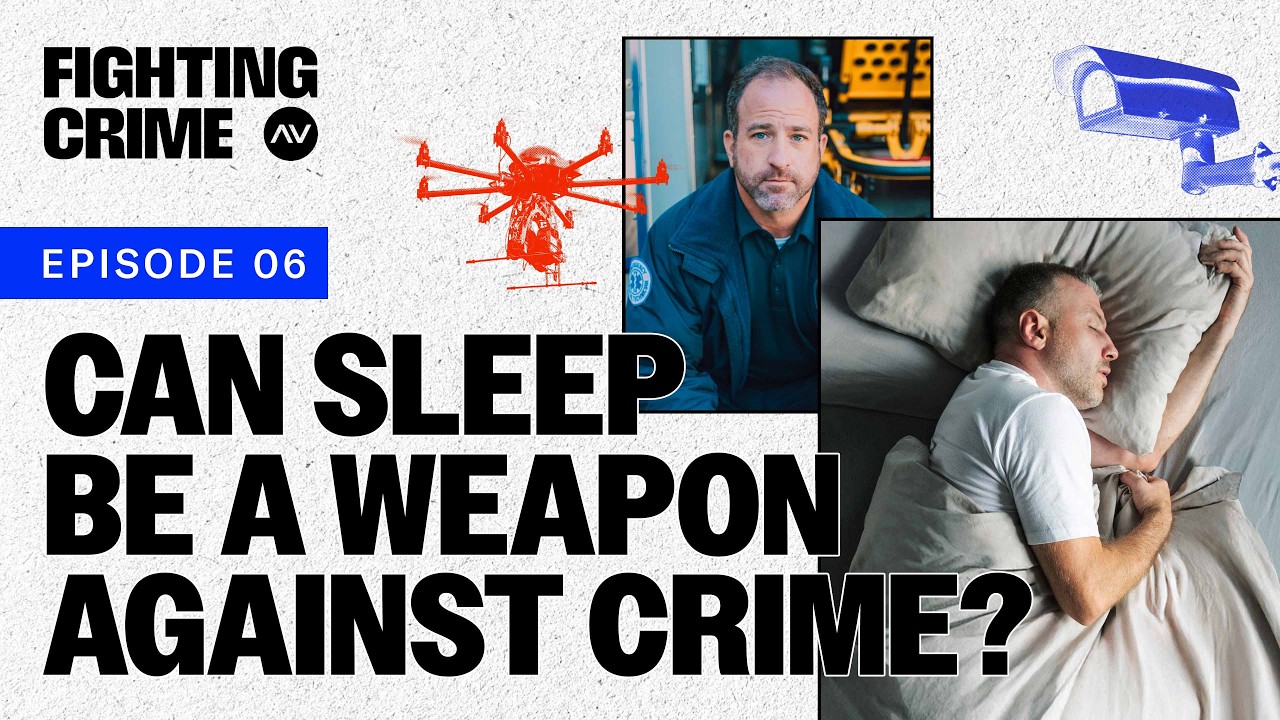
[00:00:00] Sean Bair: You’re just driving around looking for somebody. You’re maybe listening to the radio, having a nice conversation, drinking your Pepsi.
[00:00:12] Cristina Quinn: In the late ’90s and early 2000s, Sean Bair was a police officer in Tempe, Arizona.
[00:00:18] Sean Bair: And then all of a sudden, immediate I’m gonna go, a sprint, and I’m gonna pull my weapon.
[00:00:24] Cristina Quinn: In his three years as a cop, he experienced his fair share of adrenaline-filled incidents.
[00:00:31] Sean Bair: I was investigating a hit and run, and there was a description of the suspect. He had a green shirt, and he had these kind of pants, and he was a African American person, and it was like, “Okay, so this is who we’re looking for,” as we’re driving around.
[00:00:43] Cristina Quinn: And then right in front of him, walking across the street, he saw a man that met that exact description.
[00:00:50] Sean Bair: So I thought, “Well, okay, let’s go have a conversation and see what’s going on.” So I began to pull this person over, and they didn’t wanna have a conversation, so they started running.
[00:01:00] Cristina Quinn: Police officers need to be on their guard, ready for something like this to happen at any given time.
[00:01:05] Sean Bair: And I chased after this person, chased them into a little area, a little parking area, where they sort of were trying to hide behind the front of a car. He was reaching into his waistband.
[00:01:16] Cristina Quinn: And Sean had to figure out if he was reaching for a gun.
[00:01:19] Sean Bair: I thought I was about to be drawn upon and fired upon, so I drew my firearm and I pointed it in his direction and I said, you know, “Show me your hands.
Stop.” Adrenaline is just dumping into my body. I can feel the pressure on the trigger.
[00:01:37] Cristina Quinn: It’s high-stakes moments like these that a police officer needs to be at their most alert. You don’t want to be drawing a weapon on a suspect after only three hours of sleep, still exhausted from your last shift.
But officers across the country are experiencing high levels of burnout, and that can impact public safety.
This is Fighting Crime, the show that asks big questions about crime and how to stop it. I’m Cristina Quinn, a journalist, and I’ve spent my career digging into stories to discover the truth. I’m going across the country, from prisons to universities, police chiefs to inmates, to look at the evidence and question everything we think we know about how to make America safer.
I want to know what actually works and meet the people who are making it happen. So join us as we figure out new ways to fight crime and make society safer, and be prepared to think differently.
[00:02:40] Sean Bair: I was probably a half a pound away from pulling the rest of that trigger, and when he pulled the complete thing out, I thought, “That’s, that’s not a firearm. What is this?” And thankfully he didn’t raise it and point it at me, but he threw it, and it ended up being marijuana bundled in tinfoil.
[00:03:01] Cristina Quinn: These are the kinds of split-second decisions police officers have to make on a daily basis.
The adrenaline spikes and falls throughout their shifts, coupled with a lack of sleep, can have a huge impact on their ability to do their jobs and for police departments to function.
[00:03:16] Sean Bair: The job is not boring, let’s put it that way. So there’s always something new, and as such, you’re always having to deal with something you’ve never probably dealt with before.
And I liked that, but I didn’t realize what that was doing to me, either, because what most officers will do, or at least I’ll speak for myself, you would just bury it when you go home. So whatever you saw, whatever, you know, you had to deal with that day you just do not bring that into your house.
[00:03:43] Cristina Quinn: And this can have a ripple effect on public safety. But when the very nature of these kinds of jobs is stressful and fatigue-inducing, what can be done? On today’s show, we’ll be looking at efforts to reduce burnout among those in law enforcement using the power of human connection, sleep training, and AI technology keeping pace with advances in tech has always been essential for effective policing.
It was something Sean was aware of back in the ’90s. Before he was a cop in Tempe, he was a crime analyst in the same police department.
[00:04:17] Sean Bair: I did an internship at a local police department, and it was very cutting edge for its day. When everybody else was still putting pins in maps on the wall, we were doing computer generated mapping.
And I just fell in love with that because I’ve got a background in computer science. I was programming ever since the age of 12 in the eighth grade.
[00:04:38] Cristina Quinn: When Sean started out as an analyst, he was organizing shift patterns and officer deployment. Officers would complain about being overwhelmed, but he couldn’t understand why.
[00:04:49] Sean Bair: They would always complain, “I’m so busy. I’m so busy.” And I would look at their day and say, “You’re not busy. You worked 300 minutes of a 600-minute day. You’re not even 50% busy.”
[00:04:58] Cristina Quinn: Officer activity logs were reliant on their notebook scribblings, radio chatter, and handwritten police reports. Sean was missing all the police officers’ often vital but unreported activity.
[00:05:10] Sean Bair: They were playing basketball with the kids in the park. They were speaking to a community group, things that aren’t sort of tied to dispatch.
[00:05:17] Cristina Quinn: Not to mention hours of paperwork. And while that may not be as intense as chasing a suspect or deciding whether or not to fire your gun, they need to be accounted for.
So Sean created an automated logging system, with officers’ activity going into a spreadsheet. The auto log painted a far more realistic picture of the workloads for police departments to make more effective deployment decisions. But Sean wanted to go further than logging activity to improve police officers’ performance.
He left the force in 2000 and merged his love for analytics with public safety. And he, and computing, have come a long way since spreadsheets. Though shout-out to spreadsheets, you’re still doing your thing. We appreciate you. Sean’s latest venture, SWORN.ai, combines officers’ radio communications, biometrics from their wearable tech, like an Apple Watch or Oura Ring, and artificial intelligence.
It tracks the data behind the stresses and strains that officers face, warns them when they’re getting dangerously far from their baseline readings, and recommends a course of action.
[00:06:26] Sean Bair: SWORN is a piece of software that sits on a police officer or a public safety person’s cellphone, and it communicates with our CAD system.
So every time somebody calls 911, that goes into what’s called CAD, and it stands for computer-aided dispatch. And then it takes biometrics from their Oura Ring or their Whoop or Fitbit or any other biometric they have, and it marries up the CAD data, where they went, how long they spent, what kind of call it was, so on and so forth, what the disposition of the call was.
So we know that Sean went on a burglary and it spent 60 minutes and this, that, and the other. Or he went to this really tragic shooting call and spent six hours on that or investigated this to try and inform them how their stress levels are, how their health is, and give them insights and advice on how best to manage their stress, but also be healthy and well.
[00:07:24] Cristina Quinn: The software even does voice analysis.
[00:07:27] Sean Bair: The officer can speak for 30 seconds into their phone, and just like we’re speaking right now, extemporaneously, no script, and it’ll take that recording, it’ll analyze it, will not save it, and then it’ll report back to the officer to say, “Based on your baselines of what you’ve said is your baseline calm voice, you’re at an elevated stress level,” or, “You’re, you’re doing fine.
All is well.”
[00:07:49] Cristina Quinn: If this sounds a little too surveillance heavy for you, it’s worth noting that none of this data is going to supervisors or being monitored by anyone. It’s just for the [00:08:00] individuals. But it is a lot of info. Sean argues this level of data is critical to providing a holistic profile of the officer.
[00:08:09] Sean Bair: We can also see how it impacts their nutrition. So if you’ve ever used something like MyFitnessPal where you take photos of your food, we do that as well. So we’re looking at the entire health of that individual as it relates to their workload.
[00:08:21] Cristina Quinn: AI is already beginning to feel ubiquitous in our online lives, in the emails we send, the Google searches we make, to actively using it to make your own work or business more efficient, or simply planning your next vacation.
But it is still rapidly evolving in real time. Despite AI’s powerful abilities, it is criticized by some for major flaws, like hallucinations, where AI language models present false information and distort facts. So how can we trust it to comprehensively assess a human’s well-being? Sean Baer is wary of these concerns, and says because of that, a key feature of SWORN.ai is that it directs officers to actual people.
Actual people.
[00:09:04] Sean Bair: Our system actually provides them resources. “Here, you should call this number. It’s anonymous. Don’t worry about it.” You know, ’cause every cop is worried that if they went to a counselor, that’s gonna be found out, and they’re now gonna have their gun and their badge taken, and they won’t be able to, you know, put food on the table.
So our system provides them these anonymous numbers that they can call as part of its response.
[00:09:28] Cristina Quinn: Built-in discretion has its appeal. But can something like SWORN.ai actually have an effect on reducing officer burnout? And if so, how can its success be measured? Fewer cops leaving the job? Less sick leave taken?
Less use of force? Right now, some police departments across the country are trying it out. So it’s still too early to know. But we’ll be following the research and hoping to find out. There are plenty of ways we can test our own level of fatigue or alertness. So I thought I’d give one a shot online. It’s called the psychomotor vigilance test.
It’s a game used to measure someone’s sustained attention, reaction time, and alertness. Then we can see if I need to go and take a nap. Okay, so I have gone to the Sleep Disorder Center Florida website, one of the places you can find the test. And on my screen, I’m currently looking at a small white box with a black border.
Next to it says, “Instructions. Press start button. Single click on the box as soon as possible after red numbers appear in the box. The red numbers will appear at random times. The test lasts two minutes.” Okay. Here goes.
Ah, damn it. Oh, man. Okay. All right. This is not compelling podcast content, so we are going to take a short break because this actually requires my full concentration and attention, and I’ll let you guys know how I do at the end of the show.
We’re used to thinking about the stresses faced by a police officer on their beat, but there’s a whole ecosystem of law enforcement behind the scenes that is impacted. Think about the demands placed on a 911 dispatcher, usually the first person to be made aware of an emergency.
[00:11:28] 911 Dispatcher: 911, what’s your emergency?
Hello? We need help!
[00:11:31] Dr Elizabeth Linos: We ask our 911 dispatchers to make life or death decisions very, very quickly without a lot of information.
[00:11:38] Cristina Quinn: That’s Dr. Elizabeth Linos. She’s a professor of public policy and management and behavioral scientist at Harvard Kennedy School.
[00:11:45] Dr Elizabeth Linos: They’re making decisions that affect the rest of the public safety chain.
They’re deciding who gets, you know, sent out. And so those critical decisions that meet someone potentially at their worst moment, right? The worst situation that they can find [00:12:00] themselves in, require a level of empathy and support and focus.
[00:12:04] Cristina Quinn: Trying to provide that support in a high-pressure situation can take its toll.
It’s no wonder the role has a high level of turnover, something that’s an issue across all law enforcement. It’s so dire that in 2025, the National Sheriff’s Association declared a recruitment and retention crisis. Dr. Linos wants to bridge this disconnect, so she conducted a study into reducing burnout among 911 dispatchers.
I’ve mentioned burnout a few times now, and many of you listening or watching have probably experienced some kind of burnout at work. But what is it exactly? Well, it just so happens that in 2019, the World Health Organization recognized those feelings of existential meh as an occupational phenomenon.
There are three characteristics to this burnout. The first is emotional exhaustion, then there’s feeling mentally distant from your work and your colleagues, and lastly, an impact on your, quote, “professional efficacy,” losing the ability to do your job at the level you’d expect. We’ve heard how technology in the form of biometrics and artificial intelligence is being implemented to combat burnout among law enforcement.
But with all that tech can do, it’s important to SWORN.ai that resources in the form of a number to call, a person to speak to, a human, is where the technology leads you. Dr. Linos is interested in that human connection too when it comes to combating burnout. Because when you have a stressful job, there’s one group of people that will understand exactly what you’re going through, your colleagues.
[00:13:48] Dr Elizabeth Linos: So we know from other studies that we’ve done that one of the strongest predictors of whether or not people burn out under difficult circumstances is the answer to this really basic question, which is, do you have a friend at work? Do you have someone that you can talk to about what it’s like on the job?
And in particular for 911 dispatchers, we know that they aren’t understood by the broader community. They’re, they aren’t valued. But other 911 dispatchers certainly understand what it’s like.
[00:14:14] Cristina Quinn: 911 dispatchers, like many people who work the same job, joined the same Facebook groups where they’d go to ask for advice and share experiences.
Dr. Linos and her team wondered if this kind of support could be scaled and offered to frontline public safety workers as a way to reduce burnout and prevent so many from leaving the job. So they set up a randomized control trial. Using those Facebook groups as inspiration, Dr. Linos and her team created an online platform where dispatchers would be prompted to share their thoughts and experiences for six weeks.
Even if they didn’t share their own experiences, they would receive notifications of other people’s entries, so they’d still get a reminder that there are other people who understand what they’re going through. At the start of the study, participants answered a bunch of questions to determine their level of burnout.
They took this survey again at the end of the study. So what did they find?
[00:15:13] Dr Elizabeth Linos: This relatively light touch intervention not only reduced burnout, which was the main thing that we were, we’re focusing on, it also reduced turnover. So it cut resignations by more than half after the end of the program, which is, you know, a wild–
[00:15:27] Cristina Quinn: That’s staggering
[00:15:28] Dr Elizabeth Linos: It’s wildly successful given the size of the intervention.
[00:15:32] Cristina Quinn: Reduced burnout and a reduction in resignations by over half. Half. It just goes to show how simply having a space to share your experiences, whether it’s to commiserate or to feel heard, is invaluable. So we’ve heard how human connection can be vital to combating fatigue, stress, and burnout, but there’s one basic source of regeneration that law enforcement and other public safety workers don’t get enough of: sleep.
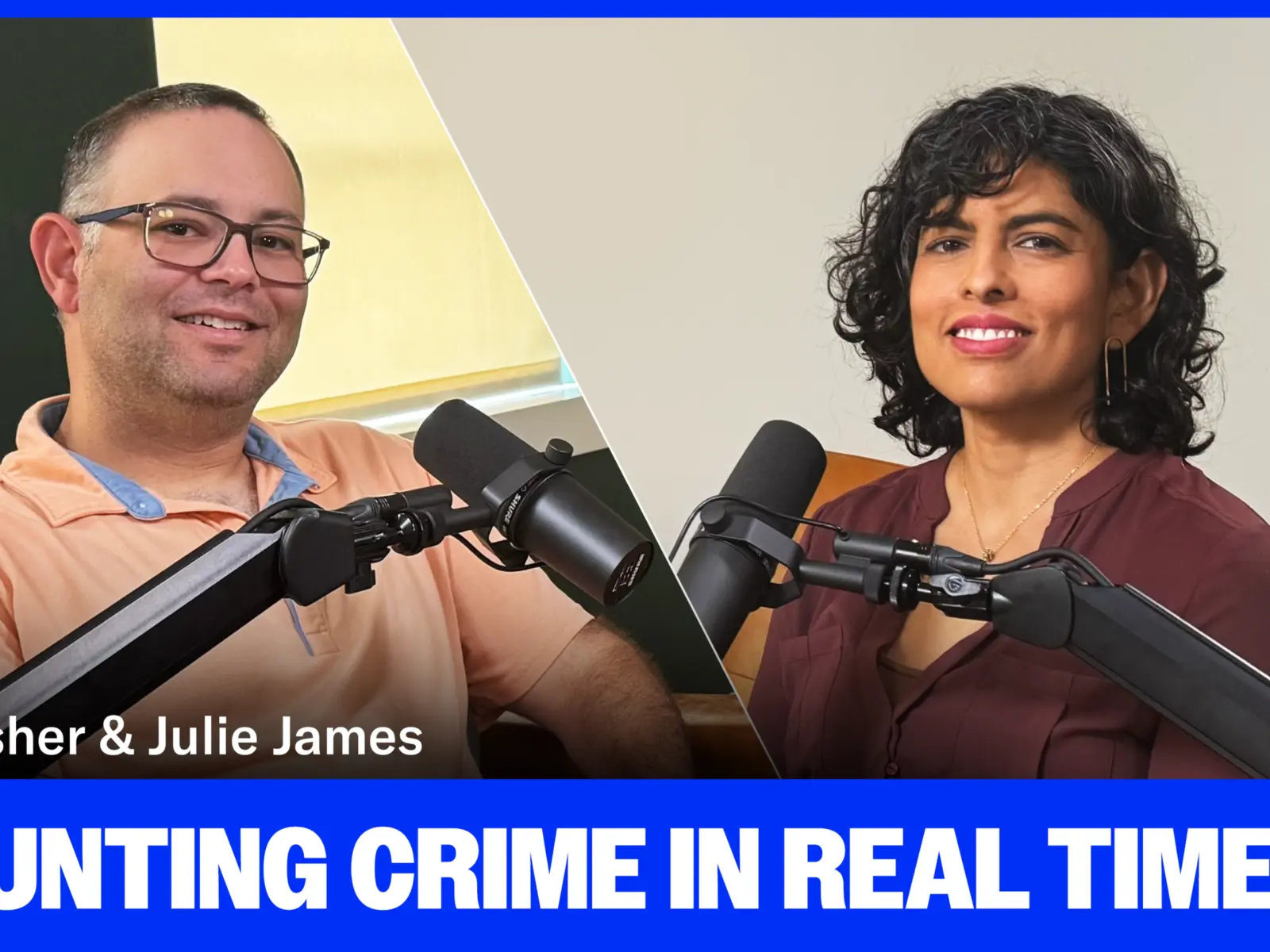
[00:16:01] Dr Lois James: There’s still quite a bit of stigma in policing, the idea of, well, if you get tired, if you’re not okay on this, you know, reduced amount of sleep that you’re weak, that you’re not designed for the job, and a little bit still of that old vibe of, you know, I’ll sleep when I’m dead.
[00:16:20] Cristina Quinn: Dr. Lois James is director of the Sleep and Performance Research Center at Washington State University’s College of Nursing. She’s carried out a number of interventions with police departments attempting to combat some of the negative impacts of fatigue. As someone who’s been bedeviled by insomnia at various stages of my life, coupled with raising two kids, I can confirm the following.
[00:16:44] Dr Lois James: When you’re tired, it affects your reaction times, it affects, you know, your driving ability. It affects your mood. It affects your ability to kind of think rationally and to problem solve. When we think about police kind of specifically, the three major areas that the most work around fatigue is done one is of course drowsy driving because they do an awful lot of driving during the course of their work.
The other two major aspects of performance that we look at is escalation, de-escalation. There’s a strong association between fatigue and lowered ability to deescalate a situation, right? Which does make sense. We’re grumpier when we’re tired, you know, we’re less able to just let it blow off our back and not take things personally, and police really can’t take things personally.
I know that that can be challenging, but they can’t. They sign up for this profession. They have to be able to separate, you know, them as a person and them as an officer, right? And b- and if somebody is attacking them as an officer, it doesn’t necessarily have anything to do with them as a person. And their ability to do that when they’re tired is less.
And then of course, the other major one that’s had a lot of research is use of force. And what that looks like typically is that the more tired an officer is the more likely they are to make a mistake. We do a lot of this in our simulation lab, looking at errors. So for example, an officer firing when the person on screen pulls out a wallet or a cell phone, in a highly volatile situation instead of a gun.
[00:18:30] Cristina Quinn: In 2020, Dr. James began the Seattle Police fatigue training experiment, the first randomized control trial to determine if fatigue management programs would work for law enforcement. Participating police officers were sent an online video to watch, one a week for eight weeks.
[00:18:49] Dr Lois James: The videos ranged, and initially a lot more about the risks associated with fatigue, really to try and get them to buy into the program and, you know, pay attention.
Then they moved through things like, the science of sleep, what happens when you’re asleep, what circadian rhythms are, for example, our biological drive to be awake during the day and asleep at night, and what happens when we go counter to that, which of course we have to do when we’re on night shifts.
And then they moved from there to more of the kind of the solution-driven videos. So things like sleep hygiene, which is the, the concept of kind of maximizing your sleep opportunity, making the most, you know, of the sleep that you get. Things like temperature and light and noise reduction.
And then also things like fatigue countermeasures. There was a video on napping, strategic napping.
[00:19:47] Cristina Quinn: I love the idea of a strategic nap. Sounds like something that should be built into everyone’s day. But there was more to the experiment than just a video about napping. Participants had to do homework, like keeping a sleep diary and doing stress reduction exercises.
Officers in the study also had their sleep monitored for 24 hours and went through psychological evaluations, things like measures for depression, PTSD, level of fatigue before and after the experiment. And what they found after assessing these folks for six weeks was pretty remarkable.
[00:20:21] Dr Lois James: First off, we found an overall increase in sleep across a 24-hour period for officers.
We also found really great reductions in overall sleepiness across the officers. And a- and notably, we found some, some decreases in their PTSD symptomatology. And, you know, it’s not mind-blowing in that we do know that there’s a strong connection between PTSD and sleep, but it was really notable that a fatigue intervention could have a follow-on effect on, you know, how they’re feeling on the stress front as well.
[00:20:56] Cristina Quinn: Sleep training like they did in the Seattle Police fatigue experiment could help drive home an important message.
[00:21:02] Dr Lois James: I mean, it’s not particularly fun to tell officers, “If you don’t take this seriously, your life expectancy could be reduced by a decade or a decade and a half,” but sometimes that’s what it takes to get people to actually prioritize sleep.
There’s nothing absolutely kind of rocket science about any of this, but it’s things that people don’t usually think about. Right? And so it’s useful information, and some things are so easy. They’re so easy for somebody to implement.
[00:21:31] Cristina Quinn: You don’t have to convince me. 10 to 15 years is a substantial chunk of time.
Think of all the naps you can take in that period. But seriously, don’t sleep on not sleeping. Dr. James certainly isn’t. She’s in the process of expanding her work, collaborating with a number of police departments across the country. Whether it’s through human connection, using artificial intelligence, or simply improving police officers’ sleep, these measures all have one thing in common.[00:22:00]
They’re preventative, not reactive solutions, and that is critical according to Dr. Elizabeth Linos of the Harvard Kennedy School.
[00:22:09] Dr Elizabeth Linos: One thing you’ll see if you, you know, talk to different public safety agencies is that often there is a lot of mental health support, but after a bad thing has happened.
So, like, if you’ve been in a difficult situation, there’s peer support and support. What the science suggests is that you have to do it before, that basically this has to be a preventative strategy to build your sense of self-worth, to build your sense that you can handle difficult things when difficult things come your way.
And so it’s not really a reaction to bad things happening. It’s more kind of setting you up to succeed because inevitably bad things will happen in this space. That’s the nature of the work.
[00:22:43] Cristina Quinn: No doubt those on the frontline of public safety know that they’re not signing up for the usual 9:00 to 5:00, but there are better ways they can deal with it.
Here’s a recap. Number one, connection is a lifeline. Something as simple as anonymous peer sharing cut 911 dispatcher resignations by more than half. You don’t need big budgets, just the feeling of being understood. Number two, tech can triage, but humans must heal. AI tools like Sworn AI can spot stress before it becomes a crisis, but their real value is pointing officers toward human support, not replacing it.
And number three, sleep isn’t a weakness, it’s a weapon. Fatigue drives bad decisions, escalating situations, and even wrongful use of force. Treating sleep as a performance tool, not a luxury, could be one of the cheapest public safety upgrades around. As for that fatigue test I took, well, I failed. It stated, and I quote, “Your results show that your alertness may be suboptimal.
Consider medical evaluation.” Ha, I already know I’m tired, so joke’s on you, psycho motor vigilance test. But I’m in good company. Two of my producers also failed the test, so maybe we’re all just collectively tired. Let’s go take a nap. But before you do, don’t forget to subscribe to this show and leave a review.
It’ll help others find us
Thanks for listening to Fighting Crime. Our series producer is Nastaran Tavakoli Farr. Production by Benji Guy and yours truly, Cristina Quinn. Video production and editing by Mike Tamman and James Page. Emily Owens is our resident expert. Our researcher is Ben Miley-Smith. Elliot Edwards is our production coordinator.
The theme music is by Armen Bazarian. Marketing by the Podglomerate. Our executive producers are Meredith Peebles and Jonathan Coates. This was an Indio Media production for Arnold Ventures.