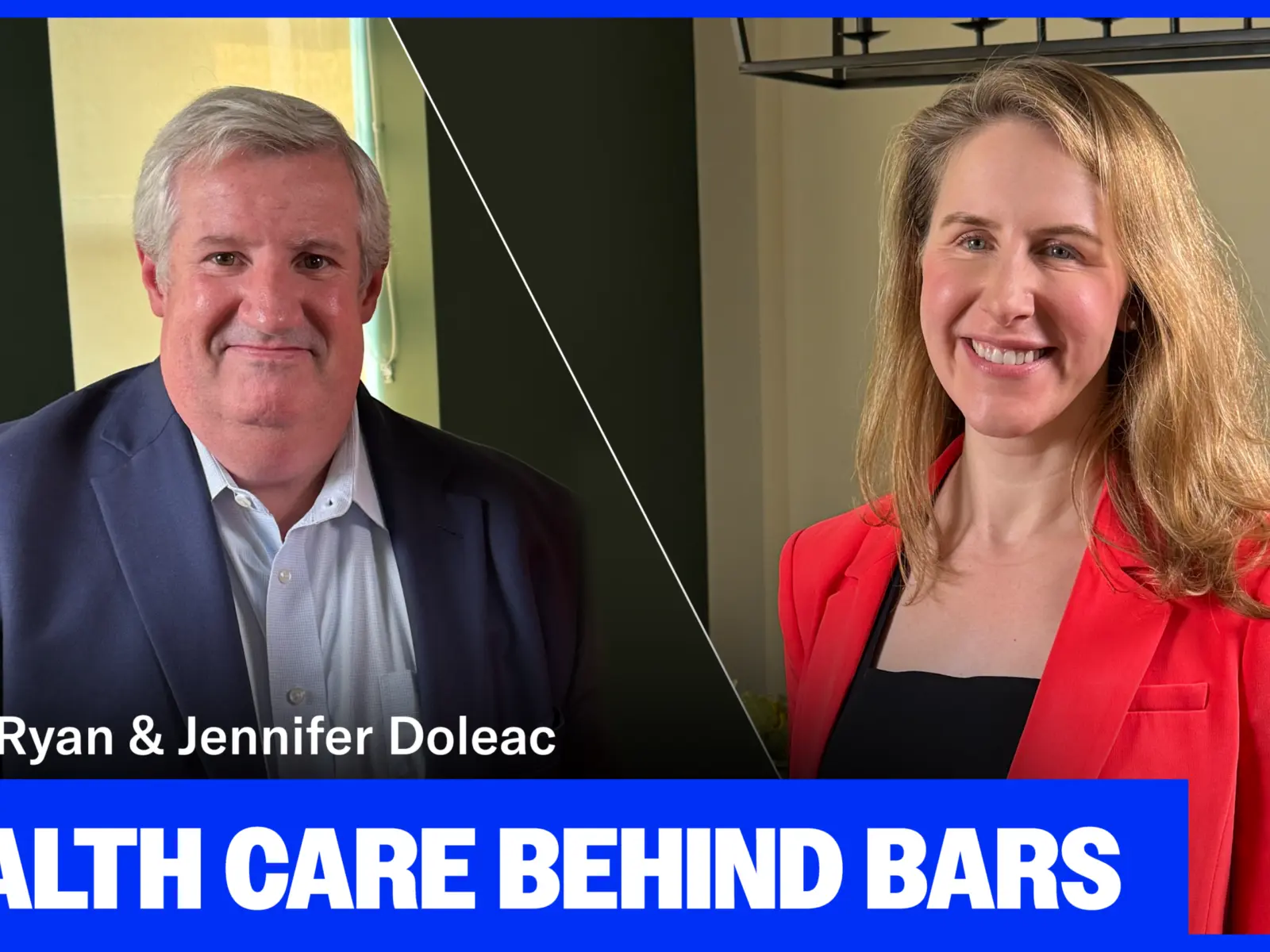
[00:00:00] Cristina Quinn: Greetings listeners. You’re about to hear Fighting Crime and our last episode of the season. But we will be back with season two in January. Until then, subscribe, follow us, spread the word, and write to us if there’s a topic you think we should cover. Our contact details are in the show notes. Okay, onto today’s episode.
[00:00:33] David Phillips: There’s a fair amount of overlap in the group of people that repeatedly enter the criminal justice system, that repeatedly enter homeless services, that repeatedly enter healthcare services. And some of those folks will be folks experiencing mental health issues.
[00:00:52] Cristina Quinn: Economist David Phillips often went to court as part of his research on economic equality.
He’s the director of [00:01:00] the Wilson Sheehan Lab for Economic Opportunities at the University of Notre Dame. After a while, he noticed that there appeared to be many defendants whose behavior could be explained by mental illness, like this case, where a woman thought she had a bedbug infestation.
[00:01:16] David Phillips: One example that I observed in Seattle Misdemeanor Court, right, is a situation where you’ve got a person who’s coming through.
They’re being charged a first arraignment, or they’re being charged for an arson charge, and you’re like, “Okay, this seems normal. and it, as the facts of the case come out, right? What, what’s the situation? The situation is you have somebody who has a situation of mental illness, they have a crisis.
They come to believe that some of their belongings are infested by bugs, and so they light them on fire, and they do that, light them on fire in a portable toilet that then destroys that Port-o-John. And that’s against the law, right? You can’t destroy property. That’s arson according to the law.
If that’s what this person was accused of, if that’s true, that’s, that’s arson. It’s also [00:02:00] the case that you’d probably look at that situation and think the underlying thing that’s going on here is maybe not what we would call a traditional criminal justice issue. It’s probably a mental health question.
[00:02:10] Cristina Quinn: While this is one example of someone committing crime because of mental illness, the statistics back him up. It’s estimated that almost 45% of people in state prisons and 25% of those in federal prisons meet the threshold for severe psychological distress. The most common disorder reported in prisons is major depressive disorder, which impacts up to a quarter of state prisoners.
Other conditions include schizophrenia and bipolar disorder. Jails also have a high proportion of people suffering from mental illness, around 45%. Now, if we compare these statistics to the general population, these figures are in the single digits, and only around one in 10 Americans report having a mental health crisis in any given year.
David Phillips [00:03:00] says the high rates of mental illness in prisons, and also in jails, is well known by people in the criminal justice system.
[00:03:06] David Phillips: You visit local jails around the country, you talk to local sheriffs, you talk to them like, “Hey, what’s going on? What do you see in local jail? What are big issues?”
And mental health rises up to the top really, really quickly.
[00:03:19] Cristina Quinn: David is gonna tell us about work in Johnson County, Kansas in 2016, which aimed to help connect people suffering from mental health issues with support upon their release as a way to prevent them from getting arrested again. An estimated one out of three people entering the jail there screen positive for either severe depression, bipolar disorder, or schizophrenia.
That’s one in three.
[00:03:44] David Phillips: If you’ve got a place like Johnson County where one out of three people coming in are indicating, yeah, this person probably has severe mental illness that they’re experiencing, right? That affects everything. It affects, you know, safety in the community, affects safety in the jail, right?
It affects [00:04:00] what is the right situation, right? We have a criminal justice system that’s designed to deal with breaking of the law, but then we end up with a large fraction of folks in local jails who a big related reason that’s happening with them being there is experience of mental illness.
And you have a jail that’s trying to manage operations and trying to manage their facility and also treat people humanely at the same time, and that’s just very difficult to do.
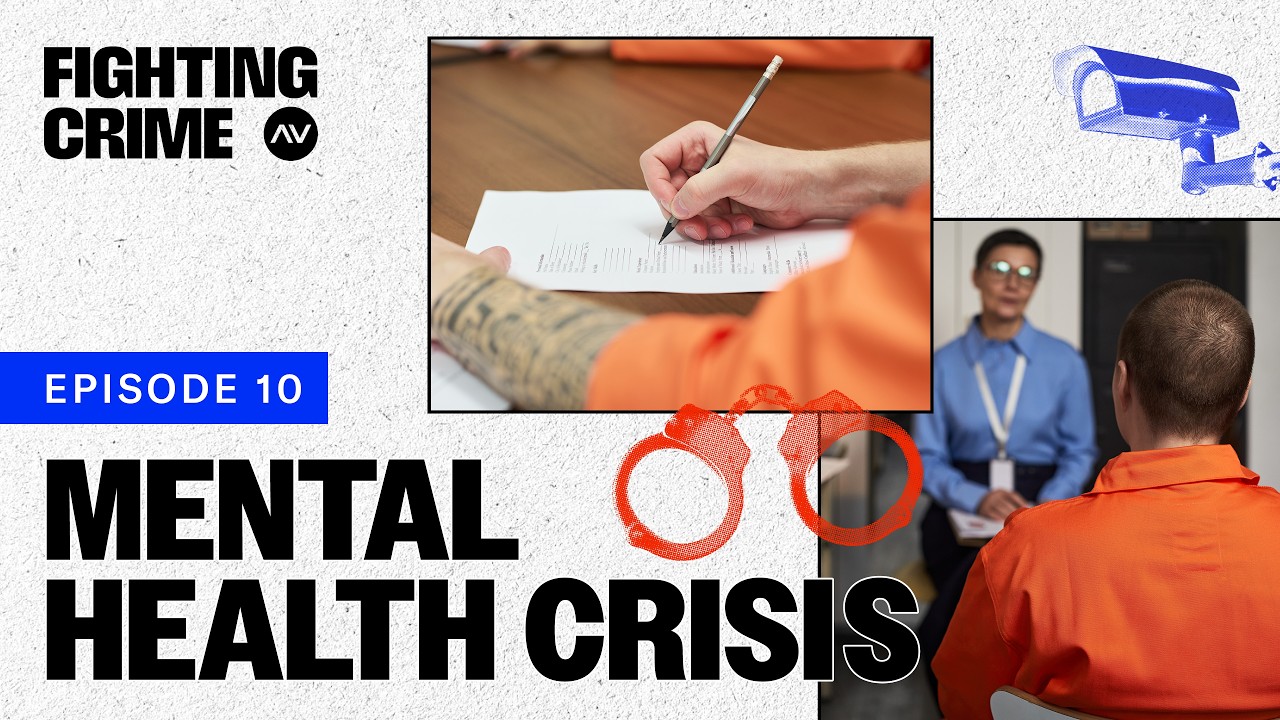
[00:04:24] Cristina Quinn: So why are so many people with mental illnesses ending up inside? And how can they best be helped onto a better path where they get the care they need and don’t need to cycle in and out of the criminal justice system?
And what are the costs for all of society when it comes to budgets and public safety when these people aren’t getting support? That’s what we’re going to explore in today’s episode. This is Fighting Crime, the show that asks big questions about crime and how to stop it. I’m Cristina Quinn, a journalist, and I’ve spent my career digging into stories to discover the truth.
I’m going across the [00:05:00] country, from prisons to universities, police chiefs to inmates, to look at the evidence and question everything we think we know about how to make America safer. I want to know what actually works and meet the people who are making it happen. So join us as we figure out new ways to fight crime and make society safer, and be prepared to think differently.
So first off, we want to make something very clear. We are not saying that people who have mental illness are criminals or that they will end up in prison because of it. But we are saying that mental illness is over-represented in the prison population.
[00:05:45] Vikki Wachino: Probably about 40% of people who are incarcerated have a mental health issue, and even more people have substance use disorder.
It’s fair to assume that a significant contributor to people cycling through [00:06:00] prisons and jails is mental health, as well substance use disorder.
[00:06:04] Cristina Quinn: That’s Vicky Wachino of the Health and Reentry Project, also called HARP, and we’ll hear more about her later on about their work helping people access mental health care upon release.
Now, I know the numbers I told you about mental illness rates in jails and prisons are big, but don’t forget that only a small proportion of Americans are incarcerated. The total jail and prison population in the US is almost two million people in any given year, this in a country with a population of almost 350 million.
However, people with mental illness are over-represented in prisons and jails. So here I have to say that this is a huge topic, and we are only going to touch on one part of it today. Mental illness can run a wide range of disorders, and there are lots of people who function well day to day. For others, though, daily life can be challenging, which can lead [00:07:00] to impaired judgment or committing crime because of difficult life circumstances as a result of their condition, or even arrests made not for any criminal activity, but rather for altercations with officers.
And there are also people who have committed crimes which are not related to their mental illness, but nonetheless will be impacted by their condition when they’re in prison and upon reentry. We’re going to hear more about all these factors soon. In this episode, we want to look at how to prevent people with mental illness from ending up in the system in the first place, and how to help them when they get out, and to explore which outcomes are also best for public safety.
So let’s first hear more from David Phillips and work he has done looking at programs to help people with mental illness stay out of the cycle of reoffending. David Phillips and his colleagues looked at an interesting project in Johnson County in Kansas that tried to connect people to mental health [00:08:00] services in the day or two after they leave jail.
He explains that this is a very sensitive period when someone has a lot to navigate and where a lot could potentially go wrong for them.
[00:08:11] David Phillips: They’re coming back into a situation where lots of things are up in the air. Where are they going to stay? How are they going to get their medications if they want to get their medications or if they need medication?
They might still be in the midst of a trial, right? How do they stay in contact with their attorney, with the justice system and that process? Like, all of those things are going on. It’s a sort of chaotic moment in somebody’s life, and so making sure to do all of the things that need to be done in order to get my medication filled, to be able to connect with a mental health provider, right?
That might not be the most immediate thing that comes to somebody’s mind, but it also might be the thing that helps, that gives them the stability that then they’re able to deal with all of this other stuff. And so I think, but yeah, part of the rationale behind rapid outreach is that this is a moment where a person has a lot of stuff to figure out, and it’s helping bring access to mental health care and make that an easier thing [00:09:00] rather than a harder thing in the midst of that very busy moment.
[00:09:03] Cristina Quinn: Now, remember that earlier he told us that around one in three people coming through Johnson County Jail screen positive for bipolar disorder, schizophrenia, or severe depression. He says the county wanted to use these short stays inside as an opportunity to put these individuals onto a better path.
[00:09:21] David Phillips: So they built an outreach team that had a very simple, straightforward goal, which was when somebody’s exiting, let’s try to get in contact with them, and then let’s try to connect them with resources.
So they would call up a person repeatedly. This is in the day or two after they release, right? The goal was to get somebody connected within a couple days. Let’s call them up multiple times. for cases where this seems particularly important, maybe the team would go and knock on somebody’s door and with the goal of connecting them to resources.
Now, they were pretty successful, right? For a group of people that’s pretty hard to get ahold of, right? Folks who have recently exited jail, right? Life’s unstable, and folks who’ve screened as likely experiencing severe mental illness, they were able to get in contact with half of [00:10:00] people and be able to connect about a quarter of them to mental health care.
Either to the county’s publicly supported mental health resources or connecting them just to an existing provider that they already had contact with in the past.
[00:10:12] Cristina Quinn: David Phillips and his colleagues were interested to find out if this helped reduce recidivism and stop these people from coming back to jail within a year.
They looked at this in their paper, Reducing the Burden of Mental Illness on the Criminal Justice System: Evidence from Light Touch Outreach. It’s written with Mary Kate Batistic and Bill Evans. Remember, within a day or two of release, the county was able to get in touch with half of people screened with severe mental illness and to connect around a quarter of them with mental health care providers.
He told me how the location of the Johnson County Jail helped them analyze the data.
[00:10:50] David Phillips: For a suburban jail like in Johnson County, right, you’re gonna have a lot of residents of Johnson County who end up in that jail. You’re also gonna have some folks from nearby Kansas City who end up in the jail.
[00:11:00] And so we’re able to compare those two groups of people, similar to a randomized control trial, to see what the impact of this program is. It turns out that before the county started doing mental health outreach, those two groups of people are very similar in terms of their recidivism rates. And so we think that there’s a reasonable comparison between the two, comparing those two groups, residents and non-residents, would get you, give you a good measure of impact.
And so then we do that after health outreach started. When they started doing this outreach toward the end of 2016, we see what fraction of folks ended up coming back to the jail.
[00:11:29] Cristina Quinn: So what did they find?
[00:11:30] David Phillips: After mental health outreach started at the end of 2016, non-residents, so people who weren’t affected by this, their recidivism rates are basically flat.
Like, it doesn’t change that much, but for people who recei… were offered the outreach, so residents of Johnson County, recidivism rates declined by 10 percentage points, right? So you see this big decrease in people coming back to the jail. They try to reach out to folks. They get in contact with half of them.
A quarter of them, they’re able to connect to healthcare. And then you’re looking at, like, 1 [00:12:00] out of 10 people who would have come back to the jail, and then they don’t end up coming back to the jail we think because they got connected to mental health resources in the community.
[00:12:09] Cristina Quinn: Recidivism rates fell by about 10% for the people who were connected to mental health services within a day or two of leaving jail.
That’s huge. So hang on. I need you to understand just how significant this is. In general, around 600,000 people leave prison a year, and around 40% are rearrested within 12 months after leaving. If you do the math, a 10% reduction in recidivism means a lot less people end up returning to the criminal justice system.
So how much mental health care were these people getting that led to such a dramatic fall in recidivism?
[00:12:48] David Phillips: So the amount of care that people are receiving on average, you should think about it as like three or four contacts with the mental health service, right? And so it’s… For some people that might be, right, they have one contact, one appointment, [00:13:00] they get back connected to a prescription, et cetera, right?
For other people, it might be more ongoing, right? Where they’re having regular outpatient meetings with the provider at the mental health center. It varies a little bit across people, but on average, right, you should think about this as, as people experiencing like a couple of hours of, of provider contact time at the mental health center.
[00:13:18] Cristina Quinn: He says that one of the key factors that made this program so successful is close collaboration between different departments within Johnson County.
[00:13:27] David Phillips: This was a collaboration between mental health providers and local criminal justice in the county, right? So that team was interacting well with both of those systems, and you need that to be the case, right?
You need a jail that’s going to give up-to-date, accurate information on how to contact somebody right at the right moment in time, right when somebody’s going to leave. A lot of people observe the intersection between criminal justice and mental health, and they think, “Oh, is there some like fundamental trade-off between people’s dignity and keeping communities safe?”
And I think part of what we’re [00:14:00] learning from studies like this one and other ones is that there are situations where we don’t have to choose between treating people with dignity and keeping communities safe, right? Connecting people to mental health care is something that is both affirming of that person’s dignity, “Hey, here’s something that could help you get back on your feet,” at the same time as helping communities stay safe.
Like the strongest solutions are gonna do both of those things.
[00:14:21] Cristina Quinn: So Johnson County’s approach is really interesting. They managed to really reduce recidivism through a simple and light touch approach. Just by trying to put people in touch with a mental health provider a day or two after release, they managed to help these people onto a better path and ensure better public safety for everyone, showing how a targeted approach can have a big and positive impact.
So we’re finding out more about what can help stop people with severe mental illnesses from coming back into contact with the criminal justice system. But how can we prevent these people [00:15:00] from ending up in the system in the first place? Now, often for people suffering from serious mental health conditions, arrests aren’t necessarily due to criminal behavior.
[00:15:10] Amy Watson: Oftentimes, arrests kind of come out of just the fact that there’s an interaction between an officer and a person with mental illness.
[00:15:19] Cristina Quinn: Amy Watson of Wayne State University is also the president of CIT International. CIT stands for Crisis Intervention Team, and they try to promote safe responses to people experiencing mental health crises.
She also used to work as a probation officer and saw up close how people suffering from mental illnesses struggle to deal with law enforcement.
[00:15:42] Amy Watson: When I was a probation officer, I had a specialized caseload of people with serious mental illness, and a lot of it was made up of relatively young men that were early in their illness career.
It hadn’t been that long since they had their initial onset of psychosis. So they were trying to [00:16:00] figure out how to deal with, you know, what was going on with them, and it seemed like any time they were in the area of a police officer, there was an interaction, and they ended up with a battery to a police officer.
Sometimes it was spitting on the officer as the officer grabbed them. Sometimes it was obstructing justice ’cause they wouldn’t give their name.
[00:16:21] Cristina Quinn: Aside from altercations with officers, people with these conditions are most likely to come into contact with law enforcement because of low-level crimes like DUIs and shoplifting, and later on it could be for something like probation violations.
[00:16:33] Amy Watson: The majority are low-level misdemeanors. It changes a little bit over time with kind of earlier on people get involved in, it may be DUIs, some low-level drug possession, shoplifting, and then down the line, say 20 years later, it’s more likely to be probation violations criminal trespass, those types of things that, that may have [00:17:00] more to do with how their illness and their system involvement has impacted their life.
[00:17:06] Cristina Quinn: She says the problem is compounded by the fact that people with severe mental illnesses then end up staying inside for longer, which is also in part because of the nature of their conditions and the impact this can have on their behavior.
[00:17:21] Amy Watson: People with serious mental illness are disproportionately funneled into the criminal legal system, but they also stay longer.
So once they’re there, whether they’re in jail or in prison, they are less likely to earn good time for credit, so they serve more of their sentences. If they’re on probation or parole, they’re more likely to be violated for technical violations, so then that extends their time within the system.
[00:17:49] Cristina Quinn: In her view, if we want to prevent these individuals from ending up inside, we should focus on the conditions of these people’s lives, how mental illness can have a lasting impact.[00:18:00]
[00:18:00] Amy Watson: You know, people have an onset of a serious mental illness, it may actually knock them out of a trajectory and opportunities they might otherwise have. They may not have the same career trajectory, educational trajectories, social relationship trajectories because of their illness, and that puts them at risk.
it puts them at risk for all the things that increase anybody’s risk for engaging in criminal behavior: unstable housing, lack of opportunities to engage in more pro-social relationships and activities.
[00:18:36] Cristina Quinn: It can be a huge undertaking to tackle all these issues, so a more immediate way to help prevent people with mental illness ending up in jails and prisons would be to simply reduce unnecessary arrests of people who are in the throes of a mental health crisis.
One method that has been tried out is CIT, or Crisis Intervention Team, mentioned earlier. These [00:19:00] teach officers to recognize the signs that someone is having a mental health crisis and how to attempt de-escalation. She told me about its origins.
[00:19:09] Amy Watson: The crisis intervention team model originally started in Memphis, Tennessee in 1988 after the Memphis Police shot and killed a man with schizophrenia who had a knife and was threatening to harm himself.
So after he was killed by a Memphis police officer, advocates, mental health providers, and the police department got together. The mayor put together a task force, and they developed this program called CIT, Crisis Intervention Team.
[00:19:38] Cristina Quinn: CIT, there’s a training component for officers, which is typically 40 hours to help them understand how to respond to a behavioral crisis more effectively.
There is partnership between law enforcement, the mental health system, any other relevant parties in a community to see who to connect someone with. She says it seems that [00:20:00] CIT can also benefit officers too, given that they can get hurt in these interactions as well. So does CIT work? Amy Watson and her colleagues are currently looking at data from an RCT, a randomized control trial, they’ve been doing on officer training.
They won’t have results for a while, but she says there are findings from other studies, including ones she’s been involved with, that seem to show that CIT increases connection to other services. Then there are other methods of dealing with this issue, which involve different experts too, like a co-responder model.
It’s where a mental health professional will respond to a situation or join the police. This could be effective, as in some communities there can be fear or distrust of the police. She says we must not assume that a mental health professional is a better option, ’cause in some communities people could have difficult relationships with them as well.
[00:20:56] Amy Watson: For the most part, people who have had crisis [00:21:00] interactions prefer less law enforcement involvement. This is people who’ve had the interaction about themselves as well as family members. However, there are some folks that, that indicated they prefer having police come to, over a clinician, and I think that really speaks to that there is this distrust of the, the mental health system as well.
The mental health system has been very coercive to some communities and people have had really bad experiences within the mental health system. So there certainly are times when people would prefer an officer come and if they see a mental health clinician, at least their experience has been that somebody coming out to fill out the paperwork to have them involuntarily committed.
[00:21:49] Cristina Quinn: So Amy Watson really believes we need people who are well-trained on how to deal with these communities and these kinds of situations. Now we’re going to hear more about how to support [00:22:00] people when they reenter society to ensure they are on a better path and won’t end up back in the system. But first, we have some ads.
But while that’s happening, I want you to think of three friends, yes, three friends, who you think would find this episode interesting. Share it with them now. Okay, speak to you soon after these ads.
[00:22:29] John Wetzel: I had a sister, adopted sister, who was mentally ill. From the time she was six, like, in and out of the mental hospitals, and ultimately ended up spending 20 years in Federal Bureau of Prisons at a time when I was getting recruited by the Obama administration to run the federal prison. So there’s… most people have mental illness in their families, and sadly, many people with mental illness get involved in the criminal justice system because of failures in our behavioral safety net. So I really appreciate you covering this topic.
[00:22:58] Cristina Quinn: John Wetzel was [00:23:00] Pennsylvania’s Secretary of Corrections between 2011 and 2021.
Before that, he worked as a correctional officer and a county warden, and says as a result, he has worked closely with people suffering from mental illness his entire career. But we’ve heard how people with mental illness are over-represented in the prison and jail population. And Wetzel thinks we should try to help these people at the community level if they are not a threat to public safety.
Incarceration itself can make people worse.
[00:23:30] John Wetzel: Unfortunately, being incarcerated isn’t the best thing for your mental health. So frequently, just incarceration exacerbates mental illness.
[00:23:40] Cristina Quinn: I wanted to know more.
[00:23:41] John Wetzel: Yeah, I mean, incarceration is hard. First of all, you lose control. You lose control of everything. you know, you don’t choose when you eat, you know?
You don’t choose where you eat, what you eat, you know, so you’re, one, in a very unnatural environment. Two, it’s very restrictive [00:24:00] being locked in a cell and not being able to let yourself out. Especially with people with a trauma history, you know, there’s a bunch of ways where that trauma could be triggered.
The most humane environment inside prison is harsh just the loss of liberty for human beings who were born to be free. That’s what our country is built on. So just losing liberty has an impact on your psychological makeup.
[00:24:26] Cristina Quinn: And mental illness inside is also hard for people working in jails and prisons.
[00:24:32] John Wetzel: Frankly, we see it playing out in staff. The mental health outcomes of staff are not good, and I would argue it’s because they’re subject to some of the similar conditions. Ultimately, they go home at the end of the shift, but before the end of the shift, you can’t go home. You lose a lot of that control.
You can’t open your own doors. And so we’re seeing those two groups co-vary with bad mental health outcomes, so a lot of it is just the incarceration experience. It is probably the most [00:25:00] challenging environment to work with someone who’s mentally ill, and I would argue probably the most resource-intensive and the least effective.
[00:25:08] Cristina Quinn: Some of the reasons why it’s challenging is that the staff need to spend more time looking after this population. Self-harm and suicide can be risk factors for these individuals, and many people with mental illness also have issues with addiction, as well as withdrawal, and that can be agonizing. So prison staff need to monitor these people closely.
[00:25:30] John Wetzel: So first of all, they require more supervision, closer supervision. It’s frequent if someone is identified as especially seriously mentally ill or unstable, it’s very common for them to be on 15-minute checks, so an officer physically checking on them every 15 minutes. Frequent access to mental health professionals both psychiatrists and prescribers, psychologists, counselors.
Some of the more evolved systems are using peer [00:26:00] support specialists, trained peer support specialists to kind of build a bigger kinda continuum of care mitigating the cost, but getting somebody to stability, and that’s the number-one goal, requires a real team approach.
[00:26:17] Cristina Quinn: He says the problems can often start when someone is first brought to a jail or prison, where it’s important that they’re diagnosed properly so that staff can then best deal with them.
[00:26:27] John Wetzel: You really train your staff to kind of be detectives when people first come in the door to identify symptoms of mental illness, and frequently they’re conflated with misbehavior. And so really having having staff really well trained in identifying that, but also using pretty significant resources for mental health professionals to actually affirm those decisions and get your hands around who, who has a mental illness and then getting accurate diagnoses.
[00:26:57] Cristina Quinn: This can help staff know where it’s best to house someone.
[00:26:59] John Wetzel: [00:27:00] And then you’re trying to house them in a place where they can get as much a normalized environment as much as possible, but also get the kind of scrutiny or supervision to ensure that they’re able to adjust to the population and those kinds of things.
[00:27:23] Cristina Quinn: John Wetzel says this is really important for someone with a mental illness, to house them in the right facility that is not going to exacerbate their condition. Example: during his time, they had facilities for people with developmental disabilities, also for those with neurodivergent conditions.
[00:27:40] John Wetzel: When you think about someone who has, has that challenge, doors slamming and those kinds of things, it doesn’t do well for that population.
So even focusing on the environment as it relates to noise, as it relates to access to natural light, we try to be deliberate about how can we mitigate [00:28:00] challenges in the environment that exacerbate problems as we’re talking about.
[00:28:04] Cristina Quinn: In general, he says that for people struggling with serious mental illness, it’s important that they can see others and socialize.
So they created housing units where people could be out of their cells more, and made other adjustments.
[00:28:16] John Wetzel: So they were like chairs where individuals were like, had a handcuff or a shackle on their leg so they couldn’t get out, and so they could get socialized with other people. ‘Cause the key things were socialization with other people and out of cell time.
[00:28:32] Cristina Quinn: And the actual prison environment itself can have an impact. He told me about some simple methods that could be transformative.
[00:28:39] John Wetzel: One thing that you probably wouldn’t think about was we put digital clocks all over the place to make sure people could stay oriented. Murals, posters, the kind of things you wouldn’t think about seeing inside prison, but really trying to manipulate the environment to make it feel less punitive.
The more you made the environment better for staff and incarcerated [00:29:00] people, the less incidents you had in general, but especially with this population. And in really trying to structure programs, and if not programs, activities, even games, the kind of stuff would keep people productively occupied while they were there.
[00:29:15] Cristina Quinn: And it’s not just about these physical factors, like the facilities themselves, but the people in the prison play a crucial role, too. Firstly, he and his team made sure there was enough CIT training. Remember, we heard about that just a little earlier from Amy Watson. In fact, they adapted this training specifically for correctional staff, and he is a big believer in the important role peer specialists can play in helping those struggling with mental health issues.
These are other inmates who are in some way recovering from a mental health condition themselves and have been trained to help others, and they can also show other inmates the potential of getting better. But given all the problems we’re trying to deal with and ways we want to improve public safety, should [00:30:00] we really be focusing on helping inmates with their mental health conditions?
John Wetzel believes doing this ultimately benefits us all. First off, like he was telling us earlier, incarceration itself is hard, and we want people to be able to reintegrate back into society upon release.
[00:30:18] John Wetzel: Yeah, first of all, they’re sent to prison. That’s the punishment. They’re not sent to prison for additional punishment.
So being separated from society, that’s the punishment. and one, they have a constitutional right to be treated properly. But secondly, 95% of the people who came in Pennsylvania, even though we have a life without parole system, get back out in the community. In some states, it’s 99% come back out in the community, and there is no circumstance and no one can make a serious argument that mistreating people for five, 10, even one year is gonna result in a better human being walking out the back end of the system.
[00:30:52] Cristina Quinn: And investing in the things he talked about, such as better facilities and trained staff, makes their jobs easier.
[00:30:59] John Wetzel: And then just from a [00:31:00] practical standpoint, individuals who are not doing well from a mental health standpoint are staff intensive. They require a lot of resources, and the country has a correction staffing emergency.
There’s systems that are 30% staff vacancies, and an individual who’s unmanaged utilizes a lot of correctional officer hours. So just from a practical standpoint, it’s a smart investment. And from a human standpoint, it’s pretty obvious.
[00:31:26] Cristina Quinn: In the ideal scenario, though, we should be trying to help people with mental illness while they are still in the community and before they end up in jail or in prison.
[00:31:35] John Wetzel: But ideally, we’d have resources in the community where we can keep people healthy and when people are in crisis. Frequently, when people are in crisis, they commit a crime. And if you talk to police officers, frequently they’d love to take someone to to, for instance, a psychiatric emergency room. They just don’t exist.
And then once they come into the jail it’s complicated and I think the [00:32:00] criminal justice system is almost like a spider web, especially for an individual with mental illness, and once you come in, it’s hard to get out.
[00:32:06] Cristina Quinn: So do you mean if it’s possible to keep these people in the community and if that’s okay from a public safety standpoint, we should aim to do that?
[00:32:14] John Wetzel: A hundred percent better. It’s really important that we make good decisions at the front end of the system and factor in future outcomes. But when mental health resources in the community are lacking, frequently the jail becomes the de facto place.
[00:32:28] Cristina Quinn: And finally, having people with mental illness caught up in the criminal justice system ends up costing us all a lot more.
[00:32:35] John Wetzel: When someone comes in jail, they fall off of Medicaid, and so in the short term becomes a county cost. In the long term, it’s difficult to connect people back to this, to Medicaid, and that has implications on re-entry and medication and those kinds of things. So that advocacy for me continues to today, you know, five years hence my retirement, where as a society, [00:33:00] I think we really gotta question, are we making good decisions?
[00:33:04] Cristina Quinn: So we’ve just heard how severe mental illnesses can lead to people getting involved with the criminal justice system, and how if someone is not a threat to public safety, we wanna help them before they end up inside. Now, you just heard Pennsylvania Secretary of Corrections, John Wetzel, talk about the high costs of treating someone with mental illness inside as they lose their access to Medicaid.
Well, this loss of Medicaid coverage can also impact people when they leave prisons and jails, and can make it harder for them to get on better track and not to end up back in prison again.
[00:33:39] Vikki Wachino: I’m Vicky Wachino. I’m executive director of the Health and Reentry Project HARP, and HARP works to improve the health and safety of people and communities by expanding access to healthcare as people return from prison and jail.
[00:33:54] Cristina Quinn: Vicky Wachino and HARP are trying to expand Medicaid coverage for incarcerated [00:34:00] people and those who have been recently released. Currently, Medicaid is not available for people when they’re in prison or in jail, and so they need to re-enroll when they leave. This process can take several months and can leave people vulnerable and without care upon reentry, which is already a precarious time.
HARP and other groups are pushing for waivers of this policy.
[00:34:22] Vikki Wachino: A waiver is a tool by which a state goes to the federal government and asks for permission not to follow the rules. and so in this case, states are asking the federal government for permission to allow Medicaid to overcome this longstanding bar on providing services in prison and jail simply by allowing Medicaid to cover this targeted set of pre-release services in the month to three months before someone leaves prison or jail.
[00:34:49] Cristina Quinn: This movement is gaining traction. 21 states, as well as the District of Columbia, have or are implementing such waivers, and nine of them are already [00:35:00] actively providing to individuals who are returning to their communities. These include states as different as California, Montana, New Hampshire, and Kentucky.
So there is broad support for these waivers from across the country in rural and urban areas with differing political viewpoints, and many more states are interested. In fact, there’s so much movement around these waivers that CMS approved them for Louisiana, Minnesota, Nevada, and Washington, D.C. in late September, which is just days before this episode’s release.
HARP has been working with state, local, and federal policymakers on these waivers, which Wachino says can help to provide a bridge by giving these people access to healthcare before they return to their communities.
[00:35:44] Vikki Wachino: And if we can do that, we can improve public safety outcomes as well as people’s healthcare.
[00:35:50] Cristina Quinn: So access to healthcare helps individuals and also improves public safety. We heard this earlier when we spoke to David Phillips at the start of this episode. When [00:36:00] people are released, they have a lot of uncertainty in their lives and many things to sort out very quickly. This can be an overwhelming and vulnerable time.
[00:36:10] Vikki Wachino: Right now, as people leave prison and jail they’re largely left on their own to return to their families, communities, and to get healthcare services if they need them. when you’re returning to community, you have a lot going on in your life. You’re trying to obtain financial stability, housing stability and you may not have interacted with your family and friends for quite some time.
So you’re really trying to get to a point of stability but there are a number of barriers standing in your way. You may not have money you may not have access to transportation, and you may not have access to healthcare. and particularly for people with mental healthcare needs, having access to care and [00:37:00] continuity of care is incredibly important.
and so historically, people have not been able to easily access treatment when they need it when they’re returning to communities from prison and jail. The consequences of people not getting, not having support to transition to communities are stark. we know that people have very high rates of severe illness and death.
people use hospital services at extremely high rates. They generally show up in emergency rooms rather than accessing primary care. and several diseases have higher rates of mortality in that immediate, the immediate days following release from prison and jail.
[00:37:48] Cristina Quinn: This really is a sensitive time when people need support to transition and to get on a better track so they don’t end up in prison again.
One of the issues with not having health [00:38:00] insurance is that people are more likely to use emergency rooms, and that has a huge cost for us all.
[00:38:05] Vikki Wachino: Providing healthcare services to people when they cycle through jails over and over again is expensive. And we also know that treating people in emergency rooms is expensive.
And so what we’re going to be looking at going forward is can we improve efficiency in both the healthcare and the criminal justice systems by reducing reliance on emergency rooms and reducing return trips to jails and prisons?
[00:38:31] Cristina Quinn: These changes in Medicaid policy via waivers are to help prisons and jails build a bridge when people are reentering society.
This means that Medicaid can start to cover services just before you’re returning to the community, and it covers a targeted set of services, including having strong connections to healthcare providers. She believes we are in a moment of opportunity where many parts of the criminal justice system can work together with healthcare [00:39:00] leaders to really make a difference to people’s lives far beyond their time in prison or jail.
[00:39:04] Vikki Wachino: In very few places in the country have Medicaid and wardens, jail wardens, or correctional leaders really actively collaborated to improve the health of people as they return. What’s exciting about the current moment is that they are now actively collaborating and really seeing as we pull correctional leaders, law enforcement leaders together with state Medicaid leaders.
They’re all recognizing the moment of opportunity to improve public safety and improve public health. and they’re both realizing that the current system of not supporting people in, is inefficient and harmful and wasteful in many cases.
[00:39:42] Cristina Quinn: The waivers are already in place in California, and she says they’re having a profound impact in helping people reintegrate into their communities.
And the journey starts before they are released, where a community health worker will meet with them to help them get access to care.
[00:39:57] Vikki Wachino: The beneficiaries of these services have [00:40:00] described being able to go to job training, being able to file paperwork for a small business, and I think that really speaks to the potential here and the goal.
That access to services and that type of stability post-release is how we improve public safety, as well as address some of the use of emergency room and hospital services.
[00:40:24] Cristina Quinn: So we have covered a lot in this episode, and this is an enormous topic, and there’s so much more to still look into. But for now, here are our three takeaways on mental healthcare.
Number one, we should aim to help people with mental illness before they end up in the criminal justice system. Getting care inside takes up a lot of resources and time for prison staff who are already overworked, and they aren’t specialists in mental healthcare. And incarceration itself can make mental health conditions worse.
So it makes sense to try to stop people from ending up inside because of an untreated mental [00:41:00] health condition. Though remember, someone can suffer from mental illness and still commit crimes unrelated to their condition. Number two, we need to ensure mental healthcare upon re-entry to help stop people from re-offending.
For people whose criminal actions have been in part due to mental illness and this making life harder for them, providing mental healthcare is essential, especially as the first few days of re-entry are a critical time with a lot of uncertainty and the potential for things to go wrong. This care can be as simple as putting someone in touch with a mental healthcare provider to ensuring someone will have Medicaid as soon as they’re out.
And our final takeaway is it’s not a trade-off. We can provide mental healthcare for those who need it and focus on increasing public safety. In fact, providing this care will actually help improve public safety. That starts from giving those in need the care they require to help them make decisions and [00:42:00] also be on a better life trajectory so they won’t resort to criminal behavior or get into altercations with officers that will land them inside.
It then includes better care once inside to ensure these people are in the best condition upon re-entry, and giving them care once they’re out to help keep them away from re-offending. In each case, helping the individual with mental illness will also keep all of us safer as well. It’s a no-brainer.
This is the end of our first season of Fighting Crime. We’ve loved getting your emails and would love to hear more ideas and topic suggestions as we gear up for our second season. So before we leave for now, I want you to do three things. First, subscribe to the show. That way you’ll hear season two as soon as it’s out.
Secondly, write to us. Is there a topic we should cover? Maybe you work in the field and wanna tell us about some new research you’re doing or a policy proposal. Send us an [00:43:00] email. Our contact details are in the show notes. And finally, spread the word. Send this episode to anyone who you think will appreciate these topics, and ask them to follow, subscribe.
You know the deal.
Thanks for tuning in to Fighting Crime. We’ll speak to you again when we’re back with season two. Our series producer is Nastaran Tavakoli Far. Production by yours truly, Cristina Quinn. Video production and editing by Mike Tamman and James Page. Our researcher is Ben Miley-Smith. Elliot Edwards is our production coordinator.
The theme music is by Armen Bazarian. Marketing by the Podglomerate. Our executive producers are Meredith Peebles and Jonathan Coates. This was an Indio Media production for Arnold [00:44:00] Ventures.