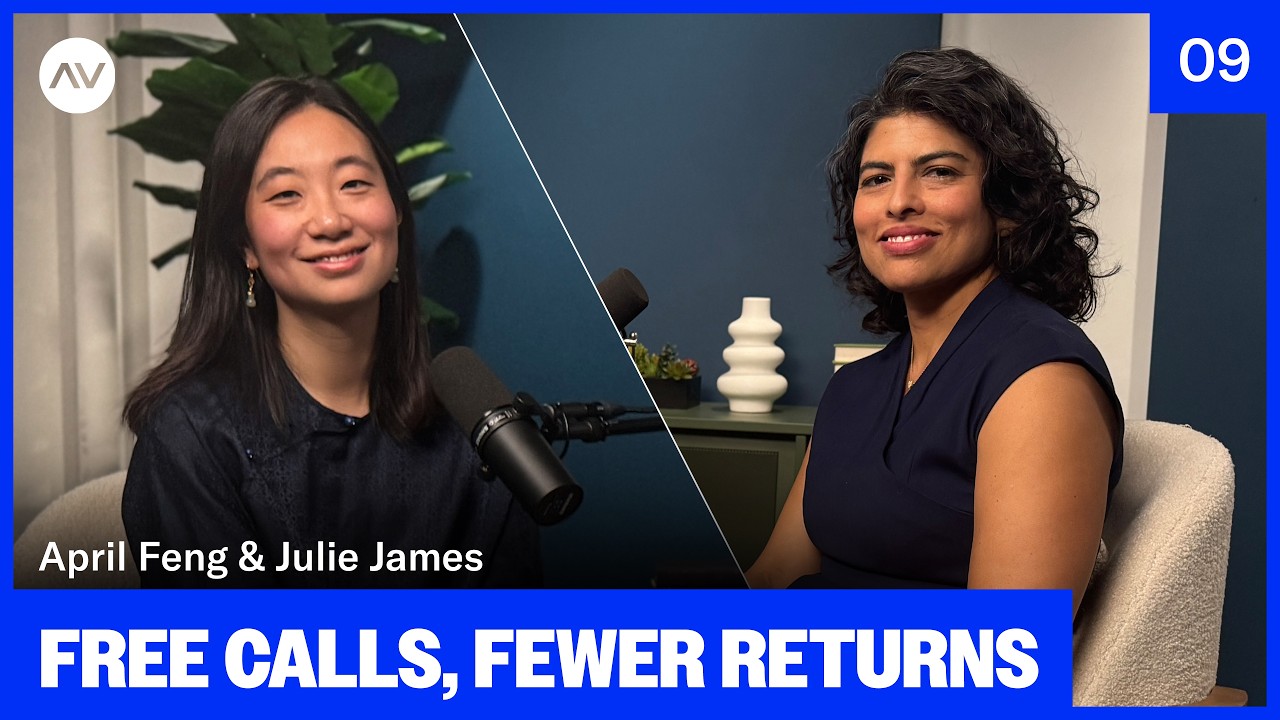
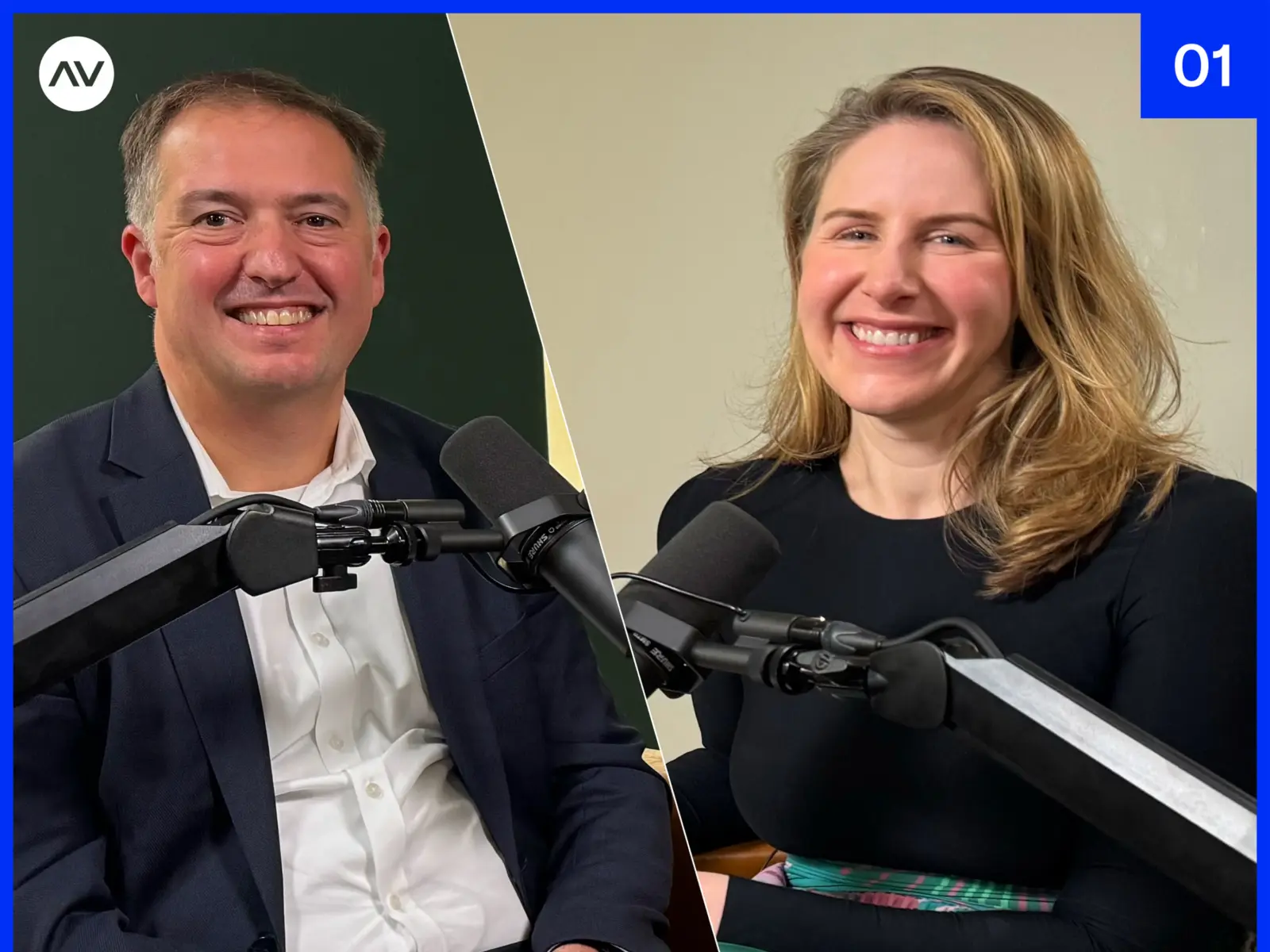
[00:00:00] Julie James: Making a phone call from prison in America can be costly. Video calls, messaging, staying in touch with your lawyer, accessing education, all of it has historically come with a price tag that many incarcerated people and their families simply can’t afford. In this episode, I talk to April Feng. She’s the CEO of Ameelio, a tech nonprofit that provides free communication services to incarcerated people across the country.
She believes that keeping people connected to their families while they’re inside is one of the most effective tools we have for reducing re-offending. We talk about how Ameelio works, what incarcerated people in correctional facilities make of it, and whether better communication inside prisons could ultimately mean fewer people going back.
I’m Julie James and this is Field Notes.
Hi, April. Thank you so much for joining us.
[00:01:10] April Feng: I’m so happy to be here.
[00:01:12] Julie James: First up, tell us what is the issue with prison communications. Why is it so important?
[00:01:17] April Feng: Yeah, so there are so many people incarcerated in the United States. Two million Americans are incarcerated in prisons, jails, juvenile facilities across the country, and they’re spending so much money connecting with their loved ones.
And the cost burden’s on the incarcerated individuals as well as their family and loved ones. When you have to spend up to $30 for a 30-minute video call–
[00:01:40] Julie James: Wow, $30?
[00:01:41] April Feng: Yes. It’s really expensive. I mean, that’s what I pay Verizon every single month for unlimited data, unlimited calls. If you have to spend that much money talking with your loved ones, a lot of times you just don’t end up talking to them.
And so that loss of connection is what makes communication and then also [00:02:00] rehabilitation after they get out really, really, really difficult.
[00:02:05] Julie James: Okay, so tell me more about how does this impact people in prison on the day to day? What does it look like in the sort of current state of affairs?
[00:02:15] April Feng: Yeah, so… The vast majority of people just don’t talk with their loved ones anymore, right? And then whenever you do have a call, you’re constantly reminded that that call is having a burden basically on someone that you really love. And so a lot of them end up not communicating with their families, loved ones, not communicating with their educators or legal counsel sometimes even and the resource providers on the outside.
And so a lot of programs that are currently inside end up not working as well, right? Because a lot of the reentry programs depend on constant checkpoints between the incarcerated people and their resource providers or families. And so you have all of these [00:03:00] programs with millions and sometimes billions of dollars pouring into these systems, but because of that lack of communication, most of them are just ineffective.
And so that lack of communication, that kind of expensive way of staying connected is contributing to a lot of, I would say, waste in our current criminal justice system.
[00:03:23] Julie James: Okay, so we’re spending a lot of money on trying to prepare people to go home and to keep those connections alive, but then we’re making it hard for that to actually work.
[00:03:33] April Feng: Happen. Exactly, yeah.
[00:03:35] Julie James: Well, tell me about Ameelio. What’s the story behind it, and how did it come about?
[00:03:40] April Feng: Yeah. So Ameelio is a nonprofit technology organization, and then we build, deploy communication and education technologies for incarcerated individuals and their families. We were started back in 2020 when our co-founders met in Yale University.
They had friends incarcerated when they were younger and they come together and say, “Hey, it’s COVID. Everybody is depending on Zoom and Google Meet and all of these video conferencing to stay connected, and why are we still paying so much money to stay connected with our loved ones inside?”
And so that just did not sit right with them. When technology has already progressed to a point where Zoom licenses are so affordable, Google Meet, I think it’s essentially free, why are we still paying this much, right? And so they came together and start developing Ameelio. The idea being, right, with technology at this stage, there are definitely something that we can do at a low cost and at no cost really to the end users.
They started developing Ameelio, and before we knew it, we were deploying in Iowa Department of Corrections, all the state prisons in Iowa, we actually roll out one at a time. And [00:05:00] then fast-forward, now we’re in 15 different states already.
[00:05:03] Julie James: Okay, so when do you come into this story, and what drew you to the organization?
[00:05:07] April Feng: Yeah, that’s a great question. So I think unlike a lot of CEOs who kinda started the company from the get-go, I came across Ameelio as a coincidence actually. So I’m fortunate to not have friends or family members incarcerated. When I was in University of Chicago, that was the job that I had right before Ameelio, I was working at a research lab looking at impact evaluations for social interventions.
And so we were looking at criminal justice interventions, we’re also looking at evaluating how social media contributed to loneliness and all of those really interesting problems. But the co-founders of Ameelio at that point approached our lab and said, “We know we’re still very early on, but we want you guys to do an impact evaluation.”
[00:05:55] Julie James: We love that.
[00:05:56] April Feng: Hopefully…
[00:05:56] Julie James: we love that–
[00:05:57] April Feng: I know…
[00:05:57] Julie James: at Arnold Ventures.
[00:05:58] April Feng: We actually had to turn them away at that moment… because the organization was so young, there was not a lot of data available just yet, but we did refer them to other parts of University of Chicago and said, “Hey, you can actually start building rigorous evidence if you start early.”
But since that moment, it was very impressive to me, I think, the way that our co-founders explained the problem to me, and I think that for me, that communication part, that connection with family, is something that I felt every single day. I’m an immigrant, and so whenever I communicate with my family, it’s always virtual calls, right?
And so it’s impossible for me to imagine if I have to spend that much money communicating with my loved ones, and to know that this is a problem that impacts so many people across the country, and yet I had no idea that it’s happening. It’s just shocking to me. And so I think fast-forward, when I was ready to leave academia, I happened to come across the chief of staff posting, and so I first joined Ameelio as chief of staff to the CEO and co-founder back in 2022, and then kind of worked my way up from chief of staff to COO to CEO, and it’s been such a rewarding journey so far.
[00:07:15] Julie James: So what have you learned about what Ameelio does best in this space?
[00:07:20] April Feng: Oh, there are so many different things. So one is, I should mention that I also have a background in government technology. So before University of Chicago, I mostly worked for state governments in information technology and innovation departments.
[00:07:34] Julie James: That’s a helpful background.
[00:07:35] April Feng: Yeah. And so I like remember when we were… I was working in City of South Bend, when Pete Buttigieg was second term mayor, and I remember we were doing a lot of these kind of tech modernization and upgrading technology, digital infrastructure, all of those projects, and it’s very difficult for a industry or, like, a city small enough to not have a lot of providers around, right?
And so for us, I think that the difficult part wasn’t necessarily that we don’t want better technology. It’s just that there was no alternative, and I think that in itself is something that Emilio does very well.
[00:08:18] Julie James: So meaning you didn’t have providers in the community, so you had to rely on Tele–
[00:08:24] April Feng: Exactly
[00:08:25] Julie James: film-like?
[00:08:26] April Feng: Yeah, exactly. Okay. So a lot of times, right, like for example, we were trying to introduce more affordable housing into the community back in South Bend, but there is not a lot of developers in the region. And so whenever we as the government agency are publishing, like, a request for proposal… you in the end just don’t have qualified providers or qualified developers responding to it.
[00:08:49] Julie James: So market failure, you don’t have the supply–
[00:08:51] April Feng: So market failure, exactly. Like, it’s very similar to the correctional technology industry where there are essentially a handful of companies [00:09:00] that just monopolize the space, right? And so even if you as the government want to do something, they might not wanna do it, and you can only go as far as you have providers to do the, the work, right?
[00:09:13] Julie James: Okay, so two sides of the equation. You have the governments who are saying, “We want a service that looks like this,” and then you have the providers who say like, “Yeah, we might not respond to that RFP or be willing to do that service.”
[00:09:26] April Feng: Exactly. Exactly.
[00:09:27] Julie James: Okay. So, tell me more about what Ameelio offers that kind of disrupts this space.
What are the services that these correctional facilities are starting to rely on?
[00:09:39] April Feng: Taking a quick step back, right? Like, what kind of services are in correctional space? There is usually communication, so think video call, voice call, e‑messaging, and then there is also education, so learning management system, virtual classroom experience.
And then one step back is the devices, right? So the softwares need to be functioning on hardware, so think about corrections-grade tablets, Chromebooks, computers that need to have these software run on. And then the last layer is the network, right? So internet availability inside, both for incarcerated individuals and correctional officers.
So right now, all of these layers are generally provided by one provider, so that’s the kind of the bundling of contracts nature of the whole thing, right? It’s like you have everything happening inside provided by one company, and so you can’t change any single one of them without- overhauling the whole thing.
Ameelio come into the place, we first started thinking we’re just gonna provide software. So let’s just do video call really, really well. Very quickly, we realized that that’s not enough, because, the incumbents do not let us use their hardware and do not let us use their network, and the government agency is essentially held hostage there and so they can’t do anything about it.
And so now Ameelio has developed to have software for communication and education, as well as devices. And so we are working on the hardware and the software part of it, and we’re working with a lot of partners to essentially work on the network side, because we realize that network inside currently, especially for incarcerated individuals, are equally monopolized, right?
And so you can’t have other providers, education or legal providers, you can’t have their content on the network. So we are advocating for a vendor neutral network so that anybody who is providing service on the outside can have their service on the inside as well.
[00:11:51] Julie James: Okay, so vendor neutral. Help me understand in the… outside of prison’s world–
[00:11:56] April Feng: Yeah.
[00:11:56] Julie James: That’s like having being able to take your phone with you, or what… what’s the… what’s the analog on the outside?
[00:12:04] April Feng: Yeah, so that’s a great question. So think Verizon. I don’t know what your phone network is, but mine is Verizon. Verizon wouldn’t restrict me from using Zoom on Verizon.
Right? Verizon will say, “Yeah, whatever, whatever phone or computer you have, you can hop on the Verizon network, and you can use Zoom, you can use Google Meet.” That is currently not the case inside, right? It’s as if Zoom is selling Zoom licenses to you, but at the same time saying you have to buy a Zoom computer, and you have to buy Zoom network.
And if you don’t–
[00:12:39] Julie James: I remember… So this is actually reminding me of, there was a Netscape lawsuit against Microsoft, I think.
[00:12:46] April Feng: Yeah.
[00:12:46] Julie James: Because they weren’t allowed to use the browser on the… Okay, that’s dating me. But, okay. So I think I get that. Tell me about how people who are incarcerated actually use the systems and the services.
[00:13:00] April Feng: Yeah, so for Ameelio, we have two main user groups, so people who are incarcerated, their family members on the outside, and then correctional facility staff as well. So for the incarcerated users… it’s very similar to what they’re currently using, the actual experience, except the technology and the products are much better.
But essentially they will have tablets on the inside, so these can be lined around in their cell blocks or in the common area of a facility. And then they go to the tablets. They can dial out to their loved ones. They can also schedule a video call with their loved ones, and then let’s say they know they’re gonna have recess tomorrow, and then they will have time, they’re not in class.
They can always schedule a video call, like you and I, right? Schedule a Zoom call with each other tomorrow at 3:00, and then during recess, they can go to the tablet and they will have a video call there with families. It’s very, very similar to how video conferencing happens on the outside.
For the families, they can access Ameelio through an app that they can download on their phone, or they can use any computers. Either it’s in the public library or their own computer, and then access Ameelio on a web browser. We try to make sure is… it is accessible as possible because we know that a lot of families and loved ones on the outside, they might not have a computer.
They might not have a smartphone, and so that is why, like, from the beginning, our engineers were very focused on making sure people can access Ameelio anywhere that they can… that they want to. That’s for incarcerated people and the families, and for correctional staff, they do have a dashboard where they can see how many calls are happening, and this is something we really pride ourselves on.
We are very transparent about how people rate the call quality because I know that’s something that our competitors or the for-profit companies really intentionally try to hide, right? It’s like call qualities are so low that if they let people know how many times a call drops, there will be riots.
And so we are very, very transparent about how are the calls? Are the qualities of the calls good? And so after every single call, we ask the incarcerated people and their families to rate the call. And then on the staff dashboard, you can actually see really a chart of breakdowns of ratings and reasons why the call didn’t go well.
Yeah, so that’s the staff dashboard.
[00:15:42] Julie James: Well, and that strikes me as a big difference from the free world. It’s that corrections facilities likely have very valid security concerns.
[00:15:52] April Feng: That’s right. Yeah.
[00:15:53] Julie James: And when I remember talking with one corrections leader about the services that you all provide, and them saying like, “This is actually makes it easier for us to do our jobs because we can see who is being contacted.”
Now there’s privacy concerns as well. But tell us more about the value proposition for the corrections facilities and the services you provide.
[00:16:16] April Feng: Yeah. So the value proposition really it’s twofold. One is when technology works inside. Currently, it’s a rarity that technology works, right? And so you would have folks who have been trying to connect with their families.
I mean, imagine if your Zoom call with your mom, like the call drops every single five minutes. You would be pretty angry. You’d be pretty annoyed. I would be. And so like when that happens inside, it’s the same thing, right? People get very angry. And so that’s the first value proposition to these correctional facilities is that Ameelio actually works.
Like our call, if you have an hour video call, it doesn’t drop. It gives you an hour of family connection time, and that is really incredible for a lot of these incarcerated folks, their families, and for the staff because–
[00:17:11] Julie James: Yeah, so what you’re saying is like the environment is influenced by how people are feeling and how they’re connecting, whether they’re able to connect with their families.
You might have a more, calm and maybe even less violence. Is that what I’m understanding?
[00:17:25] April Feng: Exactly, and that is back to the UChicago study, like that actually was the result of a ongoing study between University of Chicago, Berkeley, and then Vanderbilt on Ameelio. Although we didn’t take it out, we did refer it to our teams and there is a quasi-experimental study, showcasing Ameelio’s intervention and the impact of that on Iowa state prisons.
And that is one of the key findings is that when people are able to connect with their families consistently, in-prison misconduct dropped by 30% and especially violent misconduct dropped by up to, I think, 55%. And that is huge for like a causal study in criminal justice. And so yeah, that is one of the key value propositions for staff, right?
It’s like you are having a much less violent and much safer environment for your staff and for the incarcerated people. And generally, when that’s better, rehabilitation programs and all kinds of resources and programs can actually happen. Things can’t really work that well if there are riots or if there is, like, violence all the time.
[00:18:40] Julie James: Well, and who wants to come to that work environment? That makes it much harder to run a safe institution. Tell me about what do incarcerated people make of your product? What stories have you told that make you believe those numbers?
[00:18:53] April Feng: There are so many. We’ve had… Well, one particular story came to mind.
So we had a grandmother who was incarcerated in Iowa State Correctional Facility for Women, who had cancer. she’s a lifer, and so she could not really go out and see her families. And her grandchildren are very young, and so they couldn’t really come inside to do the in-person visit either just yet.
And so she really is at the end of her life, wanting to meet her grandchildren for the first time, and Ameelio was able to facilitate that video visit. This was one of the first video visits that we were successfully rolling out in Iowa. And seeing the grandmother kind of say hello and also say goodbye at the same time to her grandchildren on a video screen was a lot, I think, for everybody who was witnessing that moment.
But what was even more, for me, moving was after the call, she said to us “Thank you so much. I thought that I would never see my grandchildren again, and at this point, I know that they’re well, and I’m happy here.” So moments like that are, numbers aside, right, on a qualitative scale. Like, I see how connection creates hope and how hope can help people just, one, feel better, and two, I think feel more like themselves, and then return them to the valuable moments in their lives, the family, the children, the environment outside that they left behind for.
So I do think that a lot of those stories are incredible, and that I still receive those stories all the time. I still answer customer support emails, and it probably drives my team crazy. But yeah, I see customers writing in and say, “Hey, thank you so much for your service. I actually saw my dog for the first time since I got incarcerated, and that was really, really valuable.”
Or, like, juveniles, right? So kids who got locked up saying that, “Hey, my parents showed me their… like, our house, and then I realized that they left my room exactly the way that I left it, making me feel like I still have a place to go back to, and I wanna work hard and get out of here.” And so I think all of those moments were, yeah, incredible for us.
But the best customer support emails we can get are those who write in to say, “Hey, I got out, and I never have to use Ameelio again.” Those are great. Those are the best.
[00:21:42] Julie James: Wow, I mean, the picture is worth a thousand words there. I think it’s so hard to communicate some of what you’re saying, that someone has a place that, they’re gonna have a safe place to land, and then to be able to actually see it, that’s worth a lot.
[00:22:00] Also, the, that… they’re never gonna have to use it again.
[00:22:03] April Feng: Kudos to you, you know?
[00:22:05] Julie James: Yeah, really. Go for it.
[00:22:06] April Feng: Yeah.
[00:22:06] Julie James: Well, I’m interested in how you got that first state, Iowa, to take the leap with you. Because I will admit, so when I first met with Zoe and Gabriel, my question was why would corrections, this very closed system, with their go-to providers, what is in it for them to open up to a new provider?
So how did you get your foot in the door in Iowa?
[00:22:35] April Feng: All it took was one person who was willing to change. So in Iowa Department of Corrections, that person is called Jason Holder, he was the director of IT in Iowa. He was at the beginning of pandemic, trying to use Google Meet to connect folks via video, right?
Because in-person visits were all shut down during COVID, and so Iowa Department of Corrections were really looking for innovative solutions where people can meet virtually. And we talked to Jason, and we said, “Look, we’re a very small, young nonprofit. We have about five people. We might have a product.”
Sorry, “We might not have a product just yet, but we believe that we can fill your need here.” And so Jason took a leap of faith, really, in us, and said, “You know, Google Meet is really insecure, and again, it’s not really fit for correctional environment, and these young people seem to know what they’re talking about.”
And so he said “I’ll give you a chance. Try to deploy this in the Iowa Correctional Institution for Women, and then if it’s successful, we can roll it out somewhere else.” So I wasn’t at Ameelio at this point, but I’ve heard stories many times about that period of time, where essentially our team just pack up their bags and went and lived in an AirBnB in Des Moines for about three, three months, and deployed first in [00:24:00] ICIW.
And it was very successful that it got rolled out to the other eight facilities, in the following six months, I think. Yeah.
[00:24:09] Julie James: Yeah. What did they like about how it deployed there?
[00:24:13] April Feng: I think first thing was we were very, very… well, mission aligned, I would say. So Iowa DOC, the director there, Beth, has been absolutely amazing, and she is really, really big on making sure that people are connected, and she believes, right, connection leads to rehabilitation.
And so I think the mission alignedness in a sense was what overcome some of that fear for new technology. But two, there are concrete conditions in Iowa that led to that, right? So one is Jason, again, our lovely IT director, has already extended the state-owned network all the way to support incarcerated individuals.
So the infrastructure is there, right? Unlike a lot of other states that we’re currently deployed in, where we have to really think about the infrastructure, Jason kind of got it done. And so we were able to roll it out pretty fast. And then the third thing is that one of the best things, right, about a small team who is mission-driven and again, willing to listen to incarcerated folks, what they need, the staff, what they need, is that we, in the end, really developed our first iteration of the product with Iowa, with Iowa DOC, and with Jason and Beth and all of these folks who spent so many hours honestly helping us, thinking about what is a product that really works for them.
And so I think that that level of dedication was something that they have never seen from other providers. And so that was a tipping point for us, for sure.
[00:25:54] Julie James: Yeah. Well, and that sounds like the way, product development, IT, any of this stuff should be developed, is that kind of iterative partnership kind of way, which is kind of the opposite of how I understand most government IT works.
[00:26:10] April Feng: Exactly. I mean, I used to work in government IT. I can say that iterative product development is rare. It’s also hard in the sense that obviously government services touches people who are… a lot of times don’t have alternatives, right? And so it is important to get it right the first time. But on the other hand, you are foregoing so many valuable opportunity to listen to your communities if you can just do the iteration and do the improvement little by little.
I would say in corrections, we feel the responsibility, right? If if I have Verizon, if Verizon goes out, I can switch to AT&T, and I can probably hop on a public Wi-Fi. But if Ameelio shuts down, people who are using our services inside will not have a second choice. And so for us, it is important to get it right the first time, and then I think for government agencies, they are really concerned, right?
Like, they don’t want to introduce a provider who can’t help, right, their incarcerated population. And so I think I’m perpetually grateful, honestly, for Iowa DOC for taking that first leap of faith in us, and to be honest, every single correctional facility who has used Ameelio.
It is a huge change for a lot of them.
[00:27:30] Julie James: Yeah, the stakes are really high, but also, we know from across sectors at this point that trying small scale things, iterating, failing fast is kind of how you get the farthest, and we’re not built that way. But I’m… It’s so great to hear a story that tells a different–
[00:27:51] April Feng: Yeah
[00:27:51] Julie James: arc. Yeah.
[00:27:52] April Feng: And like, I’ll just say for us it is really interesting in this space, right, like, I think contrary to a lot of other kinda government service space where people are trying to… becoming more and more like Silicon Valley startups and for-profit and that kind of thing, for us in this space, the industry is so calcified because the two providers really monopolize the space.
And I think the fact that Ameelio is a nonprofit and we do have a team of essentially engineers and nerds who are ready to transform the system without profit is in itself a pretty big challenge to how we think about government services being done. And I would say that, like in my time in government, the idea is always that nonprofits are bloated, they’re kind of big and move slow.
And I think that Ameelio really challenges that conception and say, like, in a lot of places, and this goes a little bit to economics, but I think that in a lot of places where you have… where the consumers have a choice, it is good to have a lot of competition, and what led to competition is the demand from the consumers.
In this particular case, the consumers don’t have a choice. They’re not even consumers, right? They’re end users. They basically have whatever that is cobbled together thrown on them, and in this space, if you allow profit into it, it will almost inevitably become profiteering because it’s so convenient.
And so for us, yeah, it’s incredibly important for us to stay nonprofit so that we’re governed not by how much money we can make, but by the impact. And for Arnold Venture, for example, for all of our funders, it is important that we’re held accountable to will we end up producing impact-wise.
So–
[00:29:52] Julie James: Well, so speaking of impact, what do we know so far from the research? You talked about some interim findings around discipline in prison and incidents, violence, violent incidents. Do we know anything yet about what happens when people return home?
[00:30:09] April Feng: We are entering the second stage of the research where we’re seeing some of the causal evidence on that, but anecdotally, we have seen, right, where, again, there are stories of people who are connected with their loved ones come out much better.
For one, have a place to go to, but from the larger research literature, we are also seeing a lot of good evidence on essentially sustained communication with families led to better recidivism, outcomes where people really don’t return to facilities. We are looking at two more kinda categories of outcomes.
One is immediate re-entry outcomes, so if people are connected, right, inside with resources, with families, can they find a job faster when they come out? Can they enroll in education courses faster? [00:31:00] And then three-year recidivism rate.
[00:31:03] Julie James: Yeah. Can you tell me about a re-entry story? You talk about, okay, are people connected when they come out?
That’s something that you’re seeing. What’s an example?
[00:31:13] April Feng: We are deployed in Massachusetts, across different counties in Massachusetts, and we have tablets and education resources, and then connection to career counselors. So one of the ladies in Worcester County, Massachusetts, utilized Ameelio to build a resume when she was inside, scheduled the interview with a, I think it’s a HR desk receptionist job, and then had the interview the first day she came out, and got the job within a week.
And she specifically wrote to us and said, “You know, I’ve actually never built a resume in my entire life, and because of the digital literacy and kind of education courses that were on the tablet, and getting me used to really how to do a Zoom call, like how to do a video call, was really critical for me to ace that interview, and then getting the job.”
I think that that’s the other thing that we see. Connection, communication, and education are very important, but there is also this factor which we did not anticipate, honestly, that being able to be near modern technology, like a tablet that you and I would use, and being able to know how to, again, do a virtual interview, is as important as it is to connect and the communication itself.
‘Cause in a lot of these facilities, you have outdated payphones on the wall, like literally payphones. So people don’t really know how to type on a keyboard if you’ve been in, inside for so long.
[00:32:55] Julie James: Yeah, we take a lot of that for granted. I mean, we still, right, we’ll be on mute on Zoom calls.
[00:33:00] April Feng: Oh, yeah.
[00:33:01] Julie James: And we joke about that, but really there are folks who will never have been exposed to that technology, because it’s pretty recent.
[00:33:08] April Feng: Like, we have users who came out and did not know how to type, did not know how to use Google Map. I had one… one of the users who came out of Massachusetts after 27 years and was calling me and asking me, “Where can I find a payphone in downtown Boston?” And I said, “You know, I have never, never seen a payphone in downtown Boston for years.”
And so I actually went to the re-entry center and I said, “You know, look, here’s Google Map. Here’s a payphone on Washington Street. Just follow the blue dots.” He’s like, “What do you mean by following the blue dots?” And I’m like, “Whoa.” This dude has never used Google Map before, does not know how to navigate himself to a place that he wants to go to.
How is he ever gonna be successful, I don’t know getting a job or getting to first day of work? So that is what I think that we’re also seeing impact-wise, right? It just… having actually technology that works, technology that you and I use every day on the outside, help people get used to it faster.
And so when they come out, they’re not wondering why people are talking to themselves on wireless earphones.
[00:34:22] Julie James: There are some detractors. There are some people who think that prison should be punitive, and that separation from family and from society is part of the punishment. So perhaps people in prison shouldn’t have regular communication that Ameelio provides.
What would you say to that?
[00:34:41] April Feng: I would say… yes, punishment is a part of the criminal justice system. However, what we’ve consistently heard from the victims actually is that they want the perpetrators, if they can’t have them gone forever, they wanna have them changed. Because 98% of all state prisoners do return home one day, and they’re gonna be our neighbors, they’re gonna be in our communities.
It’s better to have them as contributing members, right, of our communities. And so because of that, let’s focus on what is actually effective in terms of spending time inside. It is being able to get a job when they come out. It is being able to access education resources, re-entry resources, medical resources, so that they can get better inside.
And then when they come out, they will become contributing member of society because they’re transformed. And so yeah, I would say to that, right, like sure, you can think that people deserve to be punished, but nobody deserves to be isolated. Partially because it’s just, it’s not human nature, right, that would want to be alone.
And more importantly, from a… even a utilitarian perspective, it’s not effective to making that person better.
[00:36:05] Julie James: Yeah. So I was gonna say you can have the value of connection, human connection is an inherent human right.
[00:36:14] April Feng: Yeah.
[00:36:15] Julie James: or you could just say like, we care about safety. If we care about safety, the, you know…
And yet there are still gonna be folks out there who say like, no, I… the idea of just deserts, that is a value that they hold, and that people are gonna differ on that.
[00:36:33] April Feng: Yeah.
[00:36:33] Julie James: And you should think about if you’re prioritizing safety, that we should be serious about measuring that.
[00:36:41] April Feng: Yes, absolutely. And I think, so the other thing that we do see, right, is narrative that works, right, on these cases is where we actually emphasize the correctional staff safety. Well, if these people are inside a facility, they are coexisting, right, with the correctional staff, who are facing a pretty hostile working environment every single day.
And I think they’re quite underappreciated, ’cause we generally think about law enforcement and we don’t necessarily think about those who are working in prisons and jails, but they have, I think twice as much the workplace violence as any law enforcement officers. And they have, you know, higher rate of PTSD sometimes than veterans.
And so I think that when you think about, okay, you can put people away, but what are these places? What do they look like? And how are they impacting people who work there, who will return every single day to their families and communities?
[00:37:46] Julie James: Yes, that is a problem that we’re really concerned about as well.
The corrections staffing crisis being as it is, some facilities understaffed at 40 or 50%. It begs the larger question of, is this a workplace that people can really, return to, can be healthy in, and do what they came to do, which I think is really help people change and make communities safer.
I’d love to zoom out and hear about… I understand you have a policy lab, and so you are thinking about these bigger questions, bigger narratives, bigger, policy questions. What is the policy lab prioritizing? What are you all looking at and trying to change?
[00:38:31] April Feng: We’re looking at changing one state at a time.
So there are already six states in the country that passed no-cost call legislation, right? So essentially saying that any communication between an incarcerated person and their families should be at no cost to either party.
[00:38:48] Julie James: Okay. No-cost call legislation. Yeah. Okay.
[00:38:50] April Feng: Yeah. And then there are counties actually already taking up this charge as well.
I think there are eight or seven or eight counties across the country that just passed similar legislation on their own, right? I think for us, Policy Lab’s work looks at how do we amplify what’s happening in those states? How do we actually communicate the impact that we’re seeing with Ameelio’s work?
So that’s one, right? Is awareness, communication, and making people aware that this is even a problem, ’cause I remember when I first got into Ameelio, again, I work in government technology, and it was our job to wire up and provide good technology in homeless shelters, halfway housing, all of those.
And I personally never once thought about how are jails and prisons doing. And so I think that it’s a problem that is niche, but needs to be heard by a lot more people. And so that is one part. And then the second part is honestly trying to help different states that have this idea, they want to do it, do it.
Because… we definitely should talk about this, but essentially it goes from an idea from legislation to implementation takes a long time, and a lot of times people don’t know how to do it, especially such a transformative change. And so we work closely with the legislators, with people who are going to implement such change, to understand what is a replicable playbook, and then we help them step by step.
A lot of times there are so many unknown unknowns, and people look to providers, right, people who have already done this work, to say, “What should we be thinking about?” So we answer a lot of those questions as well.
[00:40:42] Julie James: Yeah, we think about that a lot as well. Prisons have very valid security concerns, right? I mean, people can use technology for a lot of reasons.
Yes, connecting with their family, but also organizing crime. There are people outside of prison who might be part of an organization or it could be person on person violence. So how do you think about the risk that people can use this technology for ill?
[00:41:08] April Feng: Yeah, that’s a super important question, and it’s one that we got asked all the time, right?
Whenever we’re deploying in a prison, jail, or juvenile facility, is what if people are using this technology for bad things? What if they contact their victims, right? What if they threaten their communities? And so for us, we are building for a correctional space, and so monitoring and recording, keyword flagging, all of those investigative features are really, really present in our product, and it’s something that we hold very, very seriously.
Because if you have an instance, generally there will be a lockdown, and then there is no more communication. And so we wanted to make sure the correctional facility and staff have the ability to customize what those keyword look like, because sometimes they’re not the same facility to facility. We know sometimes people say mattress to refer to blocks of cocaine.
And so we wanted to make sure that when it comes to investigation and catching people doing wrong things, right, they will be caught immediately and 100%, right? That’s kind of the best way to deter somebody from making a bad choice. And so yeah, technology enables that, and that’s one of our most important things.
But at our core, we do want to promote communication. We never want this kind of thing to stop or decrease the amount of communication people can have with their loved ones. And so we follow very strictly the principle of supervision instead of surveillance. And we provide the necessary tools for correctional staff to supervise communication, but not like Big Brother surveilling folks, right, having those calls.
[00:42:55] Julie James: Where do you see Ameelio in the future, in the next few years?
[00:42:59] April Feng: At our core, we wanna provide more services to more people. I think that, like every single nonprofit, our end goal is to work ourselves out of a job. And so in order to reach that, we have set pretty ambitious goals for the next five years.
Specifically, we wanna reach a cumulative of one million users by the end of 2028. So wanna reach–
[00:43:22] Julie James: Two years. Two and a half years. Okay.
[00:43:24] April Feng: Yeah. So we are, at this point, in 15 states, 63 facilities, and serving about 187,000 people. By the end of 2028, we want to serve 300,000 incarcerated people. And then generally what we see on our platform is that one incarcerated person usually have three visitors on the outside.
[00:43:46] Julie James: So when you say, work yourself out of a job what does that mean the world looks like at the end of that?
[00:43:53] April Feng: Well, ideally, corrections are centered around rehabilitation and all the facility have adequate digital infrastructure and video calls and voice calls, communication, right, between families and incarcerated people are at no cost.
And ideally, that would lead to fewer and people… fewer and fewer people incarcerated, and in the end, right, like, we are seeing correctional facilities as places where people can transform. And I think that for us, working ourselves out of a job actually means that there are more competition coming into this space.
We are currently still the only nonprofit in this space, and our goal is to have more more nonprofits, more organizations who are focusing on this work. So we’re actually competing, all of us, right? On how can we best serve folks who are incarcerated. And so yeah, in that way, we wanna be competed fiercely, right, in this space, and then be able to provide products that are even better and, in the end, saves a lot of money for government agencies and restore, really, humanity for incarcerated people and their families, and they don’t return.
[00:45:16] Julie James: April, thank you. And that’s all we have time for. If people wanna find out more about Ameelio and what… the work that you’re up to, how can they find out more?
[00:45:26] April Feng: You can go to ameelio.org, so A‑M-E-E-L-I‑O.org. We update our website pretty frequently, so definitely there’s a lot of resources on there, and then also feel free to email our team at team@ameelio.org.
I mean, we, as I said, answer every single email, and I personally answer customer support emails as well, so.
[00:45:47] Julie James: As we’ve heard today. Thank you so much. That is all from us. Thank you for listening or watching. Please do subscribe for more conversations, and we’ll be back soon. [00:46:00] Goodbye.