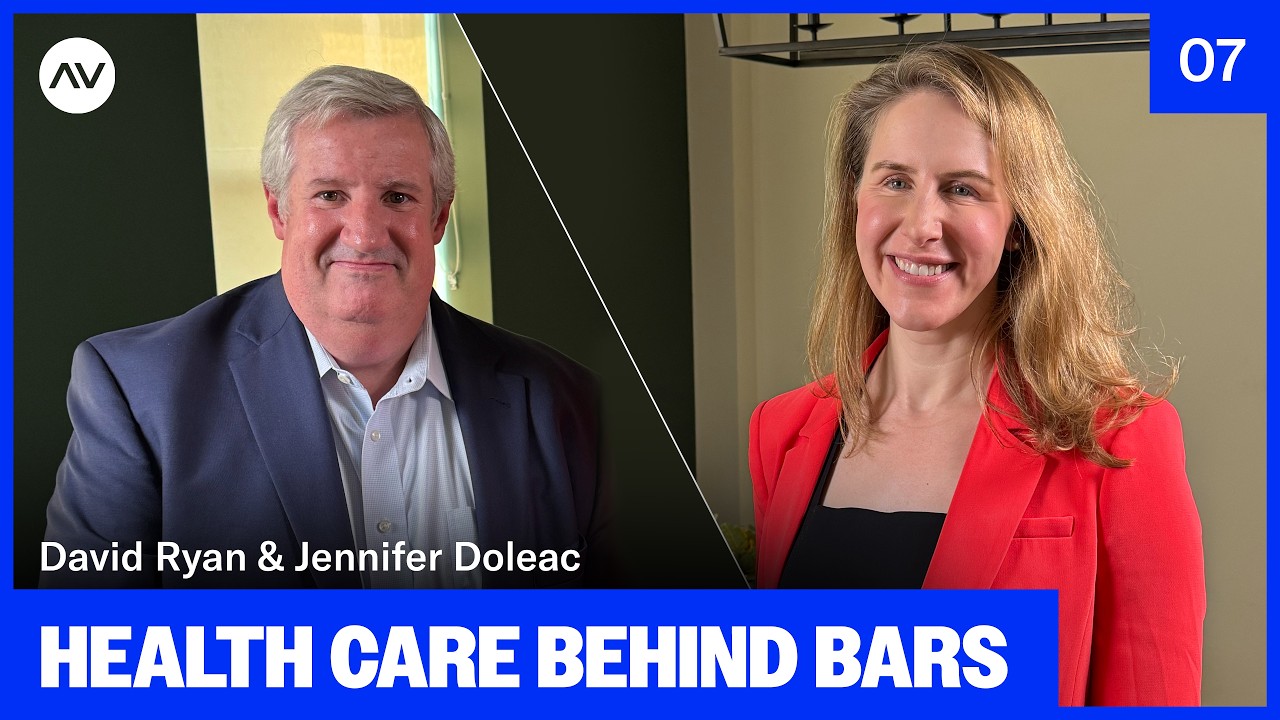
[00:00:00] Julie James: Welcome to Field Notes, the podcast looking at policy and innovation in public safety. The relationship between healthcare access and public safety is an area of growing interest for researchers and policymakers. In particular, the question of what happens to people’s healthcare when they enter and leave the justice system.
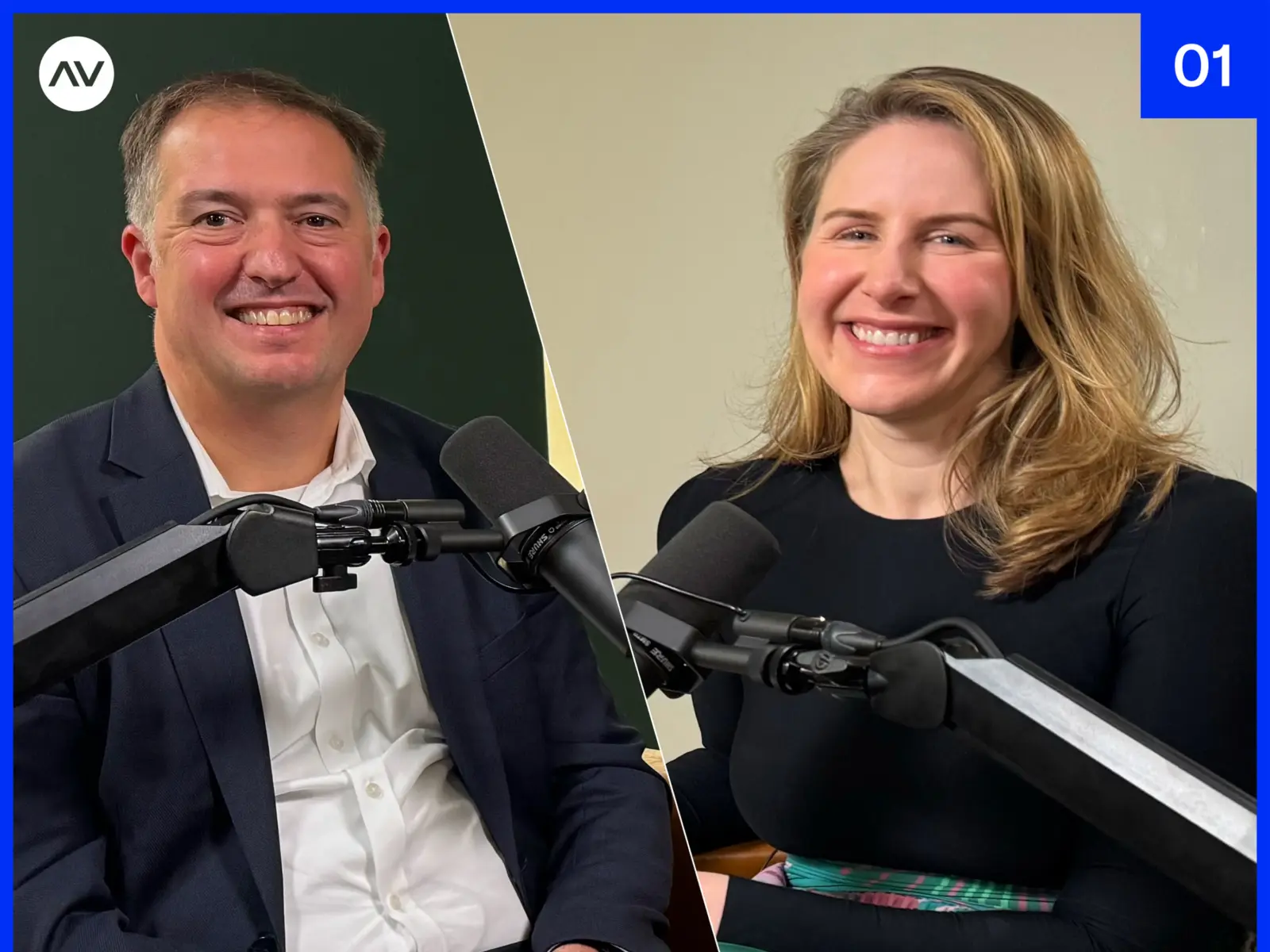
In this episode, Jennifer Doleac talks to David Ryan from the Health and Reentry Project, or HARP, about how healthcare can improve public safety. They cover the current challenges, the policy landscape around Medicaid and incarceration, and what HARP is doing about it. This is Field Notes.
[00:00:55] Jennifer Doleac: So David, let’s jump right in. Can you give me a real-life example where you’ve seen [00:01:00] Medicaid intervention make a difference to an individual who’s left prison?
[00:01:03] David Ryan: Certainly. Thank you for the question. So, prior to joining HARP, I spent 10 years working in a local jail where we actually had a medication-assisted treatment program offering all three forms of MAT in addition to counseling.
And what we were doing before the Medicaid waivers were put in place is that we were making sure that we were enrolling folks in Medicaid prior to their departure so that we could actually make appointments within the community so that they could have continuity of care as they were leaving.
‘Cause we would begin administration of MAT behind the wall, but we would wanna make sure that they could also receive that within the community, so we would make those appointments as well as provide case management that would follow folks into the community and help assist them with the follow-up care that they would need and connecting to additional services within the community.
And one positive piece that we saw out of that, just [00:02:00] looking one year, we saw that the recidivism rate for those individuals was hovering around 10%, which if you looked at the overall facility, I think it was around 25%. So where, yeah, where you could actually have, like, evidence-based programming and treatment and then a connection to care within the community, but also bolstered by Medicaid coverage, we were starting to see some positive signs.
[00:02:23] Jennifer Doleac: All of that effort sounds really unusual. It’s obviously a lot of work for a jail to be doing this on top of, you know, just keeping people safe while they’re incarcerated. That’s the day job. What prompted you all to want to do this?
[00:02:37] David Ryan: I think when we first started folks would grab us… and this, I think we came in, and it was like 2011, 2012, and a lot of folks were talking about inmate healthcare costs.
[00:02:47] Jennifer Doleac: Mm-hmm.
[00:02:47] David Ryan: We’re like, “Yep, no, that’s a valid point. We should take a look at the cost” But we also wanted to look at the data to understand, like, how sick is this population. Yeah. And I will say, like, going back 10 years, you know, maybe we didn’t [00:03:00] have all the data we wanted at that point, but when we started to gather it…
And I’m gonna read just a few stats that I had jotted down. And again, this was back when I was at the jail, and it’s been a minute since I’ve been there, but I think that these numbers still track, is about 48% were diagnosed with an SUD, around 56% with a diagnosed mental illness. And the one piece that I don’t think we talk enough about is chronic health, so that was hovering around 60 to 70% folks with chronic health, and that could be diabetes or that could be hypertension and the rest of it.
So you have a very sick population, and also you have folks that are entering jails across the country that are actively detoxing. So that’s also very dangerous, especially when we talk about alcohol, to make sure that you have medically managed detox and the rest of it. So those numbers were alarming to us, and so we have to make sure that we’re establishing the necessary pathways for continuity of care so that folks maybe can remain in community and not come back and actually, you know, receive the care within the community.
[00:04:00] Because I will say also, it is a wear and tear on correctional staff and the healthcare staff at the jail to have to care for folks that are so acutely sick and the rest of it. And there’s a little bit of mission creep I find sometimes where we have corrections officers whose job is security, where they’re playing a little bit more of a social worker type of role.
But one thing that we did, because it was necessary, is we trained all of our officers in CIT so that they could recognize signs and symptoms. ‘Cause historically What would happen is that they would have someone who they thought was behaving badly, but they actually just had an unrecognized or undiagnosed behavioral health issue that was, like, impacting their behavior.
[00:04:46] Jennifer Doleac: So training those officers to be able to recognize that and intervene–
[00:04:49] David Ryan: Exactly.
[00:04:50] Jennifer Doleac: more effectively.
[00:04:50] David Ryan: Yeah.
[00:04:51] Jennifer Doleac: Amazing. So briefly give us an overview of what HARP is trying to do.
[00:04:56] David Ryan: Certainly. So first and foremost, we wanna make sure [00:05:00] that we’re improving health outcomes and we’re improving the public safety of our communities.
What we look to do is through education and analysis, is to strengthen policies but also access to care for individuals. And then I would say the third main component is we’re supporting implementation in the field of these new policies. So that would be through the 1115s and through the youth continuity care requirements.
Right now through a learning collaborative, we’re in seven different states. and we’re also in 12 different counties in California, so we’re actually watching the implementation happen in real time. And it’s a lift of work for sure, and it can be messy, but I think the one encouraging thing is that it’s happening, right?
[00:05:44] Jennifer Doleac: Yeah.
[00:05:44] David Ryan: Like, we’re seeing it across California, we’re seeing it in Washington, we’re seeing it in New Mexico happen. I think Kentucky is going live at the beginning of October. So all great signs. But the process for [00:06:00] implementation has been a lift for these jurisdictions, so we’re trying to support them as best we can to make sure that when questions come up, which are starting to turn to evergreen questions, that we’re able to support them and get those questions answered.
[00:06:13] Jennifer Doleac: You joined HARP just recently, 2024. What conversations persuaded you that this was the right next step for you?
[00:06:20] David Ryan: I started my career working in the US Senate and working on sort of justice and health issues and then after that I went to law school practiced for a bit, and then had the opportunity obviously to work for Sheriff Batussen.
And the work on the health and justice pieces continued. I didn’t think starting my work in the jail that we would be such a focus on health ’cause I wasn’t aware of the number of folks that were in jail that had acute care needs, and how we really needed to kind of step in further and assist.
So like two main parts of my portfolio, one [00:07:00] was on crisis diversion and deflection, and the other one was on re-entry and how to utilize Medicaid as a re-entry tool. And so after 10 years it… I had the opportunity obviously to work with Vicki and team over at HARP as a strategic advisor.
And then the opportunity came because we had finished some of our work with the crisis diversion facility. Massachusetts just got their 1115 waiver approval, and I thought that this would be a great opportunity to kind of step in a little bit deeper to be able to help more states, ’cause played a big role in trying to help Massachusetts through the process from the jail perspective and the corrections perspective as they were, sort of moving through their proposal process.
But I really wanted to sort of expand that and be able to assist more states with that and provide additional perspectives. ‘Cause the one thing I will say, in this process, which is driven largely by the state office the Medicaid offices in each state, is that the corrections perspective is really important to this [00:08:00] conversation because there are things and this is no fault of anyone, that sometimes they’re not seeing in the corrections space, things that are security, physical plant restrictions. Like, one component of the 1115s is 30 days of meds in hand upon release, and if you say that to a health services administrator within a jail it’s a little jarring, ’cause, like, that’s a lot, right?
So like, where are you gonna put those meds? How are they gonna be secured? So I think providing that perspective, I think will help the implementation of these policies be successful. So that was sort of one of the main motivators for me joining HARP, and also just a great team over there with Vicki and team, so.
[00:08:39] Jennifer Doleac: Yeah, yeah. So let’s talk a little bit more about the context here that all these, the corrections officers, the corrections staff are working in and what problem we’re trying to solve. So can you talk me through the incarceration process from that medical perspective? What are the quality issues that jails and prisons are facing when it comes to medical [00:09:00] care? And how could Medicaid access potentially affect that?
[00:09:03] David Ryan: That’s a really great question, ’cause the one thing that we do say is if you’ve seen one jail, you’ve seen one jail. Right? So it’s all sort of handled differently. And so, like, moving from that, each jurisdiction sort of has a handle on how they deliver correctional healthcare. With this, because of the Medicaid program, because of the quality and accountability that is built into the program, in addition to the opportunities for scalability and accountability and evaluation and the rest of it, we do have an opportunity to create some level of uniformity across the delivery of healthcare within the jails because… just historically obviously these jurisdictions have had to shoulder the burden financially, and also having to deliver these, and that this is an opportunity to right-size some of the resources and provide support for correctional administrators who are trying to set up folks successfully upon reentry.
[00:09:59] Jennifer Doleac: [00:10:00] Yeah. Yeah, I think something I’ve learned that’s been fascinating to me is just, I think a lot of people take for granted when they go to their doctor, they go to a hospital, that there is a, a basic requirement of quality of care. And that’s really all coming from requirements from Medicaid and Medicare in order to get those reimbursements.
And since jails and prisons are not getting reimbursed through Medicaid or Medicare, there basically are very few rules. Is that fair? Is that fair to say? Or there are different rules?
[00:10:31] David Ryan: You’re right, and there’s levels of oversight, right, that occur from, like, departments of public health and mental health.
[00:10:36] Jennifer Doleac: Mm-hmm.
[00:10:37] David Ryan: and there’s levels of oversight, I think, with departments of corrections and the rest of it. Yeah. I think the one thing that I have noticed in working at HARV is that in different jurisdictions, it’s just handled differently and so being able to, I think sort of improve the continuity of care for those individuals by establishing a process for folks to [00:11:00] become enrolled, receive some services pre-release, and then making those connections with the community could really have a great impact.
[00:11:07] Jennifer Doleac: Why is getting insurance back when people come out of prison so difficult? Why don’t they just sign back up for Medicaid? Why is it so hard?
[00:11:15] David Ryan: No, it’s a really great question ’cause I remember back when I was working in the jail, the way that we started out before the 1115 waivers were in place is that there was a practice, which we changed where folks would just get handed a paper application to sign up, and the Medicaid application is, like, 30 pages long.
And shocking, like, that didn’t really work well to actually get folks signed up. So what we actually ended up doing is we had full-time staff that would get certified as application counselors to help folks to be able to sign up for Medicaid so that they had that coverage, and then they could connect to care on the outside, which was hopefully facilitated by reentry specialists or caseworkers, so they made sure that they had the [00:12:00] opportunity to connect to care.
And now we have the opportunity where, you know, Medicaid’s getting turned on behind the wall, so you have that continuity that’s gonna follow you within the community so that you can be able to, hopefully seamlessly, without gaps in coverage, be able to reenter because that process is all starting at the beginning.
It’s almost pushing it all the way towards intake as opposed to something that you’re getting handed as you walk out the door. So just… it’s sort of like flipping the process so that we can make sure that there aren’t any sort of gaps when folks leave.
[00:12:30] Jennifer Doleac: Yeah. When people leave, they’ve got a lot of other things to figure out, and health insurance is probably not the very top–
[00:12:35] David Ryan: Exactly.
[00:12:35] Jennifer Doleac: Of their list.
[00:12:36] David Ryan: Exactly.
[00:12:36] Jennifer Doleac: But it helps the rest of us if they have healthcare. So as I mentioned earlier, from a research perspective there is… there’s just so much evidence at this point that access to healthcare is… it makes a big difference to public safety. So, you know, we have evidence that state Medicaid expansions to cover low income adults without dependent children have reduced crime rates in those states.
We have evidence from South Carolina that when young people age out [00:13:00] of Medicaid at age 19, they’re suddenly much more likely to become incarcerated. And what’s especially fascinating to me is that effect is really concentrated among people who were relying on Medicaid for mental health services, and especially medication related to mental health.
We have evidence from Wisconsin now that efforts to increase Medicaid enrollment for those leaving prison dramatically reduced the likelihood that they were reincarcerated in the state. So for those of us who are coming from that research perspective and the public safety perspective, access to healthcare has become a really important and exciting crime reduction strategy which I think most people don’t think of it as. You were coming at this from this law enforcement angle. So say a little bit more… I know we talked about this up top, but say a little bit more about what you saw that made you want to work on this.
[00:13:49] David Ryan: I think one thing that has sort of struck me throughout this process is, like, the public safety plus up here and the opportunity to improve the [00:14:00] safety of our communities if folks are actually connected to care.
And one thing that we’ve really been encouraged by is that this issue at the very beginning, going back to, like, 2015 timeframe, has garnered the support of national law enforcement organizations which has been really encouraging, and also been able to maintain that bipartisan support moving forward throughout this.
So that, that’s something that really drove me into this work is the public safety piece of it, but also the ability to improve health outcomes, obviously, for individuals who are returning. And also, there’s, there is a cost side to this as well because this is anecdotal, but it may cost, like, $100,000 to go to jail a year which there’s potential to create cost savings and efficiencies when we’re talking about using taxpayer dollars.
So that’s also something. I always sort of say, like, no matter where you’re coming [00:15:00] to this issue from whatever sort of perspective, if it’s the public safety or improving health outcomes or the cost savings or creating efficiency, like, there’s something in it for you, and that’s why I feel like we have such a broad stakeholder support that has maintained over time, and it’s been bipartisan, which is encouraging.
[00:15:16] Jennifer Doleac: Yeah. Okay, so this leads us into these 1115 waivers. talk a bit about the waivers, why we’re talking about them now and the opportunity they’ve opened up.
[00:15:26] David Ryan: I don’t think anyone envisioned that our jails and prisons would look the way that they do and that we have the high number of individuals with acute care needs behind the wall.
And so now there’s been a recognition and there’s sort of change underfoot with what we call the 1115 waivers, which the Centers for Medicare & Medicaid Services, which is the federal agency which oversees Medicaid, they have broad, not total authority to change some areas of the Medicaid law. And so through waivers, and this is one way that they’re doing to address some of the needs [00:16:00] and rightsize some of the resources that are needed in… but there are parameters. You go up to 90 days of services behind the wall, and there’s sort of three key components. There’s the case management piece of it. There’s MAT medication-assisted treatment, all three forms and then also which I mentioned earlier, was the 30 days of meds in hand upon release to make sure that you have sort of, again, that continuity with folks having medication upon release, which is really important ’cause sometimes when you’re leaving, you can’t stop by the pharmacy and the… and those pieces.
The other component to this which is important is the youth continuity care requirements, which is those went live January 1 of 2025. And for the 19 states that have approved waivers in this space, they can actually, and this is a Medicaid terminology so forgive me, but they can subsume those requirements into their waivers.
And what that does is that requires diagnostic screening, targeted case management for folks that are under 21 or former foster care youth [00:17:00] under the age of 26, which is such an important group of individuals that could really benefit from, like, targeted intervention. So that’s a really encouraging component to this.
[00:17:11] Jennifer Doleac: And I guess the idea here, because they are waivers from the standard rules, is that these are experiments, and the idea is that hopefully we’ll all learn what works is all these different states are trying new things. Is that the idea?
[00:17:24] David Ryan: Yeah, so this is a demonstration, right? And it’s something, what’s part of this, which is actually exciting, is that, is evaluation and monitoring is part of the requirements.
So over time, like, we’ll be able to actually see the other piece of this too, and one thing that I think some jurisdictions are already picking up, is trying to actually track some metrics earlier on, ’cause we wanna see somewhat the short-term impacts are, but then through the waiver we’ll see sort of longer term impacts of the implementation of these policies have had for jurisdictions.
[00:17:55] Jennifer Doleac: Great, great research opportunity for people who like that sort of thing [00:18:00] which I do. So who can apply for these waivers? How does this work in practice? If a state hasn’t signed up yet, how could they do that?
[00:18:07] David Ryan: This is obviously voluntary, right? If states want to do this. And like I said, you know, we have the 19 approved and the eight that are pending, but any state can apply for these pieces, and obviously they just have to keep it within those parameters of the 90 days and those three, but they can expand upon that.
Like, an option for example, that we did was durable medical equipment. One thing that, like, I didn’t realize until we actually looked at the data was the number of folks that actually needed things like canes and walkers when they left especially when you’re looking at a population that is graying within corrections and the rest of it, that they actually needed the durable medical equipment.
So you can sort of tack that on to your waiver and have it be a component part, which, you know, I would certainly encourage jurisdictions to do that because that’s a needed service and the rest. But you just have to hit those, the core components, and then you can sort of tack [00:19:00] on additional where folks or jurisdictions feel that it’s necessary.
[00:19:06] Jennifer Doleac: So how much do you think people are aware that all of this is available?
[00:19:10] David Ryan: It’s slowly, I think, starting to come to the forefront a little bit. And, you know, one thing that HARP has been doing is a lot of education. We try as much as possible to be sort of on the road educating you know stakeholders, policymakers that this opportunity is available.
And also, you know, the one thing that a lot of policymakers will be asking from us is, you know, “Is there data?” And so what we’re trying to do is point to some of the data that is available as you highlighted. I mean, one study that we cite regularly, I’m gonna read this here a little bit is from 2022, and it found that having Medicaid coverage reduced rates of incarceration by an estimated 40% among young men with mental health conditions in [00:20:00] South Carolina.
So when we come into these conversations, we do come at it from an approach of like, “Why do I care about this? Like, why is this important? Why should I be…” ‘Cause it is a lift of work for states to take on but one that we feel as though obviously has value and that could obviously increase the safety of our communities and improve the health outcomes for individuals.
So, you know, who wouldn’t support that?
[00:20:25] Jennifer Doleac: Yeah. Yeah, and I think that’s you know, I think a lot of people who might have been thinking about the quality of care in jails and prisons often worry that people aren’t getting good enough care, and it’s entirely from more of a social justice perspective or concern for people while they’re incarcerated. And that’s wonderful, but not everyone is equally concerned about that. So I think really driving home, like this is a public safety issue.
[00:20:49] David Ryan: Absolutely.
[00:20:50] Jennifer Doleac: because healthcare helps helps people you know, get on a better path when they get out of jail and prison, that makes us all safer.
[00:20:57] David Ryan: Absolutely.
[00:20:58] Jennifer Doleac: So thinking about this as a crime [00:21:00] reduction strategy I think is a new angle. And so I’m glad, I’m really glad HARP is working on this. So what else? What else is HARP trying to accomplish here? What else do you do in your day-to-day job?
[00:21:10] David Ryan: I mean, between the waivers and the youth continuity of care requirements, there’s really not a lot going on.
Kidding. I think the support on the ground is really like a key focus in making sure that, you know, jurisdictions have all that they need. Because some of the evergreen issues that are popping up that we’re seeing are things like data sharing, right? And so you’re talking about establishing MOUs and data sharing agreements, and sometimes that may be new.
But also you have two systems that are coming together, justice and health, who are historically siloed, so a lot of like stakeholder building is, you know, are also gonna be really important. Looking at things like expanding technology behind the wall. You have, you know, electronic medical records that need to be captured and [00:22:00] shared.
You have eligibility and enrollment systems that need to be put in place. There’s billing, and corrections has never done billing before. So really kind of rolling up our sleeves and getting to work on sort of those pieces, and setting up that transition where we can share information so we can actually coordinate the care at that level.
And these learning collaboratives, the work that we’ve been doing in California have really sort of highlighted where the need is. But the other thing that I mentioned earlier, it’s just really encouraging to see this implementation that’s actually going live. And it’s been really positive, and it’s been challenging for jurisdictions.
But it’s really been exciting to watch them put one foot in front of the other and have their heads down and actually doing it, so which is great.
[00:22:49] Jennifer Doleac: Let’s dig in a little bit more on just the logistical challenge here. ‘Cause I think people hear this and they’re like, “Great, so now jails and prisons can build a Medicaid easy,” right?
And [00:23:00] it’s been fascinating to think about you’ve got these two big bureaucratic systems that, you know, have their own problems. I mean, I work mostly in the crime and criminal justice space and data systems in that space are notoriously, you know, not what we would want them to be, let’s just say.
And so that’s a lot of work that people have been trying to do for a long time on its own. And now we need to have these two big data systems, these two big bureaucracies speak to each other, work together. It sounds like people are figuring it out, but just say a little bit more about what needs to be done there.
[00:23:32] David Ryan: I think the one thing is to be able to foster buy-in by stakeholders, and so a lot of it… And one of the key things that HARP does is trying to bring together broad stakeholder groups to start to do the education about, you know, what this is and what the incentives are, in and around being able to implement these new policies.
But in order to foster that buy-in, some of the exercises that we went [00:24:00] through when I was working in the jail is we would do, like, sequential intercept mapping. We would do gaps analysis where, like, it’s not the most fun thing you can do on, like, a Monday or a Tuesday, but, like, locking people in a room so that they understand the different systems, right?
And so, and you’re sort of, like, in a way just trying to kind of foster buy-in so that folks are aware, like, “Oh, this is what the corrections folks are up against.” And then the corrections folks are like, “Oh, okay, this is what the state office of Medicaid is trying to kind of wrestle with,” and making sure that you are sort of establishing that governance upfront so that you’re sharing across what the challenges are.
One thing that I always encourage my correctional friends to do is list out what your needs are. Like, what are your staffing needs here? What are your technological needs here? Like, you know, do you need, like, a template for a data-sharing agreement? Like, what are your needs? And then go to your state office of Medicaid and say, “Here’s what we need in order to make this successful,” because unless… I believe the strong collaboration across these [00:25:00] systems is gonna be very challenging.
But that, again, that’s a lift of work to be able to take two systems that don’t have a long history of getting together and say, “Okay, figure this out.”
[00:25:11] Jennifer Doleac: Yeah. Am I recalling correctly there are federal funds available for the data infrastructure side of this?
[00:25:15] David Ryan: Yes, there are.
[00:25:16] Jennifer Doleac: Are states taking the feds up on that?
[00:25:19] David Ryan: In some jurisdictions, yes, they are.
[00:25:21] Jennifer Doleac: Okay. Yeah. Hopefully more.
[00:25:22] David Ryan: Yes.
[00:25:23] Jennifer Doleac: Hopefully more will. That seems like a big opportunity.
[00:25:25] David Ryan: Absolutely. And the other piece of it too to mention is there are CMS planning grants that have now been released. And they’re I want… the second tranche just came out, and I think those monies will start to flow.
So each state could have access up to $5 million. And so, you know, if I could wave my magic wand and I was running a state, I would, like, take those monies and put that into the infrastructure that you need…
[00:25:51] Jennifer Doleac: yeah.
[00:25:52] David Ryan: The technology side of it, because that’s gonna be a lift.
[00:25:55] Jennifer Doleac: That seems like, yeah, having that money available, and also, you know, AI is [00:26:00] here.
AI could help, right? The combination of the two does feel like an opportunity to level up
[00:26:04] David Ryan: Agreed
[00:26:05] Jennifer Doleac: …across the board here. Okay, tell me about the State Reentry Learning in Action Network. what is it? What does it do?
[00:26:11] David Ryan: So we’re doing a learning collaborative with the National Academy for State Health Policy.
And in addition to that, we have what we call the LAN, and that’s open to, like, all state officials. So part of the challenge is, like, sharing this information across jurisdictions, so wanting to create opportunities. So we have the seven states that are part of the learning collaborative, and then we have the LAN, which is open to everybody.
So folks just kinda sign on, maybe, like, during their lunch, and they can hear about, like, a new topic. It could be billing. It could be data sharing. It could be technology. It could be care coordination, like, you name it. just because we wanted to take another opportunity to be able to, like, share what we’re learning and share that with the field because, you know, we’re creating discrete products that we’re pushing out, but also we wanna make sure that we’re sharing [00:27:00] across as much as we can as we learn from the the implementation that we’re doing on the ground.
[00:27:04] Jennifer Doleac: Okay, let’s talk about California.
[00:27:05] David Ryan: Sure.
[00:27:06] Jennifer Doleac: Which was one of the first states to implement the policy. And actually several of us from the Arnold Ventures leadership team were out in San Francisco earlier
[00:27:13] David Ryan: Oh, great
[00:27:13] Jennifer Doleac: this year in February. And we got to talk with folks from the sheriff’s office there and the jail, and jail health services in San Francisco. And they were all gearing up to implement their new version of the waiver and all the processes on the ground. And so we got to hear a little bit about just how much work was going into it. But they also just… They all seemed really excited about the possibilities here and the opportunity.
So what are you seeing there so far now that it’s underway?
[00:27:39] David Ryan: Yeah, no, it again, thank you for the question. So we have the prison system, which went online and I’m gonna read here a little bit February 2025, and there’s six counties that have gone live. And I think we’re gonna have seven more in 2025 which is great.
And so, like, through our work with it’s around 12 counties in California. [00:28:00] It is challenging these pieces, but they’re, like… They’re doing it, and one thing that I thought was really interesting with Santa Clara is that they’re… before they actually went live is they just started, like, testing. Because, like, short-term stays are definitely an issue when you talk about the 90-day piece of it.
So if you have a jail…
[00:28:19] Jennifer Doleac: in jails.
[00:28:19] David Ryan: Right, where you don’t have an end of stay date…
[00:28:21] Jennifer Doleac: Right.
[00:28:21] David Ryan: What they started to do for their jail population is to look, like, who would go out to court and then be released from court because then you would have to sort of follow on with care. So they’re… they were, like, testing the waters a little bit before they actually…
And that is certainly one recommendation that I would have for jurisdictions that are just starting out and is, like, a promising practice is, like, start doing it and kinda… And then I think that will inform when you actually have to go live.
[00:28:48] Jennifer Doleac: So what does success look like here? How do you think about measuring the impact of these waivers?
What are your goals at HARP? How should we think about what the outcomes are that we should be looking [00:29:00] for?
[00:29:00] David Ryan: Yeah, I mean, one thing, and I mentioned this earlier, is that we have the evaluation and monitoring that are built in to the 1115. So I think there’s that piece and then building in maybe some of the early metrics, I think, for, like, the measuring piece so that we can maybe get some more of the quick hits to kind of see, like, how many folks are actually, like, signing up for medication assisted treatment prior to them sort of leaving and connecting them with care, and how many folks are being connected within the community.
The one thing I will say is that, you know, this is gonna be a bit of a seismic shift in how we deliver correctional healthcare
[00:29:33] Jennifer Doleac: Yeah.
[00:29:34] David Ryan: in this country. And not to belabor this point, but it is a lift for folks. But we have a tremendous opportunity to not only make our communities safer and improve health outcomes and possibly save some money here.
The one component that I don’t think gets enough airtime is the challenge that correctional officers have and correctional healthcare staff have in actually [00:30:00] having to care for folks who are really sick who are in the jail. One story that I share all the time when I was working in the jail, we had a gentleman with Pica, which I didn’t know what Pica was until I started working in corrections, which the gentleman would ingest anything that he got his hands on, whether it be a plastic fork or you name it.
And the corrections officers and the healthcare staff would work very, very hard to make sure that he wasn’t ingesting thing ’cause that would be bad. But it would just kinda wear over time ’cause it would be eyes on, as they say in corrections for someone who’s incarcerated who obviously had a very severe, a mental illness.
And so if we do have an opportunity to be able to, like, have folks return to community and stay in community, I think, to me, from the public safety side, like, I think that is success, that folks can actually stay in their community, stay connected with their families and the rest of it, and that we can make our community safer.
[00:30:55] Jennifer Doleac: So win-win. Yeah. Yeah, it’s interesting to think about the corrections officer side, as we [00:31:00] know that prisons and jails across the country are understaffed. It’s a really hard job. It only gets harder. It creates this vicious cycle where people then quit because it’s such a hard job
[00:31:09] David Ryan: Right.
[00:31:09] Jennifer Doleac: and then it’s even harder for people who are left.
And so, yeah, it is really interesting to think about how providing more healthcare for people who are inside could actually make their job so much easier. It just makes it easier to care for them, easier to keep them safe.
[00:31:23] David Ryan: Absolutely. I mean, for the folks that are living and working in corrections, if we can improve the climate
[00:31:28] Jennifer Doleac: Right.
[00:31:28] David Ryan: that they’re working in and keep them safer
[00:31:31] Jennifer Doleac: Yeah.
[00:31:31] David Ryan: then again, that’s another win.
[00:31:33] Jennifer Doleac: That’s a big win. Yeah. What are some of the other difficulties you’ve seen? What else do people… what other challenges do people need to overcome here and what ways are they finding to overcome those challenges?
[00:31:45] David Ryan: One that I’ve heard correctional administrators voice is, you know, we’re doing a lot of work to set folks up for success behind the wall, and we wanna connect them to care within the community. But if we are… if they’re [00:32:00] reentering into an area where capacity is a challenge
[00:32:04] Jennifer Doleac: In terms of healthcare availability?
[00:32:07] David Ryan: then that’s one thing that… and, you know, we can’t always kind of wave our magic wand and create
[00:32:13] Jennifer Doleac: Sure.
[00:32:13] David Ryan: more capacity but that’s one that keeps me up at night about, you know, our ability to that. But luckily, like, we have community health centers. There was $50 million that, you know, got put on the street by HRSA to help facilitate some of those re-entry efforts which is gonna be great, but we’re gonna need more of that, I think, and I…
’cause I… with this, you’re gonna be creating some demand, you know, on community providers and making those connections. I think that that’s gonna be really important, but that’s an additional challenge.
[00:32:42] Jennifer Doleac: Yeah. The workforce shortage and the, especially the mental healthcare space, is a challenge throughout the criminal justice system.
There are a lot of places that we could imagine that those workers would be really helpful. And yeah… it is interesting to think here about, great, we’ve, you know, made it easier for you to keep your insurance, and now you go out in your community, and it’s [00:33:00] like, wait, there are no doctors.
What do I do now?
[00:33:01] David Ryan: Right. And on the workforce piece of it, what I saw towards the tail end of my time in the jail is that we had folks that were entering corrections and seeing this more as a career in wanting to be able to assist individuals who were you know, re-entering. Because historically…
’cause I remember talking to a gentleman, one of my former colleagues, who was there 30 years. He’s like, “Dave, like, normally, like, once they left, that was it.” And, like, that sort of shifted, where it’s like you see more corrections, like, reaching into community and helping sort of foster that. So you see corrections sort of shifting towards that because there’s an incentive there because they don’t want folks to come back.
‘Cause anyone that would come back, they would have a conversation. What happened? Like… where did we fail you? And how can we create a plan that will better set you up for success in the future?
[00:33:56] Jennifer Doleac: Yeah. And it’s interesting to think about, I mean, jail and prison as [00:34:00] being an intervention point, right?
It’s a point at which someone who is clearly struggling in society in some way, they’re not on a good path, for whatever reason, whatever that means, whether they’ve committed a terrible crime or they have an untreated mental illness and something else and if we’re not doing everything we can to put people on a better path, then that, again, that’s bad for all of us.
It’s not just, not just them. So how much time do you think it’ll take before we know if all this is working?
[00:34:29] David Ryan: So… the waivers are every five years, right? Okay. So, like, you… we’ll see states that will, you know, start to submit their renewals on those pieces. So that’s sort of the longer term, but I’ve already heard from correctional administrators like, “I’m gonna start tracking this stuff now the metrics, and kinda see how this is kind of rolling out.” And due in large part is that, you know, state legislatures are like, “How’s that going?” Like, and they wanna know. And so the answer that, like, [00:35:00] you know, “We’ll, we’ll get back to you,” is probably not gonna be sufficient
[00:35:03] Jennifer Doleac: Five years, yeah.
[00:35:05] David Ryan: Not gonna be sufficient for folks who want to continue to support this, because there is a component of this where, like, state dollars are supporting some of that work, right? And so that doesn’t come without some information that policymakers are gonna want to see, to be like, you know, “How is this going?” And the one thing that I do encourage corrections to do, and a lot of them are already doing this, is, like, invite your policymakers in to, like, see the operations side of things, so you can… and also your state office of Medicaid, to see what it looks like to work in a jail and to be in a jail and what the operational pieces of it, from, you know, intake or medical and then, you know, the re-entry pieces, and getting insight into the programming that’s being provided and the rest. I think really it would I think assist, you know, some of the policymakers are sort of seeing these pieces so that they can get a [00:36:00] sense of what the implementation is looking like on the inside.
[00:36:03] Jennifer Doleac: So let’s talk about the cost a little bit. What is this costing states?
[00:36:07] David Ryan: I think a lot of corrections are… they’re starting to sit down and take a look at, “Do I need like three or four FTs and points of contact in order to be able to implement these pieces?”
‘Cause you sort of need someone to be running, like, the day-to-day, and then you have your re-entry specialist. In corrections, they do have the option to actually utilize their own case managers for, like, some of this work if they want to, or they can have someone else you know from the outside community health provider be able to provide some of the case management work.
So looking through some of those pieces. And I think another big cost driver is putting up your electronic medical record systems because some of those are different and some of those don’t exist. So building it or improving it, and also building in functionality into those systems so that you can do the billing [00:37:00] component.
So the… I think the tech build is certainly one that I think could be a cost driver on this, on these pieces, but like I said, there are resources that are available you know, for that. And hopefully, you know, as part of these 1115s, there are reinvestment requirements that, that you need to make, and these are monies that are gonna be flowing back from the federal government so that you can reinvest some of these dollars in order to support some of the implementation. Because we need to talk about, like, long-term sustainability
[00:37:33] Jennifer Doleac: Right.
[00:37:33] David Ryan: of the component parts that you’re putting in for implementation. Because the seed money is great, but, like, corrections needs to know that, like, that’s gonna be there long term for them in order to support the three or four individuals that they’re gonna be hiring to kind of make all this sort of… if you will.
[00:37:51] Jennifer Doleac: Right. And the idea is of, you know, if it’s… reduces the cycle of people back through jails and prisons, then that saves a lot of money.
[00:37:57] David Ryan: That is, that is correct.
[00:37:57] Jennifer Doleac: Incarceration’s really expensive.
[00:37:58] David Ryan: Exactly.
[00:37:58] Jennifer Doleac: Yeah. Let’s [00:38:00] imagine we’re looking back on this in 20 years and it didn’t work, what went wrong?
[00:38:05] David Ryan: The one thing that I have heard early on is that for some jurisdictions, as they were moving through, like, implementation plans, which is another requirement that you have to have post-approval, is that I wish that I actually had corrections perspective in this, ’cause there were blind spots that I didn’t see.
So like I said, it’s gonna take strong collaboration across these two systems, and getting everyone at the table early on I think is, is critical to success. So if we… I’m gonna reject the premise a little bit.
Let’s just say for the hypothetical that, you know, if we look back and say, like, “What were the challenges?”
It would certainly be, I think not having the right people at the table for the conversation to make sure that we’re doing the implementation pieces correctly.
[00:38:58] Jennifer Doleac: All right, my last [00:39:00] question. All of this operates through Medicaid.
[00:39:02] David Ryan: Mm-hmm.
[00:39:02] Jennifer Doleac: Not all states have expanded Medicaid to include low-income adults without dependent children, which is the highest risk population here. Not all states want to expand Medicaid, and they’re not going to expand Medicaid, but our goal here is to increase access to healthcare. It doesn’t have to be through Medicaid. Medicaid’s a great policy lever we can pull because, because of the role it plays in this country, but if your state doesn’t want to expand Medicaid, what could you do?
[00:39:26] David Ryan: Right. That’s a great question. I mean, the one thing I will say is that the Medicaid program is well suited for this because of scalability in, you know, the quality and the accountability, the sustainability, the evaluation, and all that. But to answer your question, there’s things that you can do to support re-entry right now.
One thing that we did back when I was working in the jail, and this was just state dollars it was we did in-reach and post-release navigation for folks with co-occurring substance use disorder and mental illness. So it was a [00:40:00] case manager who would do the in-reach, which is actually kinda what the waivers are doing now.
And then they would do post-release navigation within the community and connecting those folks to care. And again, what we saw over, like, a two-year period was that the recidivism rate for that was 10%. And you could use state dollars in order to support those pieces, ’cause the one thing I will say is when I was working in the jail, we had that co-occurring model that we use, and then we also use navigators for the MAT model that we had.
It is the case management piece of it. Like, if you wanna fund that with state dollars or opiate remediation dollars or the rest of it, that’s something that you could exercise that I felt was sort of like the secret sauce in making sure that folks were able to, you know, connected care, because I even think about my own healthcare, it’d be great if someone would, like, help me kinda navigate
[00:40:52] Jennifer Doleac: Totally.
[00:40:53] David Ryan: some of it. So if I had a case manager, that would be really helpful, especially with my kids and, like their appointments and the rest of it, like that. [00:41:00] I think especially to your earlier point about there’s a lot of other stuff that folks are, you know, considering upon reentry, like employment and housing…
[00:41:08] Jennifer Doleac: Where to live…
[00:41:09] David Ryan: and the rest of it.
[00:41:09] Jennifer Doleac: All that stuff.
[00:41:10] David Ryan: All that. So to have that person who’s gonna, you know, meet them at their end of stay, and then talk about what the plan is
[00:41:18] Jennifer Doleac: Yeah.
[00:41:19] David Ryan: you know, moving forward, because what could’ve occurred, you know behind the wall with reentry planning, it would be kind of restarting on day one.
Like, “Okay, you have this appointment tomorrow. Here’s what we’re gonna do next week,” and the rest of it, so that they feel supported. Because I do feel like historically some folks who have been incarcerated, that they’ve been sort of let down, and so there’s a trust that needs to happen between the caseworker and that individual to make sure that they’re successful upon reentry, but there’s a real possibility there to be able to do that. So, you know, if you’re nowhere in this and you’re just sort of starting out, like, that’s one thing that you could do to kinda get things started.
[00:41:58] Jennifer Doleac: Yeah. Amazing. [00:42:00] Well, thank you so much for
[00:42:00] David Ryan: Thank you.
[00:42:01] Jennifer Doleac: joining me today. I love learning about this project. It’s so important. Can’t wait to see the results of how it all plays out and all the things we’re learning from it. If people want to find out more about HARP, where should they go?
[00:42:13] David Ryan: Please visit our website, and also we are on social media on LinkedIn, so please take a look because we are always putting out, like I said, like, new products for the field because that’s one thing that we feel is really important.
As we learn, we want the field to learn as well.
[00:42:30] Jennifer Doleac: Great. Thank you. Well, that’s all from us. Thank you all for listening or watching. Please subscribe for more conversations, and we will be back with another insightful conversation about criminal justice innovation soon. Bye.