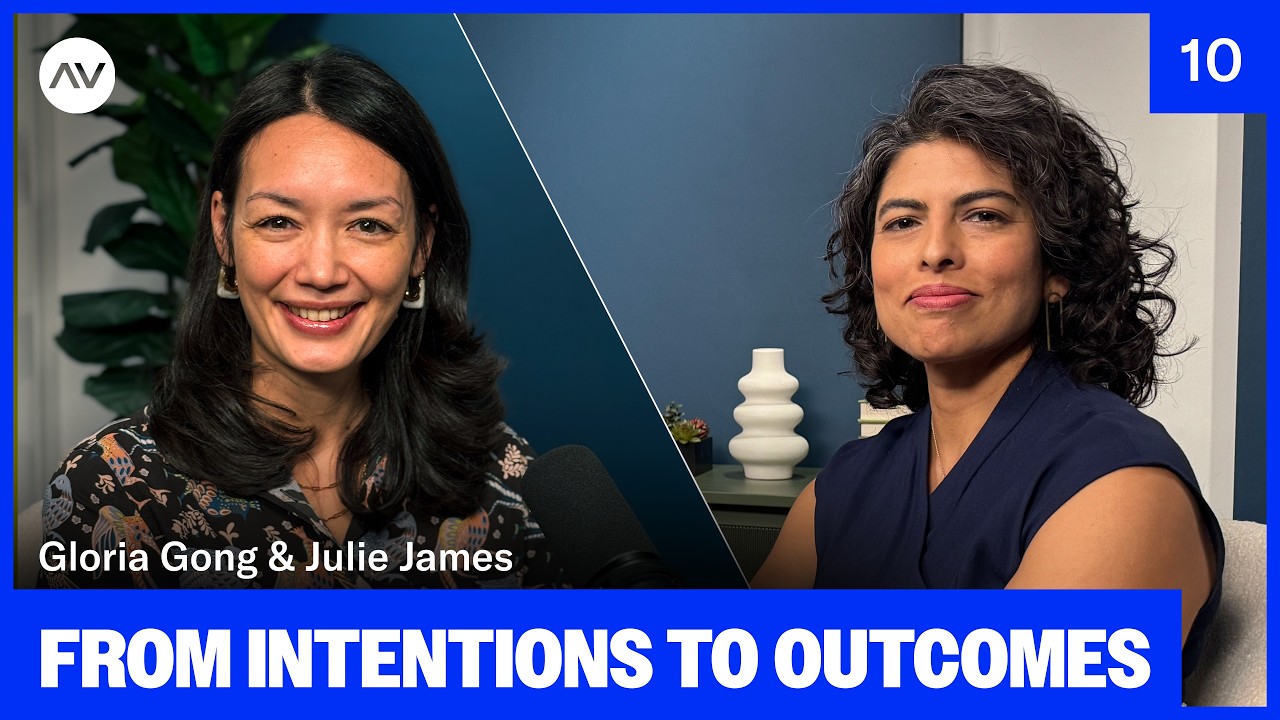
[00:00:00] Julie James: State and federal governments spend billions on programs designed to fix serious social problems, but good ideas and effective policy are not the same thing. In this episode, I’m talking to Gloria Gong. She’s the executive director of the Government Performance Lab at Harvard’s Kennedy School. Her team embeds directly with state and local governments to understand why well-intentioned programs so often fail to deliver and what it takes to make them work.
We talk about what really happens when a policy gets handed to an agency, who is accountable when something goes wrong, and whether government can be rewired to focus on outcomes rather than just activity. I’m Julie James and this is Field Notes.[00:01:00]
Hi, Gloria. Thank you for joining us.
[00:01:05] Gloria Gong: Of course. Happy to be here.
[00:01:06] Julie James: Well, first up, tell us what the Government Performance Lab does.
[00:01:10] Gloria Gong: So the Government Performance Lab is an action research lab based at the Harvard Kennedy School, and we were formed in part because it felt like there was so much armchair coaching for governments, of people kind of saying from the sidelines, “Run faster, do better,” but very little actual capacity out on the field with them, helping them to figure out how to fix the problems that they were solving.
So our model is of going and working in the field side by side with governments to help them figure out questions, particularly around how to translate policy into implementation. How do you actually take the goal that you want and turn it into a reality?
[00:01:44] Julie James: So how did you get into this business of helping government do their job better?
[00:01:48] Gloria Gong: So we started out initially trying to pioneer these social impact bonds or pay-for… performance contracts, and what we learned out of that is that governments were really, really enthusiastic around the core [00:02:00] ideas of measuring more, focusing on outcomes, trying to shift their relationships with their vendors so that they could actually demonstrate real improvement, but that they also needed external support when they were trying to do these new things.
And so our takeaway from this initial set of projects that we did was that there was a real gap in the field for people who could support governments in designing and testing new programs and actually kind of getting over that hump into a new way of doing business.
[00:02:26] Julie James: Okay, so I wanna come back to that ’cause I think that’s not a term that, you know, I think the policy folks will know a social impact bond.
But I’m curious about what drew you personally to the work.
[00:02:38] Gloria Gong: Well, I was… So I was in law school. You’ll probably appreciate this. I had been doing international kind of human rights stuff before. Then I went to law school, and at law school, I re-decided for some reason that I really wanted to work in state and local government, and everything felt like it was steering me away from that.
Anytime I talked to a mentor, they would say, “Oh, government, yes, let me connect you to something at the federal level.” [00:03:00] And I kept saying, “No, what about, what about state and local government? Like, the places where government actually really touches people’s lives?” And I kept getting these… It felt like I was just hitting a wall where people were like, “I don’t really, I don’t really know about that.
We don’t send very many people there.” And that gave me this really strong sense that I wanted to go do more, like to find– I was like, what’s, what’s this, like, state and local government stuff that it doesn’t sound like anyone was kind of funneling people, at least from my… where I was sitting towards.
And so I got really interested in this question around, like, what are state and local governments doing? How do you get there? What kind of talent do they need? And ended up meeting Jeff Liebman when he had just come back from the Obama White House, and we co-founded the Government Performance Lab together.
He had this, like, little group of former students that he was… had this small lab for, and I ended up meeting him, and he was like, “I wanna start this organization. I wanna call it the Government Performance Lab, and I want us to help governments across the country achieve better outcomes.”
[00:03:52] Julie James: Very cool. So I hear in your mentor’s advice something about scale, and I could be wrong about this.
[00:04:00] But the idea that, you know, if you were in the federal government, you could really impact, like, a broader range of policies, programs, et cetera. But I also hear, you know, your instinct to go where the impact is. So there’s this tough, you know, question of impact at scale, which I know you’re always thinking about.
So how does the Government Performance Lab think about solutions across the range of issues and scale?
[00:04:31] Gloria Gong: Yeah. Let me unpack one piece of that that you’re saying that I think is exactly right, which is I think that my mentors were steering me towards the federal level in part because that’s what they were really familiar with, so that was just kind of the known path for them.
But also because there was this idea that the highest leverage way to have impact was to do policy, because if you could change a federal policy, you would then, you know, change outcomes at scale. And I think that those levers can be enormously helpful. I think they’re very expensive, like, because everyone is interested in moving them, it’s… [00:05:00] they’re hard to move. But I also think that it’s not quite true. I think as any of us who’ve worked in the field know, you can change a policy and then everyone’s kind of like, “Well, you change a policy, dot dot dot, things change.” And I became very interested in the dot dot dot because it turns out it wasn’t true. You didn’t change things on paper and then they self-executed. Like, real human beings were having to go do that work, and a lot of time it wasn’t happening in the way that was intended. It wasn’t actually delivering outcomes. The services weren’t necessarily working.
You know, people weren’t getting jobs or childcare or the things that they actually needed, or the programs weren’t producing what they were intended to. So I became very interested in that kind of black box that the policy folks were kind of ignoring, where they’re like, “Dot dot dot, you hand it over, then something will happen.”
And it turned out that was to me where the big game was. What do the agencies actually do? What do the service delivery folks actually do? Is it working? And if not, how can you fix it?
[00:05:50] Julie James: Yeah. Yeah. So, you know, we’re here to talk about how to deliver safety and I know you have a broader range of issues, but tell me [00:06:00] about a little bit about that, ’cause I know you’ve been focusing… you’ve been exploring what do local stakeholders need in order to produce more safety. Tell me more about that.
[00:06:12] Gloria Gong: One of the things that I’ve been so interested in over the last couple years is we’ve talked particularly with mayors and asked them, “What is your top priority?” Every mayor will say to us public safety.
It’s so important for elected leaders. It’s something that they’re held accountable for. And then we’ll ask them- How are you measuring it? Not how are you measuring kind of crime stats, but how are you actually measuring this big thing that you’re saying is your top priority? And many mayors will tell us, “I have to do it off of vibes.
I have to do it off of resident feedback.” Like, and so that became very interesting for me that this thing that is so important to people is actually something that they need more tools to get their arms around. The questions around, do people in my city actually feel safe? Am I delivering it? And not just through police, but through this broader mechanism of government.
Are we actually making it so that people feel [00:07:00] like they can go outside and enjoy the place where they live and that their kids are safe outside? So I became really interested in the questions around how can we bring to bear the tools that we have to help elected leaders and, you know people who run agencies deliver on this really important mandate that actually feels very complicated and hard.
[00:07:16] Julie James: Yeah, so it’s not just one thing, right?
[00:07:18] Gloria Gong: Right.
[00:07:18] Julie James: It’s not one number, and it’s probably not one solution or actor that produces it.
[00:07:23] Gloria Gong: Exactly, and I think that’s something that, especially as we’re seeing kind of a bunch of the violent crime numbers falling nationally coming off of the, you know, the COVID peaks, and many cities are hitting kind of historic lows in shootings.
This is also, I think, very salient for mayors because they’re saying, “We are having these incredible wins on reductions of gun violence, and people in our cities still don’t feel safe” and just really forcing people to broaden the lens and say, “What are the ways that other things are contributing to a sense of safety that don’t sit just directly in the purview of police?”
[00:07:53] Julie James: So what are some of the exciting things you’re looking at in terms of what the solutions are? [00:08:00]
[00:08:00] Gloria Gong: Oh, that’s a great question. Well, I’ll tell you some of our things that we’re working on that I’m really excited about and they’re kind of in this bucket about thinking about public safety more broadly.
So we are still continuing to think about some, you know, things that cities are trying to do in terms of improving policing, but I think that’s an area where a lot of people have done a lot of really good work. some of the places I think are more overlooked are what are some of the resources that you need that sit alongside police?
And so we are doing work around alternative emergency response, which is a set of emergency response services that can go out in response to 911 calls, but that aren’t armed law enforcement officials. And there’s a whole set of things that I think cities are exploring there that are really interesting.
Everything from telephonic response, can you connect someone to a nurse triage line or to response on the phone, all the way to whether you can have these vans with unarmed community responders who are trained in mental health, you know, and crisis response and those type of things. So that’s one bucket of things is can we respond to emergencies [00:09:00] better with a better fit of services?
Then we’re also looking at ways that we can help reduce the time that people are in incarceration. There’s been, I think, a lot of work that’s been done to think about alternatives to incarceration for people who are awaiting trial, then also afterwards, and I think there’s a lot more experimentation that can be done there to really think about services that help reconnect people to community and to jobs, and that aren’t as expensive for government in terms of just holding people in carceral settings.
And then we’re also thinking about ways that technology can be used better. And so, and for us, because this is one of our really nerdy interests, ways that we can use procurement to actually help government experiment faster and get better solutions faster across a wide range of issues.
[00:09:45] Julie James: Okay.
Well, you said the magic words, technology and procurement. I definitely want to talk about those things and you also mentioned two areas where there’s a lot of program government dollars going in alternative response, co-response [00:10:00] as well as the re-entry services. We have, I’ll just say as a public service announcement, we have great interest in learning which of those approaches actually produces the most safety, kind of what the cost benefit of those different approaches are.
So that’s, you know, we’re always looking for partners for that. So excited about, you know, the opportunity to really measure those in a rigorous way and we know that, you know, like, that is gonna be… that is central to what the Government Performance Lab does. So can you talk a little bit about how you help the folks that you work with measure performance, success?
That’s part of the name after all. What goes into that?
[00:10:42] Gloria Gong: Yeah, absolutely. In alternative response specifically or more broadly?
[00:10:45] Julie James: Broadly or, you know, and if there are examples there, that would be awesome.
[00:10:49] Gloria Gong: Yeah. I mean, I think this is gonna sound so simple, but I actually think the simple things are the most important sometimes.
It starts with the government actually defining clearly what it’s trying to do, and that’s gonna sound [00:11:00] so silly, but a lot of times agencies are just running off of multiple kind of overlapping programs or mandates. And so sometimes they’ve lost the thread around why are we doing this? And so the first part of our work is actually sitting down and saying, “What is it that you’re trying to achieve?
Is it a reduction in incarceration? Is it successful diversion of people to better programming that reduces the use of emergency facilities in jail?” And actually starting with that and saying, “We need to clearly define what the purpose of this is so that you can then do all the downstream things around measurement and evaluation.”
So that’s the first step. Then you start by saying, you know, “How can we measure this?” And then you almost immediately get rolled into, “And how can we measure this in the real world, in an imperfect world where you might not have perfect data or perfect systems, but a lot of times we find that governments are collecting data and they’re not utilizing it, or that there are easy ways to start collecting it even if you don’t have a kind of perfect data collection system.
And so one of the things we often do is we say, “Listen, I’m sure someone has told you there’s, like, a perfect integrated data system that [00:12:00] you need in order to really measure this, but let us just show you how we could get started now with just Excel or just starting by getting, you know, feedback from frontline caseworkers, and we can at least get an initial baseline that will give us a directional sense of what we’re trying to do.
And then you can build your bigger performance system on top of that.” And that can be really helpful to just get people unlocked so that they… so they have that sense of empowerment of like, “Oh, we can tell… you know, we can tell something directionally, or we can figure out if the thing that we’re doing is moving the needle in the direction that we want,” and giving them, kind of building out those initial kind of like fast systems around what can we tell right now.
[00:12:34] Julie James: Yeah. We need that iteration and the… even just, like, the high-level indicators. I mean, if we waited until we had the perfect case management system, I think we’d be waiting a long time. Well, let me zoom out a little bit and talk about policy implementation more broadly. Can you give us a little bit of insight into how you see the problem?
You were talking about that ellipsis, right? That [00:13:00] space between policy and successful implementation. What actually happens, like the status quo, when an agency is told or even defines for themselves what a new policy will be?
[00:13:13] Gloria Gong: Yes. Imagine this. I think this is a very typical setup. Some really thoughtful, well-meaning policy person has successfully gotten something across the line in legislation or in city council, and they’re like, “This is fantastic.
We’re gonna educate more kids,” or, “We’re going to have, you know, a new set of services.” But then what happens is that gets handed off to an agency to enact, and usually what happens is the agency looks around and they find someone who is competent but enormously overworked and says, “Can you take on this new initiative?”
So that person then, even if they’re like the Leslie Knope of the local government agency
[00:13:45] Julie James: Parks and Recreation reference, yes.
[00:13:47] Gloria Gong: Yes. They have to add it to a set of things that they’re already doing, and typically they… the new thing doesn’t come with additional capacity or staffing for the agency.
The dollars almost always just go directly to the thing itself. So someone has to figure out how to fit it [00:14:00] into their existing workload, which automatically means that the In many cases, the potential impact has been watered down from the beginning because you haven’t staffed the agency to actually do it in the way it should be done.
It’s going to have to get squeezed in between other things. And then in many cases what the thing is that they’ve been given to do involves spending money. So then what they have to do is they have to go to the procurement office and say, “We’re supposed to release these dollars somehow that were intended when they were back in the policy formation phase to have some really, you know, ambitious impact.”
You take it to procurement. The procurement folks haven’t been briefed at all on the policy purpose of it. They… no one’s brought them along as kind of team members in the vision. They’re just told, “Get this, get these dollars out,” and then they put it into this machinery that gets dollars out, often by taking some preexisting contract, copying and pasting whatever the key thing is into a section, and then putting it out with a bunch of boilerplate that then is very, very difficult for vendors to navigate.
And so you’ve started with something that was a really ambitious vision, like, “We [00:15:00] want new services that are more integrated into the community,” and what you end up with is a procurement that goes out where people look at it and they say, “I can’t figure out how to navigate this. I can’t even really tell what it’s for,” and it’s very process-heavy.
And then, you know, 12 to 24 months later, you have policy folks who are saying, “Why didn’t we get any bids? Why did we only get one bid? Why did we get bids only from kind of known actors? Like, where’s the innovation?” And they don’t recognize that it’s that process has produced that kind of disappointing outcome for the thing that they were so hopeful about initially.
[00:15:31] Julie James: Yeah. Okay, so I’m hearing barriers to implementation, capacity at the government level. Sometimes maybe that’s subject matter, but sometimes it’s just, like, bandwidth. And then we have a bureaucracy that isn’t built to you know, get those outcomes that we wanna see. What am I missing? Like, what… are there other barriers that you see on a regular basis?
[00:15:57] Gloria Gong: Yeah, I think if I just zoomed up and thought about the ecosystem [00:16:00] overall, the two other things that I would pull out are there’s very little reward for risk-taking. So even if the initial impetus was, “Let’s try this new thing. Let’s see if we can get more innovative services and let’s take a big swing,” when you put it into the system, every person who’s touching it understands that there is no risk for them in doing it the kind of old way or, like, the easiest way, and there’s a lot of risk in trying new things.
And so at every point, without any malice, like, with no one saying, like, “Let’s see if we can water this down or curtail the impact of it,” you have a system that rewards people for saying, like, “Let’s keep this as close to the status quo as possible.” So I think that’s one thing. I think the second thing is because of the kind of risk environment that governments operate in- It is really hard to be the first one to do something.
And so a lot of times people are spending time looking to peers to see, you know, has someone else done this? What have they learned? Both because there’s really important knowledge transfer in that, but also this sense of de-risking. We can point to it and say, this other place did it. And I think that’s a place where we [00:17:00] see a lot of barriers because if a jurisdiction’s looking around and they say, we can’t see a peer jurisdiction who’s done this, we can’t see another Red state, or we can’t see another jurisdiction that is rural like ours, that often kind of stops them because they aren’t gonna be able to go to their city council and say, “We wanna do a program like this other place.”
And so we found that the more you can kind of break down some of those barriers in that broader ecosystem, the faster you can get adoption.
[00:17:25] Julie James: Okay, so before we get to, ’cause I am so excited to hear, you know, the breakthroughs, the innovations, the success stories, can you ground us in an example of what that looks like in the real world for something that you’ve seen?
[00:17:40] Gloria Gong: In that kind of, like, cross that take-up or the…
[00:17:42] Julie James: Yeah, so there’s an idea that gets passed, and tell us about, you know, all the barriers that…
[00:17:47] Gloria Gong: yeah, I mean, I’ll start with alternative response. We started in Houston, actually, doing alternative response with Harris County, and we started getting a bunch of outreach from other jurisdictions saying, “We are also considering this,” partly in the [00:18:00] wake of George Floyd’s murder, but also just because of the really severe shortages that people were seeing on their law enforcement side.
There were kind of these multiple converging reasons that people are saying, “We wanna explore building out a workforce that can go out in response to 911 calls that’s more trained in behavioral health,” you know, those types of things.
[00:18:17] Julie James: So police has an important role to play, but there might be these other things that can take the load off.
[00:18:22] Gloria Gong: Yes, I mean, many cities aren’t able to fill all of their policing slots right now, so it’s a really precious resource. And so they’re really asking, do police need to go to every call? It really looks like there’s a set of calls where it’s not a fit for their training. And in fact, a lot of the work we do is directly with police and going through with them and having them identify, like, these are calls we shouldn’t have been sent to.
They don’t have anything to do with our training and our skills. These would be much better fit for social workers. And… I think police will be very direct about that ’cause their experience is that everything is being put on them way outside of what their initial kind of mandate was. Anyway, so we so [00:19:00] we started getting outreach from a bunch of cities that were saying, “We also wanna do this.”
But what people would tell us privately is they would say, “Look, the two examples that we can point to right now are in Eugene, Oregon, and kind of San Francisco and Denver were both early on.” And they said, “I can’t… that’s, like, dead on arrival if I take it to my city council. I can’t say, like, the super blue coastal, you know, places have done this.
We wanna do it, too.” And they said, “We really need examples from other places.” So we did Harris County, and then we did this cohort, and we really deliberately picked, you know, rural Pennsylvania, red sun country… you know, sun country areas. And that was incredibly helpful because then a bunch of people in our community of practice were able to point, you know, when they took this to their city councils or their legislatures and say, “Oh, this is being done in peer jurisdictions.
This is being done in places that have similar political constituencies to ours or similar resource setups and not just in places with, like, really heavy kind of social service concentration. So that’s a kind of thing where [00:20:00] we’ve seen that cross-sharing ability to really be able to unlock those changes.
[00:20:05] Julie James: Okay, so back to procurement. What is the problem statement there? And let’s… if there’s a real-world example you can share, that’d be great.
[00:20:13] Gloria Gong: Procurement is this incredibly core function to what government does. It’s the way that government buys things for the people that it’s serving, and most of what government does is actually through buying things.
There are some things that government does directly, police, schools, but many of the other services it provides it does so through contracted vendors, whether for-profit or nonprofit vendors. So its ability to buy well is actually critical to government working because if it can buy well, then it can deliver results for residents.
But procurement has just been really, really starved of resources for an incredibly long time, and so it’s treated as this kind of back office compliance function. And for very I think, legitimate reasons, it’s also been primarily focused around risk reduction and compliance. You know, did you hand [00:21:00] everything in that you said you would?
Did you comply with all these rules? But the result over time has been that it’s something that really focuses on reducing risk, but not on actually increasing innovation or driving towards results. So I think that’s the big picture, like, problem that you’re having to solve. And then on a small scale, in every city, procurement is often just, it isn’t even brought to the table.
So that kind of dynamic that I described where the policy folks go and think about things, they envision or whatever, and then someone kind of sends it off to procurement and they’re never brought in and some you know, explains, “This is what we’re trying to do. How can we actually shape this?”
[00:21:34] Julie James: So we’re talking about people who are in government whose job it is to, like, basically write these requests for proposals.
[00:21:39] Gloria Gong: Yes.
[00:21:40] Julie James: That’s a whole set of people that could be part of the conversation, but typically aren’t.
[00:21:45] Gloria Gong: That’s right. So at Harvard, we run, in collaboration with the Bloomberg Center for Studies, this annual executive education program for procurement officials. And I’ve heard multiple procurement chief procurement officers say when we bring them to [00:22:00] campus, “No one has ever taken me anywhere.
I’ve never been sent to any kind of development. I’ve never been… I’ve never been addressed as a leader. Like, no one has ever called me a leader before.” ‘Cause we do this management and leadership training, and I’ve heard all of these chief procurement officers say, “No one’s ever called me a leader before. I’m an executor. I get things done for the city, but no one’s ever said, ‘Actually, you’re a leader here as well, and you need a set of skills around strategic thinking and negotiation and how to actually, you know, move things towards a strategic goal.’ ” So just totally uninvested part of the government workforce that then we’re relying on to try to get all these important things done.
[00:22:37] Julie James: I’m curious if you have any stories to share from that
[00:22:40] Gloria Gong: I mean, one of the ones I think about all the time is that we see governments that have, as I said, these big ambitions about what they’re gonna do, and then you go look at the actual procurement, and there’s this one… There’s a picture we show actually when we do this training of this procurement that was printed out.
It was on paper. It was like, it’s like an inch and a half [00:23:00] thick, and when you go through, you get all the way down to the point where it almost looks like it’s faxed because they had been using the same procurement from the 1970s. And then every time they had to do something, they would just put another cover sheet on the top of it.
But the actual core procurement itself was this ancient document that was just completely outdated and we… and so you run into things like that all the time where you look at it from the vendor’s point of view, and you say, “What were they supposed to do with this?” We did another project where the city was really trying to encourage minority and women-owned businesses to apply, in part because you want more competition.
You just, you don’t want the same incumbents always bidding on things, and on many of their RFPs, they would only have one, you know, one bidder. And so they’re trying to encourage more innovation, more competition. But we went and we talked to some of the minority and women-owned businesses in the city, and they said, “Oh, well, you have to pay to buy the bid book, and it’s $100 and $150, and we don’t know until we see it if we’re even eligible to bid on it.
So we’re kind of out of the running from the [00:24:00] get-go because the cost of entry is so prohibitive that we can’t even find out should we bid on this.”
[00:24:07] Julie James: Yeah. As a general proposition, we think it’s better to have more competition because then you get new ideas you get just a more vibrancy and a better range of things.
And costs also come into play, like that competition can drive costs down. But we’re not thinking necessarily about how is that experience for vendors.
[00:24:33] Gloria Gong: Exactly.
[00:24:35] Julie James: I wanna talk now about performance and accountability. What does it look like on the government side? Who’s held accountable, and what are the measures that are typically kind of at issue there?
[00:24:47] Gloria Gong: The… well, I think actually these are really complicated questions. I was just saying, I was at a dinner last night with a bunch of folks from NYPD, and one of the things they were saying is, “Hey, we feel like police are held accountable in a way that isn’t true across any of the other agencies we’re seeing,” which, again, I can understand is a kind of [00:25:00] police-specific view.
But I understood what they meant in the sense that we have these really strong accountability measures around crime statistics. They’re released publicly on a really frequent scale. The media’s extremely attuned to them. The executives are extremely attuned to them. And you have the model of CompStat where you have these kind of standing meetings where everyone’s looking at core metrics and saying, “Are shootings going down?”
I think the perspective that they were bringing is, we don’t see that happening in our peer agencies. You have a lot of money’s being spent on social services, but we don’t see the same kind of relentless focus on core outcomes. I think they’re right and wrong in the sense that I think there are forms of accountability, and many social services are more complex.
You’re chasing multiple aims at once. But I think the thing that they’re right about is often we aren’t measuring really core outcomes and then relentlessly focusing on them and saying, “Are we actually driving them down?” And so I was pausing when you asked that question because a lot of times you actually, there isn’t an accountability mechanism, and it goes back to what we were saying about procurement, where sometimes the time that you find out something didn’t work [00:26:00] is when they go to invoice.
You know, when procurement goes to invoice, and then they come back and say, “Oh, FYI, they only filled half of the slots.” Like, the service didn’t even actually get delivered or it didn’t get delivered in the way that we wanted. And you’re finding out way after your window to actually course correct.
And so one of the things we’re often trying to help governments do is figure out what you wanna have happen, and then start trying to track it in real time. Are these services actually getting to people? Are they getting to the people you intended? And are you seeing early indicators of any changes rather than waiting until it’s been delivered and then finding out on a 12-month lag that the service didn’t even go out the door.
[00:26:32] Julie James: Okay, so rather than like, you know, award and pray…
[00:26:36] Gloria Gong: yeah…
[00:26:36] Julie James: we should be figuring out what those metrics are, meeting on a regular basis, course correcting as needed. It’s a much more intensive thing that we’re talking about.
[00:26:48] Gloria Gong: Imagine if you’re driving a car, but if instead of a speedometer, you had something that would tell you kind of your average speed 40 minutes after the drive.
[00:26:56] Julie James: Okay.
[00:26:57] Gloria Gong: Like, that’s just what we’re doing in a lot of
[00:26:59] Julie James: Yeah.
[00:26:59] Gloria Gong: in a [00:27:00] lot of our services. And again, it’s not malicious, it’s just because we haven’t given people the tools. Like, you need something that’s much closer to a speedometer so you can say, “This program seems to be working. Let’s dial more money into it. Like, this one isn’t. Let’s course-correct.”
[00:27:12] Julie James: Yeah, when you put it like that it seems obvious, but it’s, it seems hard, too
[00:27:15] Gloria Gong: Yeah
[00:27:16] Julie James: …in this context.
[00:27:17] Gloria Gong: It is.
[00:27:17] Julie James: So are there ways to encourage agencies to do this kind of thing, aside from, you know, it sounds good or their peers are doing it? Are there more sticky ways to think about incentives to get agencies to do this kinda thing?
[00:27:34] Gloria Gong: I’m doing some work right now interviewing a bunch of state states and state agencies about performance management systems so that as we’re kind of building out this library of tools that we’re seeing used. And one of the things that it’s been the most interesting for me to learn is that some places that have been very kind of nationally recognized around setting up performance offices, when you go and talk to the agencies, the agencies will say, “This never really got traction with us because it was just a top-down [00:28:00] mechanism of trying to force people to do things, but we were never brought in as partners.”
And the places that have been very successful at getting the agencies to internalize it and, like, really actually use it to change what they were doing brought the agencies in as partners and said, “You know, this is a tool that we’re trying to create together because we really care about driving these outcomes together.
This isn’t because we don’t trust you but it’s because we wanna work as partners to getting things done.” So I think there’s, I think there’s a question about what the tool is, but there’s also the way that you do it. And the way you do it ends up being really determinative of whether people are willing to internalize it and keep doing it afterwards.
[00:28:36] Julie James: Okay, so, like, mission alignment and also recruiting people and empowering them to be participants in this.
[00:28:45] Gloria Gong: That’s right, ’cause the thing that you actually want at the end of the day is that you don’t just wanna use this as kind of a disciplining method to say, like, “Did you make your, you know, goal or not?”
You actually want them to giving, be getting up every day and saying, “What could I do to advance this goal?” So if you want people to actually [00:29:00] internalize it and make it their own project, you have to have it be something that they have ownership in.
[00:29:04] Julie James: Yeah. I mean, that resonates deeply because I think about how to work as a team better all, you know, all the time internally to, to Arnold Ventures.
Well, so I’m curious, what are you seeing as you look across the country in terms of practices for rewarding those positive outcomes? Like, what’s in it for you know, aside from feeling like, yes, I’m part of this, this important mission, what are you seeing for incentives that, that might work?
[00:29:37] Gloria Gong: First of all, I think one thing we shouldn’t forget is most people are working in government because they actually want to get something done. You know, they actually want to help. It’s not the most lucrative or rewarding career. And so many people are there because they wanted to, you know, serve their country in some way.
And so I actually think one of the best rewards you can give people is to give them wins. If they can get a program that’s actually [00:30:00] working It gives them that, like, deep sense of mission and it gives them that clear accomplishment. So sometimes, I keep… I tell my team this all the time, like, the best thing you can do for public servants is to help them achieve their goals and actually get a win.
Like, get kids into a great program, show that you’ve dropped shootings. Like, those… they’re… those things are self-rewarding because they let the public servants who worked on them know, like, we actually did it, and there’s often then, you know, a natural cycle where they can share it with the media, and it’s often… they’re… so often they don’t have good news stories, so it’s really exciting to have those.
So that’s one. But I think the other one is this is something where leadership is really important, and I think one thing we see makes a huge difference is the way that leadership sets an environment where innovation and excellence is rewarded. So both asking people to show that they’re not just doing process, but actually chasing outcomes, but then when they do it, rewarding them publicly, you know, standing behind them if they’re testing things and the things don’t work, and giving them that kind of support from [00:31:00] leadership.
[00:31:00] Julie James: What I’m hearing is rather than people focusing on the number of clients they served or the number of stops or whatever that count or process issue, helping them connect to that impact is a lot of the work that you do. Is that fair?
[00:31:19] Gloria Gong: That’s exactly right. One of the conversations I had over the past year or so that really impacted me is I was talking to someone who had been a police chief, but then also served on the elected side and had roles on the kind of resident police accountability side, so had sat in several seats around policing.
And what she said is that she said, “Listen, when I was a chief, the thing that became clear to me is we were rewarding activity. Did you do stops? Did you issue, you know, warrants? Did you…” Or, I mean, not warrants, but, you know, did you make arrests? Did you do these behavioral things? And she said, “I didn’t have a mechanism for actually rewarding officers who were creating safety in their communities, and all I had was all of these [00:32:00] incentives that would just cause people to be busy but not effective.”
And so I think leaders who are really trying to think about that, about not how can I not reward actions, but actually reward people who are truly trying to drive towards a shared goal are really important.
[00:32:15] Julie James: That sounds hard.
[00:32:16] Gloria Gong: It’s really hard. Listen, the example that I’ve been using about this a lot recently, ’cause it’s been so striking for me, was this project that we saw in Detroit when we went out, and they used under Mayor Mike Duggan, they got this big infusion of ARPA dollars that were allowed to be used for community violence interruption.
And many cities at the time were setting up offices of violence prevention with these dollars I think because they wanted the dollars to do good, and they needed kind of mechanism for them to go out, but also because there’s no risk in announcing an office of violence prevention, ’cause that makes it look like you’re doing something about violence.
And what Detroit decided to do instead is they gave out these really ambitious grants directly to community violence interrupt- intervention groups that were [00:33:00] tied to outcomes. They… So they allowed the groups to propose their own zones in the city, so there was a lot of kind of co-design in it, but then they said, “We’re gonna measure shootings in these zones.
We’re gonna measure them against the city average, and we’re gonna measure them against historical averages. So you really have to show us that you’re dropping your shootings against a baseline. Like, even if the whole city’s going down, it doesn’t count. Like, you have to drop your shootings more than they’re dropping in the city overall.
So we’re gonna be really tough on outcomes, but really flexible about the model.” And that created, I think, just this explosion of kind of innovation from these providers because they were given permission by the city to try out lots of different things to see what was effective in getting shootings to drop.
[00:33:44] Julie James: Well, that seems like a really great model to follow. If you’ve got a tough problem, invest in it, and invest in innovation, especially if you don’t know what the right answer is.
[00:33:55] Gloria Gong: And I remember, the first time I heard about this program, I was actually in a meeting with the mayor, and that’s exactly what he said.
He [00:34:00] said, “I looked across the country, and I decided there wasn’t something that was so clearly gonna work that I should just copy and paste it from somewhere else and bring it to Detroit.” Now, I think the funny thing is you and I would both say, “Ooh, there’s a lot of really good evidence-based stuff around reducing shootings.”
But I think what he meant, because we hear this from so many places, is that every city thinks that they are unique. And so if you just say to your local providers, “Do this… you know, this Boston model, this Philly model,” people feel like that’s being imposed on them, and then so you often see the replication lose a lot of the power that the original program had.
And so I think his solution was really clever, where he said, “I couldn’t find something where I just wanted to bring it back and say, ‘Do what someone else is doing.’ ” Instead, he said, “We picked providers from really different backgrounds and said, ‘We don’t know what will work. You’re the ones with the really local knowledge in your neighborhoods, so we’re just gonna set the measurement, like we’re gonna measure shootings, but we want you guys to test and innovate.’ ”
And the interesting thing that actually happened is that one of their providers had gone to the [00:35:00] UChicago CVI Leadership Academy, and they had brought back these really evidence-based programs, and they started implementing them. And the mayor had told us, “Look, they said that that’s what they wanted to do from the beginning.”
We didn’t know, like, we didn’t know which of all these models were right. They were doing really different things. And he said, “But I know that, that if they had told all the other providers on day one everyone has to do this, we would’ve had riots.” Like, people would’ve said, like, “Don’t tell us what to do.
We’re leaders in our communities.” But when they started doing these evidence-based interventions and their zone just consistently kept being the highest scoring zone as in the drop in shootings the most, everyone else started organically coming to them and saying, “What are you doing? What can you teach us?
How can we learn from you?” And those innovations spread across the city.
[00:35:43] Julie James: Yeah, the context does matter, and does it translate is, like, a big, is a big question. and I know, you know, from our perspective, we would love to see evaluations of those kinds of interventions because there are so many exciting innovations happening in that [00:36:00] space, and I hope that we get to, to evaluate some of them.
Where does technology fit in here? I mean, with the explosion of AI in civilian life one imagines that this could have a great potential upside for government. How do you see that playing out?
[00:36:22] Gloria Gong: We’re talking to a bunch of our governments about this right now, and I’m both hopeful and worried about it.
Hopeful because I think AI technology has the potential to be incredibly transformative. Government’s underfunded. It’s being asked to do more with less. So having access to a technology that might make it so that you can actually, like, you know, deliver more, translate things into multiple languages more easily get documents out more quickly could be really helpful.
At the same time, I’m worried because government is enormously under-resourced to take advantage of this rapidly emerging technology, and so I’m worried in two ways. One is I think government could miss a lot of the benefits. If it doesn’t have the ability [00:37:00] to kind of shape the solutions that are being offered and, you know, implement them and take advantage of them, I’m worried that the gap between the private sector and the public sector will keep, you know, only increase.
And there’s already an enormous gap. You know, government’s functioning on these legacy systems. It has, like, the worst technology. It’s, it has somehow, like, codified the worst technology we’ve invented and made it permanent a bunch of places, so that gap could keep growing. But the other thing I’m worried about is at this moment where we have just generational, I mean, historic investments in creating new technologies.
The public sector is not really at the table to shape the direction of the technology that’s being created. And so the technology’s very naturally just being driven by the commercial interests, which are very much around engagement and ad dollars and, you know, how do you just generate user engagement?
But they’re not around solving big problems, you know? So the thing that is driving those investments are not questions like, what can we do about homelessness? What can we do about housing production and housing affordability? What [00:38:00] can we do about public safety? What can we do about family stability or ensuring, you know, opioid use?
I mean, there are a million really important questions that the public sector has been tasked with taking on that are not part of shaping the new technologies that are being designed. And so this is something that I’m really interested in thinking a lot about now, is like how can government come to the table as a better buyer of those technologies, and also a better co-designer to make use of these huge investments and ensure that they’re actually being done in a way that drives the public good?
[00:38:33] Julie James: Yeah. Well, and you mentioned the resource-constrained environment. I know that state and local governments across the country are being asked to do more with less. There’s less federal revenue coming to them. And so I hope, anyway, that necessity is the mother of invention here, and that we will see some of this upside that they’re gonna have to do more with less.
And I hope that we can all be partners in that. Well, that is all we [00:39:00] have time for today. Gloria, how can people find out more about you and the Government Performance Lab?
[00:39:05] Gloria Gong: This has been such a pleasure to talk. You can find us by searching Government Performance Lab at Harvard Kennedy School.
[00:39:10] Julie James: Thank you so much, Gloria. And thank you for listening or watching. Please do subscribe for more conversations, and we’ll be back soon. Goodbye.