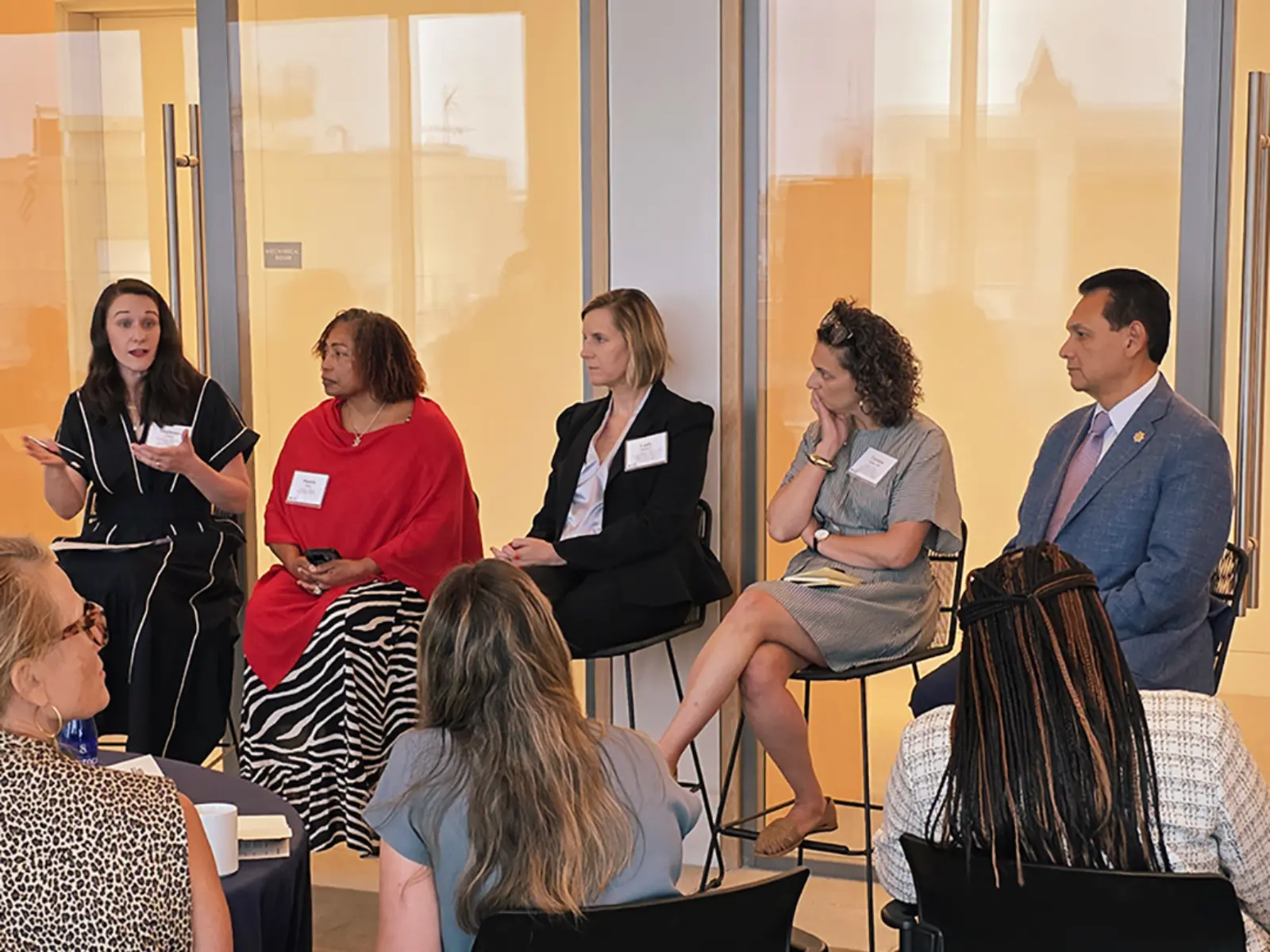
Kevin Ring: You might think that lead in children’s blood is a problem we solved back when they took it out of paint and gas, but my guest today says there are still measurable amounts in children. It’s still damaging young brains and still driving violent crime rates decades later. Robbie Barbero is a senior fellow at Renaissance Philanthropy.
He spent years looking at the science behind lead exposure in children, what it does to behavior, to brain development, and to the people those children become, and he thinks we have the tools to fix it. I’m Kevin Ring, and this is Field Notes.
Hey, Robbie, thanks so much for joining us. This is a pretty cool topic because so much of the debate of crime is sentencing or prison policy or the rest, and this is upstream. This is really about prevention.
Robbie Barbero: Way upstream.
Kevin Ring: Yeah. And so I think that’s a different take than most people have on it. So let’s just start right away with, like, I don’t think anyone thinks that having high levels of lead in your blood is good for you, but what’s the actual impact?
How does it affect people?
Robbie Barbero: Well, so lead is a really potent neurotoxin. It only takes about the same amount that you would have in a grain of salt to get into the body of a kid and to affect their ability to develop. Some toxins, your body immediately recognizes as something that it doesn’t want and it excretes it.
But lead, it absorbs. And the reason that it does that is that lead is a divalent cation, so it has plus two charge, okay? Don’t need to know any other chemistry other than a plus two charge. There is another really important element that has a plus two charge, calcium. So I’m sure you’re aware of the importance of calcium in nutrition, and we talk about calcium supplements and making sure that kids get enough calcium.
And calcium is really important because it plays a role in a lot of different biological and developmental processes. So when lead gets into the body at elevated levels, your body actually, the cells in your body sometimes look at it and say, “Oh, it’s calcium.” And it grabs it and uses it instead of calcium.
And what that can do then is it interferes with neural circuit development. And so now I’m gonna do a little bit of a biology lesson here. And this is neurology, actually. One of the things that we’ve learned in the last fifteen or twenty years is that all of these amazing things that our brain can do, memory, learning, cognition, all of these computational things that we do are based on circuits of neurons interacting with each other, kind of like the way that a computer works.
And in fact, a lot of the AI research now is trying to model how the brain makes decisions by building these circuits. Well, if you disrupt the circuit development of your neurons when you’re growing, that affects all of these future performance capabilities of your brain. So that’s number one. Number two, it can get in and actually interfere with neurotransmitters.
So these are chemicals, hormones that your brain, the individual neurons will basically send a signal from one neuron to the other. And lead interferes with neurotransmitters, and that can affect impulse control. It can affect you know, the ability of your brain to, like, send the right signals to other parts of the brain.
So that’s number two. Number three is that it actually affects the prefrontal cortex and the development of your prefrontal cortex. And so what we know about the prefrontal cortex is that it has an important role in executive function, in decision-making, all of these, let’s call them like- adult-like behaviors that we expect out of humans in order to be responsible members of society and just, like, you know, continue to make progress.
There’s a study from 2008 where they actually went in and did some neuroimaging in adults who had been exposed to higher levels of lead as children, and they saw that there was less gray matter in the front parts of the brain. So, like, you could physically see this in these neuroimaging studies, that their frontal cortexes were less developed because of childhood lead exposure, or at least, they had grown up with that. So all of this, I mean, I’ve just given you a litany of biological impacts.
Kevin Ring: But anybody sitting here listening to that knows how important that is to crime and the criminal justice debate, right? Because we know we punish juveniles different based on the fact that their prefrontal cortex, you know, it evolves later.
And it’s not till they’re 25 or 26. What we’re trying to do is stamp out impulsivity. That’s why we talk about cognitive behavioral therapy. We’re trying to get people out of those things, and that’s the whole thought of aging out of crime. We wanna even incarcerate people during their crime-committing years.
And so this is exacerbating the thing that is causing us the most concern.
Robbie Barbero: It absolutely is, and I’m gonna make it even worse for you, which is that It actually is not operating by itself. Lead exposure isn’t. It interacts with other environmental and nutritional factors. So I’ll just give you one example on that front.
I already told you that lead can be mistaken for calcium in the body. Well, that’s in a kid who has a, you know, a nutritional, a diet. If a child is malnourished or, you know, isn’t getting all of the nutrition they need, they’re even more likely to be susceptible to lead exposure than the, because the body is looking for calcium in order to be able to use, in order to grow and mature.
There is a study, a Rhode Island study from 2019 that showed that just a small increase in the amount of lead in blood has a 6 to 9% increase on the chance of a student getting suspended from school. It also affects juvenile detention rates. There’s a longitudinal study in New Zealand where they tracked kids who had elevated blood lead levels when they were young all the way through adulthood, and there was a strong connection between childhood blood exposure or lead exposure and future arrests as adults, including in, for violent crimes.
And then at the meta level, there’s a really compelling study from a couple of years ago where a group looked at a dozen or so studies and they concluded that this massive decrease in crime that we saw in the 1990s here in the US, which I’m sure you’re familiar with.
Kevin Ring: Yeah.
Robbie Barbero: Somewhere between 7 and 28%, and that’s a big range, but again, this is like a big study looking at a really complicated problem, 7 to 28% of the decrease in crime that we had in the United States in the 1990s could be attributed to the decrease in lead exposure from the 1970s and earlier.
Kevin Ring: Well, I mean, I don’t think people get that. And then also I think they think, again, I’m older, so I went to the gas station, there was leaded and unleaded and… But people think now that’s not a risk. So like, where’s the lead coming from today?
Robbie Barbero: So there’s lead everywhere in the world, and it’s all over our environment.
Just to get into a little bit of the sources of lead, I think it’s the eighth most mined element in the world. So even to this day, remember I told you it’s a highly potent neurotoxin and just a small amount can poison a kid. Even to this day, we are mining more and more lead than we did the year before.
I think last year we mined something like four and a half million metric tons, which is big number, doesn’t really matter how much it is. But the reason we’re doing that is that we use lead in electric vehicle batteries. So as we go through this global transition to electric vehicles we are actually pulling more lead out of the ground where it’s safe and not affecting humans, and putting it into our biosphere or into our human environment.
And once it’s in the human environment, it can end up in all sorts of different sources that can end, that can get into kids’ bodies. So historically, we know that there’s lead in paint, and it was in paint for a long time, going back thousands of years. It makes the paint shinier and it also makes it more resistant to water, so it’s a great additive to paint.
Unfortunately, it’s really toxic, so it’s not great for kids. Like you said, we added it to gasoline for a really long time. For something like 70 years, we basically burned lead and shot it up into the atmosphere, and anyone who was born before the 1970s was breathing lead contaminated air for their entire life.
But now that we’ve banned leaded paint and leaded gasoline, it still exists in a lot of other sources. There are thousands and thousands of water service lines in this country that are lead coated or made out of lead. In fact, everything, every pipe that we put into this, in this country before about the 1930s was a lead service line, and many of those still exist and are still delivering water to people.
Those are three of the big sources.
Kevin Ring: Well, is that the answer then? I mean, do we have to go in and just change all of our lead? That seems like a huge undertaking.
Robbie Barbero: So we should ideally. Also, like I said, those pipes are all almost 100 years old, so we should probably just replace them anyway, even if it weren’t for the lead problem because they’re old and they’re aging.
And so we see these pushes at a national level and at state levels to replace infrastructure. Water service lines are certainly one of those things. The Biden administration had a big bill in order to replace those, and it’s ongoing, but those are really expensive and really, really time-consuming projects.
You just can’t go in and replace all of the water service lines immediately. So we do those things, but we also need to be thinking about what are the other ways that we can make sure that kids are not getting exposed to lead. Because in addition to paint, which there are still a lot of houses in this, in the country that have lead paint in them.
So there are many kids who are exposed to lead paint, even though we banned it back in the, in the 1980s. There’s still some water service lines. There are a whole bunch of other sources. There, you can end up with lead in spices. You can, and I have a great story about that I can tell you.
Oh. I’ll tell you in a second once I get through the list of this. There is sometimes aluminum cookware can have lead in it, and that can release lead into the food. There was a applesauce pouch recall that the FDA did a couple of years ago. I don’t know if you remember seeing this, but-
Kevin Ring: Yeah, I did see that.
Robbie Barbero: Yeah, there was actually lead in some of these applesauce pouches.
Kevin Ring: Yeah, yeah, yeah.
Robbie Barbero: And so the FDA had to recall all sorts of applesauce pouches. And so there are all of these different sources of lead because it takes just a tiny amount in order to affect a child. It doesn’t take much to end up in their body [00:11:00] in order to hurt them.
Kevin Ring: Well, we talked about how it can influence violent crime, and we know… In crime, everyone knows that, like, impulse control is the thing. That’s why crime is a young person’s game because that’s the problem, right? What are the sort of… even if you weren’t worried about crime, what are you worried about when it comes to lead in children, like the developmental issues, and how does that show up?
Robbie Barbero: Yeah, I mean, lead has effects on a whole bunch of a kid’s development. So in addition to impulse control and the propensity for future interactions with the criminal justice system, it also affects learning. There’s a really interesting study from Chicago Public Schools where they looked at third graders, and they saw that third graders who had slightly higher levels of lead in their blood had a 32% lower or 32% more likely to fail reading and math than their peer students who didn’t have lead exposure.
That’s a big difference. And when we’re [00:12:00] constantly trying to figure out how to improve math and reading in our education system. And so if we can get rid of lead exposure for kids and make that much of a difference, that’s huge. There was another study where they looked at the impact on IQ, and just going from these numbers, I’m gonna throw some numbers out here, and I’ll tell you that they’re at the low end.
If you just go from two micrograms per deciliter of lead in your blood to 10, which is, these are still relatively low levels, you end up with an almost four IQ point loss for kids. That’s a lot. Now, to take, those are, I mean, those are scary numbers, but when you take that, and economists have actually looked at what does that mean for them, for those kids when they grow up that can be a 1.76% decrease in their lifetime earnings.
And so that’s thousands, if not tens of thousands, of dollars of lost economic output per child that experienced this lead exposure.
Kevin Ring: Well, and I feel like crime’s the same way ’cause if you’re talking about violent crime, a small difference here could mean thousands fewer victims of violent crime. And so it feels like the upside is worth…
Robbie Barbero: The upside is massive.
Once you factor… And I didn’t, there, I have another bad outcome for you while we’re talking about all the bad stuff here. Globally, there’s an estimated maybe as many 5 million premature deaths from cardiovascular disease due to lead poisoning. So it affects your brain, it affects your ability to learn, it affects your IQ, it affects your future earnings, it affects your future interactions with the criminal justice system.
And you might die early because of cardiovascular disease.
Kevin Ring: You can’t tease us with a spice story and then not follow up.
Robbie Barbero: The spice story comes out of New York City. And so we’re, you know, I’m gonna jump ahead a little bit of what I think one of the innovations, innovative solutions here, and it comes down to improving testing for kids.
So New York City has a really robust testing program. [00:14:00] Basically, every kid in New York City gets tested for lead poisoning when they’re young, younger than age five, and the city collects all of this information, and they use it to figure out where kids are getting exposed to lead so that they can go in and intervene immediately for all the reasons that we just talked about.
Well, a few years ago, in their annual sort of analysis of this, they saw that there was a huge increase in the amount of lead in blood in kids in one neighborhood, and so they went and looked at that, the demographics of that neighborhood, and it turned out it was a neighborhood with a lot of Georgian immigrants, not the state of Georgia, but the country of Georgia in Eastern Europe.
And they went in and looked, and they did an analysis. They sent public health workers into these homes and in this community, and they realized that there was a spice, like that you would add to food, that was being imported from the country of Georgia that a lot of the families in this community were using, they were adding it to their food, and that it had lead in it.
And so they immediately figured out who the distributor was, and they stopped the distribution of that spice, and over a period of several years, they were able to bring down the levels of lead in blood. So if we talk about five micrograms per deciliter, which is right in this, like, low, but, you know, still too high range, they dropped the number of kids by 96% who were above five micrograms per deciliter below that just by basically monitoring this monitoring these kids, figuring out what the source was, and eliminating it.
That’s not the end of the story, though.
Kevin Ring: Oh, all right, good.
Robbie Barbero: Then they called up their counterparts in Georgia. So they notified the government of Georgia, and the government of, and the government of Georgia went and tested some of their kids, and then found the source of spices in Georgia and were able to shut down the production of this, you know, basically lead contaminated [00:16:00] spices in the country of Georgia, and they helped the kids in Georgia as well.
So, and, you know, monitoring kids in New York City helped kids in New York City and helped kids all the way on the other side of the ocean as well.
Kevin Ring: Well, we’re gonna get to the monitoring thing, but I would- it just made me think, you talked a little bit, like, what is the scale of the problem? Because currently we have done some things like taking lead out of paint and gas, and…
But so is this something like, look, it’s better than it was. This is not that big of a problem today, and so there’s still an issue, but it’s not as urgent because we’ve made a lot of progress.
Robbie Barbero: You’re half right. It is better than it was. 50 years ago, basically every kid in the country had lead, detectable lead in their blood.
And now we’re down to 2 or 3%. The CDC estimates that it’s about 500,000 kids who have elevated blood lead levels. That’s a lot of kids. Yeah. Especially when you consider that we only have about three, 3.6 million kids born every year, right? So a decent sized number of kids who are being born every year have this.
Unfortunately, it’s the kids who are the most vulnerable in our society who are impacted.
Kevin Ring: Say more. Like what do you mean by that?
Robbie Barbero: They’re the most likely to be at risk because they might live in an older housing unit that has lead paint. They might live in an older community that still has lead water service lines.
They might live in a community that has more potential environmental exposure to lead. We recognize this as a government, our government does. There’s a federal law that says that every kid that is Medicaid supported is supposed to be tested twice before they turn five, and then some states have testing requirements as well.
We, a third of those Medicaid supported kids never get their federally mandated tests, so the, the most vulnerable kids who are at the greatest risk of lead poisoning, a third of them are never even getting tested and don’t know [00:18:00] that they’re exposed.
Kevin Ring: I don’t mean to keep holding off the testing part-
’cause we’re gonna get to testing
Robbie Barbero: You can see where we’re going, yeah.
Kevin Ring: But first of all, is there any safe level?
Robbie Barbero: There is not. If you can detect it in a child, then you need to figure out what the source is and get rid of it.
Kevin Ring: Okay. But the thing we can do today is test.
Robbie Barbero: We can test, and we do a pretty good job of it, although there are still some kids who don’t get tested.
Testing’s not the end of it, right? Once a kid gets exposed, the good news is that we do have a really robust system for being able to intervene. So our federal government, through this, the CDC and through the Department of Housing and Urban Development has funding that they provide to every state and city, and they go into the public health systems in those locations.
And when a kid does end up with a positive lead test then they will send in public health workers who can go [00:19:00] into the neighborhood and even into the home, you know, with the permission of the parents, and figure out what is the source of lead for that kid. And like I said, in the example in New York City, they realized that it was spices that were affecting this entire community, and they traced it to the importer of those spices.
They might realize in a different kid’s home that there’s lead paint flaking off of one of the window sills.
Kevin Ring: Short of investing millions or billions into replacing lead everywhere it exists-
Robbie Barbero: Which we should try to get rid of it as much as possible but like I told you before, it’s an extremely useful chemical, and we’re gonna keep pulling it out of the ground and using it.
Kevin Ring: Well, and if the Georgians are putting it in their spice, I mean, there’s no-
Robbie Barbero: I don’t think that, I don’t think that was on purpose.
Kevin Ring: So- testing. That’s the answer, right? We need to test and children, as many as we can.
Robbie Barbero: Yes.
Kevin Ring: And what’s that process like now?
Robbie Barbero: And we actually to our government’s credit, and we [00:20:00] recognized this a long time ago back into the 1990s the government decided that it was really important that kids get tested, and they tried to set up a process where as many kids could get tested.
And we’ve increased over time the number of kids who are getting tested. And it is a really useful and successful system because if you can test the kids then you can figure out where their sources are. Unfortunately, I think as I’ve said before, not every kid who is supposed to be tested is getting tested.
Kevin Ring: Why?
Robbie Barbero: It turns out that it’s just that the kids who are getting, especially the kids who are Medicaid supported the testing options that they have available to them are a little bit too expensive and a little bit too inconvenient in order for them to be able to, to either afford it or to want to take it.
Kevin Ring: Well, that’s what I worry about. I mean, there’s some will that needs to be-
Robbie Barbero: Yeah …
Kevin Ring: exhibited here, right? And so that seems like that [00:21:00] could always… And then that’s gonna disadvantage those who probably need it most.
Robbie Barbero: That’s right.
Kevin Ring: And so
Robbie Barbero: Maybe I can explain to you what the primary two options are-
Kevin Ring: Yeah.
Robbie Barbero: for testing. And then we can talk through what the downsides of them are and what we at Renaissance Philanthropy think a solution could look like. So there are two main ways that a kid will get tested. One option is that you can do a blood draw which is not a very fun thing to do for a small kid.
Kevin Ring: Yeah.
Robbie Barbero: But this is when they, you know, basically put the strap around your arm-
Kevin Ring: I’ve got kids. Yes, I know.
Robbie Barbero: Yeah. Put, draw the needle, and I get it done every year ’cause I have all these blood tests that I need to make sure that I’m staying healthy, but for little kids it’s really challenging. Yeah.
But it’s a… Once you get that blood, you can send it to the lab, and there is a extremely accurate way of testing. It’s called it’s mass spectrometry.
Kevin Ring: Is this through schools? Do they have to go to the doctor?
Robbie Barbero: You would do it at your doctor’s office or your medical care provider, okay?
And you send it in, and you get the result back extremely sensitive, really good. Has a couple of downsides, the first of which being that you have to- strap a three-year-old into a chair and draw blood from them, which most three-year-olds don’t want to, and their parents are not gonna be thrilled about it.
Okay? The second one is that blood sample has to go to a lab. It doesn’t get tested in the doctor’s office, and there is a period of time between when the kid is, has visited their healthcare provider and when the result is delivered back to them. And the healthcare system may lose track of that kid in the time between-
Kevin Ring: Yeah.
Robbie Barbero: when the sample is collected and the result comes back. And so then it’s incumbent on the parents and the healthcare system to get reconnected. If there is a positive test, they have to re- figure out how to find that kid, and for some children, that’s really hard to do. So that’s number one. The second option is way better, and it actually is a product that was developed using government funding in the 1990s where you take just a finger prick of blood.
So you just poke a little hole in the finger. You collect a tiny little drop of blood, and you put it on an instrument right there in the doctor’s office, and it gives you an answer in just a few minutes while the child and their parents are sitting there. It’s not quite as accurate as the one in the lab, but it’s, it works really well.
That is the preferred option. Unfortunately. That instrument that you test with in the doctor’s office costs about $5,000 to buy, and each test kit costs about $10 to buy, and Medicaid only reimburses $13 per test. So you can do the math on that. If you’re a doctor and you’re a pediatrician, you have a very busy practice, and you have all of these customers that you’re working with, and then you have to buy a $5,000 instrument and a $10 test kit in order to get reimbursed $13 per test, your return on investment is not going to be very good.
Yeah. And you have to find the space to put this instrument in your lab as well, and so that ends up being an option. When I have talked to people who are involved in this system, including doctors who do lead testing for kids and people who sort of do public health policy on this, one of the biggest concerns that we have right now is that the two options that are available for testing kids are just too expensive and inconvenient, especially now that we live in a world where we expect to be able to be tested quickly and easily with just a little cartridge.
I mean-
Kevin Ring: Yeah.
Robbie Barbero: think about we all got used to COVID testing where you could do a test at home-
Kevin Ring: Yeah, right …
Robbie Barbero: with a little cartridge.
Kevin Ring: Well, what… Result comes back, Johnny’s got a elevated blood lead level. What do you do?
Robbie Barbero: So there is a really robust case management process that we’ve figured out in this country.
First of all, if the level is really high and this doesn’t happen that often in this country, although I’ve spoken with a couple of doctors in the last year who’ve treated kids that are at this. The level is, like, 50 micrograms per deciliter, which is 10 times more than what we’ve been talking about for most of the statistics I was giving you about learning and all those things.
At that level you would actually treat the kid with a therapy, so they call it chelation therapy. You can give them a chemical that’ll bind the lead out of their blood and pull it out, and it immediately drops the level of lead that’s in their blood. Sometimes you have to do a couple of rounds of it, but it is a way of immediately reducing their exposure to lead.
For most of the children who end up with a positive lead test, they’re well below that level. But they’re still above the action level or the safe level. And in that case, the public health system will send in a case manager who will work with the children and their families in order to figure out what is the source of lead that’s, that, or sources, in a worst case scenario, that is causing the kids’ lead levels to, to be showing up in their blood.
And then they will figure out how to eliminate that source from the child’s life. And so it might be something they’re exposed to at school, it might be something in their home, it might be something on the way to school. And then they can, once they can figure that out, then they can make sure that the kid doesn’t end up being exposed anymore.
Kevin Ring: All right, so this is a huge problem.
Robbie Barbero: Yeah.
Kevin Ring: We know the solution is, in at least in the short term, is testing.
Robbie Barbero: Yep.
Kevin Ring: There’s problems with testing, but your work-
Robbie Barbero: Yes …
Kevin Ring: the reason we’re talking is because you’re trying to come up with a test.
Robbie Barbero: I believe that it is possible to have an easier to use and less expensive test that can close this testing gap that we have in the United States.
Kevin Ring: Say more.
Robbie Barbero: Okay. Well, so first of all, this is one of the reasons why I’m so excited to work with Arnold Ventures on this, because I actually think that the root of the problem here is that there’s a market failure, and I know that this is something that Arnold Ventures thinks a lot about. In a normal healthcare environment or in, in many other businesses, if there was a market need, right, so the market need here is a better test for lead poisoning for kids.
We’ve already talked about all of the economic and health impacts and why it’s important for not just the individual kids, but for us as a country. Normally, the market would step in and say, some innovator would say, “I know. I can do this. I’ll build it.” That can’t happen. It hasn’t happened here because the market size is too small for the innovator to step in. So probably the market for lead testing is somewhere around $45 million per year, 45 to $50 million per year. You can get at that number by taking the Medicaid reimbursement multiplying it by the number of kids who are supposed to be te- tested every year, and you can get to that number.
$45 million per year, it probably costs somewhere between $10 and $20 million to develop a new diagnostic test and take it all the way through the regulatory approval, manufacturing scale-up and all of this. Okay, so that, you can, you don’t even have to be an expert in diagnostics or medical technologies to know that a $20 million investment for a $45 million market size is not going to incentivize any innovator to head in that direction.
It’s just a classic example of a market failure. The total value of this problem is much bigger than that, but what the innovator would receive is not sufficient. And so what we think the solution here is to use philanthropy in order to incentivize the development of that product. We know what that product h- should look like, what the performance of it should be, and that once it’s developed, then it can become a profitable product, and the philanthropy can step away. And it can exist in the market just as a profitable business.
Kevin Ring: How will the test be different?
Robbie Barbero: I am currently working with a group of experts who are experts in market shaping and in diagnostics. It’s also a space that I come from, and we are conducting interviews with stakeholders across the entire spectrum to figure out what are the current… what are the current testing options missing, like how are they insufficient in order to solve this problem, and assembling a list of product performance requirements, and we’ll be publishing that this summer.
But the short answer is that it needs to be less expensive and it needs to be easier to use. So a smaller version, you know, something that, that is smaller than that instrument that has to sit in the doctor’s office. Ideally, it would be an instrument-free device, right? So a little thought exercise here.
You can get a COVID test on Amazon or at any pharmacy for 5 to $10, and it’s just like this. Now, I’m not saying that’s the exact same chemistry, but that’s one example. The other example that’s a little bit closer to it is a glucose meter. So I don’t know if you know anybody who has to check their insulin levels, but their blood sugar levels, but you can get a glucose meter for 30, 40, $50 and they’re about this big.
And that’s measuring a small molecule in the blood. It seems like it is, you know, not too far of a leap to say why, you know, why couldn’t we have something like that for lead?
Kevin Ring: So that’s where you are. Are you right now in the process of figuring out what that test is gonna look like and be, and what’s it gonna cost-
Robbie Barbero: Yeah …
Kevin Ring: and make sure it gets out there?
Robbie Barbero: Exactly, yeah. So I’m not gonna build the test. But what we, the approach that we’re taking is to define what should the test look like, how should it perform? What are the cost requirements?
Basically defining what the, you know, what does the market want from this? And then we publish this list, and then we say, “Hey, who’s interested in working on this problem with us?” And we, and the great news is we have philanthropy helping us think about this, and we can say, “We have money to help with the development of this. If someone can convince us that this is something that they can build, then we can work to get the product built.” And so we’ll find an actual diagnostics manufacturer to build the product to the specifications that we’ve defined, and that’s a couple of year process, but they know how to do it.
They go all the way through the product development, regulatory approvals, and then it ends up on the market.
Kevin Ring: Well, you just said a couple of year process, so how’s it going, and, like, what’s your timeline? Are you, do you have the resources you need? Like, where are you in the overall process of getting this out?
Robbie Barbero: So I just started on this last year and I’ve spent the last several months working on this list of product requirements, and that actually is a really intensive process because you wanna make sure that you can define as clearly as possible how does the product need to perform. You’re basically putting a roadmap together for a product developer.
Yeah. In a, inside of a business, this work is all done internally. They have marketing team that goes out and figures out what does the market want, and you write up the marketing requirements, and then [00:32:00] those get translated over to the product development team, and they put together a list. We’re doing that all in the, you know, as a public good essentially.
And we’ll publish that. We’ve talked to quite a few diagnostic companies, small ones and large ones, who we think have the capabilities to build this product once we have our final list of specifications ready. And there is some real interest there. But the next step then is to actually start to pay for some of that R&D work to get done, and, I am, you know, still fundraising in order to find-
Kevin Ring: Yeah,
Robbie Barbero: in order to put to work in that space.
Kevin Ring: Is that the biggest challenge right now?
Robbie Barbero: It’s like all of these at the same time, right? Yeah, yeah. You have to know what do we wanna build, you have to figure out who do we think can build it, and then you have to figure out how you’re going to pay for it.
And so it’s like a little bit of moving all of these forward a little bit at a [00:33:00] time which is why it’s a fun project to work on.
Kevin Ring: Well, and it’s fun too. It’s gotta be ’cause this is a moonshot, right? Like-
Robbie Barbero: Yeah …
Kevin Ring: I mean, your goal is to eliminate elevated blood lead levels for all children in America. I mean, does that… I mean, in one sense it feels doable, but another sense it feels huge. I mean, how realistic is that?
Robbie Barbero: I don’t think it’s a moonshot. I think it’s a slam dunk.
Kevin Ring: Really?
Robbie Barbero:: It’s just a matter of, like, taking one step after another. This is not… There’s no technological innovation required here.
Kevin Ring: Yeah, that’s fair.
Robbie Barbero: The technologies that we need exist. What we just need to do is put the plan together in order to get there. And so it just takes somebody like me waking up every day and saying, “What’s the next step? What’s the next step? Who do I… Who else do I need to partner with?” It’s about putting the team together, finding the right funding sources, finding the right technology developers, figuring out the right path to get them there.
Kevin Ring: Thanks, Robbie. I know this is a heavy topic. We’re talking about children, we’re talking about at-risk children who are [00:34:00] unhealthy for no fault of their own. But so many problems in the criminal justice system feel intractable, but you’ve given me hope because you… I called it a moonshot, you said this is a slam dunk. So you think this is doable?
Robbie Barbero: This is absolutely doable. The technology exists. We can put it together in a way that can help these kids. I come from the biotech world. I come from the diagnostic space. Everyone I talk to in my old world about this problem, they’re like, “This is… We can do this. Why don’t we just go do this?”
And we will. In a few years we’re gonna have this test. We’re gonna close the testing gap in this country. we’ll be helping these kids, and I’m really excited for the partnership with Arnold Ventures to get this done.
Kevin Ring: Thank you, Robbie. And thanks to everyone for listening or watching and joining the conversation.
Please subscribe for more conversations, and we’ll be back [00:35:00] soon.