Cristina Quinn: This episode begins with a story about sexual assault that may be upsetting for some listeners. We’re looking at DNA in today’s episode, and its potential to solve even more crimes, from exploring innovations in forensic technology, and how DNA databases can reduce crime. So let’s begin. This is Fighting Crime, the show that asks big questions about crime and how to stop it.
I’m Cristina Quinn, a journalist, and I’ve spent my career digging into stories to discover the truth. I’m going across the country, from prisons to universities, police chiefs to inmates, to look at the evidence and question everything we think we know about how to make America safer. I want to know what actually works, and meet the people who are making it happen.
So join us as we figure out new ways to fight crime and make society safer, and be prepared to think differently.
Ashley Spence: I was 19. I was a college student, so excited to start my sophomore year, actually, at Arizona State, and I got to school about a week and a half early just to be on my own, to be free, to get to know my roommate.
Cristina Quinn: It’s a familiar story, moving away from home, excited about a new school year, a new life chapter.
But for Ashley Spence, just days after settling into her new place, that story took a devastating turn.
Ashley Spence: I always felt safe going to bed at night, but before school started, I wasn’t, and I went to bed one night, and an intruder came into my apartment. I was very violently raped and tortured.
Cristina Quinn: Ashley didn’t know who her attacker was, something that would haunt her for years.
Ashley Spence: I could never see the person that was committing these horrific acts against me. He threatened my life, said, “Do not tell anybody, ’cause just like I’ve been watching you, I will come back and I will kill you.” But he got away, though, and I never saw his face, and I, I worked day and night with detectives in spite of his threats, but there were no leads, and the fear, it totally paralyzed me.
Cristina Quinn: The immediate hours that followed Ashley’s assault were critical. The responding officer told her they needed to go to the hospital to do a forensic exam, but she was terrified.
Ashley Spence: I did not know what a rape kit was, and I just, I, I frantically stopped him and I said, “I’m not going anywhere. I have to shower.
I have to brush my teeth. I feel absolutely disgusting.” And he kindly said, “I’m so sorry. You can’t shower. You can’t brush your teeth, but you will be safe.” And you know, he saved my life. Because of him, I took the next step. It’s such a scary thing to go through that and then have to go into a cold room, be completely undressed, have your body swabbed, photographed, you know, really treated as evidence.
What I didn’t realize at the time was not everyone has a [00:03:00] forensic-trained nurse. I did. And I can tell you, I don’t remember the hours of photographing and, and DNA collecting and evidence collecting, but I do remember how she made me feel, and she asked my permission on every single step and every layer.
She, she created a safe space for me. I was… I went there with so much shame, and she just made me feel, you know, like it was okay. It wasn’t my fault.
Cristina Quinn: After the attack, Ashley tried to resume normal life and go to classes, but everything was different now.
Ashley Spence: I was all over the news, right? So I tried to go to school.
It was only a week and a half later. I’m covered in bruises. Everyone was staring at me, you know. My sense of self was stripped, and I was the victim, and I hated that, you know? And so I remember I went to my class and I’m like, “I’m gonna go.” My friends walked me there, but I sit in class, and all of a sudden I have a horrific panic attack.
I couldn’t breathe. I ran out of the, the room and I just thought, “Oh my God, is he sitting behind me? Is he watching me? He told me he was gonna kill me. It’s all over the news. Everyone knows. He is going to kill me.” The fear, it, it paralyzed me. I had to drop out of school, and I decided, “You know what? I’m starting fresh.
I’m going to Newport Beach, California. I’m gonna go be by the ocean. I’m gonna be Ashley. No one’s gonna know.” And You know, that sounds great in theory, right?
Cristina Quinn: Relocating and starting fresh only worked for a little while. The assault shattered her sense of safety, her sense of self. The trauma was so consuming she started self-medicating as a way to cope.
Ashley Spence: It really took me down a very dangerous path. I started, you know, numbing out with, um, massive amounts of alcohol, Xanax, NyQuil during the day. I couldn’t sleep at night ’cause I would put my head on the pillow, and I would hear literal screams of his victims in my head. I knew he was out there, and I knew he wasn’t stopping.
On the outside, I could, you know, put sentences together, but I was like the party girl, right? It got so bad that there were multiple times an ambulance would have to pick me up from the local bar in Newport Beach and take me to the hospital ’cause I drank too much.
Cristina Quinn: Ashley eventually found her way out of the darkness.
She embraced yoga and other therapies. She graduated from college, and she reluctantly accepted the fact that her attacker may never be caught. It wasn’t until she returned home to Austin, Texas, more than seven years after the assault, that she began to question that belief.
Ashley Spence: That’s where I got the shocking phone call that there was a DNA match.
He got arrested for an unrelated offense. They swabbed his cheek, they put it into the national database CODIS, and it matched mine and multiple others.
Cristina Quinn: CODIS stands for Combined DNA Index System. It links local, state, and national databases, and is managed by the FBI. When Ashley’s attacker was arrested, he was in California, which is one of only 19 states that collects DNA at every single felony arrest.
The DNA from her attacker’s cheek swab matched DNA evidence from Ashley’s rape kit, and suddenly, all the pieces from a case that had gone cold years earlier started falling into place. Not only that, but at the time of his arrest, advancements in DNA technology allowed investigators to retest the DNA through a more rigorous method called Y‑STR.
It extracts the Y chromosome, allowing for an even more accurate match.
Ashley Spence: They re-tested the DNA in my case, and when they did that, they found his DNA literally all over my body. And the important part of this is it aligned with every story of assault that I told detectives immediately after my attack.
Cristina Quinn: It turns out her attacker also had a long rap sheet all over the country for committing crimes, but was never convicted for a violent crime.
He was eventually extradited to Arizona to stand trial, and was found guilty on multiple accounts of kidnapping, rape, and assault. He was ultimately sentenced to over 137 years in prison for Ashley’s attack. Not only that, but his DNA also connected him to at least 10 other attacks. Had it not been for this DNA database, Ashley Spence may never have achieved justice for her brutal attack.
But that wasn’t enough.
Ashley Spence: I was horrified to find out that not every state collects DNA for every felony arrest. So we are letting these violent serial predators literally slide through the cracks, terrorize our communities, terrorize women, you know, create murder, rape, all these horrible things. And if they get arrested for, say, murder or violent rape, only 19 states do this right now, so in all of the other states, they’re not having their DNA swab taken.
I’ve met victims all over that are waiting for their justice, and we could be closing these cases down. The more we get into CODIS, the more hits we’re gonna get, the more matches we’re gonna get.
Cristina Quinn: Ashley’s story is a powerful example of the importance of forensic DNA evidence and databases. She went through years of trauma and uncertainty, and during all that time, her attacker continued harming others.
It was the DNA database that put this to an end. But some of you may be thinking, “Yeah, but what about privacy?” Maybe you don’t like the idea of your DNA being uploaded into a federal database. After all, your DNA is so personal and unique, and that’s what we’ve always been told. But let’s take a step back.
What exactly is DNA?
DNA is considered the blueprint of our genetic material. It’s passed down from parents to children. But why is it so important in forensics?
Tiffany Roy: DNA, it’s easily shed, it’s easily left behind, and that’s why we’re interested in it forensically, and all we do is swab it up. We can get it from any biological material, and that includes skin cells, you know, saliva from speaking.
We are looking for anything that we believe was involved in the crime, um, and that may have been in contact with a victim or a suspect. We can do that with hairs. We can look for blood, semen, saliva. We’re looking for all of those things, but even things that are unseen, things that might have been touched from coughing or breathing or, or touching your, your skin cells and the cells from the inside of your mouth.
Cristina Quinn: That’s Tiffany Roy, an expert and professor of forensic DNA analysis, and she is our fearless guide in the Fighting Crime Fact Box on DNA and forensics. So back at the crime scene, officers will usually look for anything a victim or suspect has been in contact with and bag it up.
Tiffany Roy: If we think something was handled or touched by a perpetrator or was involved in the crime, we wanna package that whole item and take it back to the laboratory so a trained DNA expert can swab it in specific fashion.
Sometimes this happens with things that are, that are used, belts that are used as ligatures or items that have been, a knife maybe that we believe is the murder weapon. We wanna pick the areas where we believe the perpetrator is going to be present. So on something like a belt, if someone was strangled with something, we will wanna pick the areas where we feel like the perpetrator had their hands on the item, um, and not necessarily the, the places where it was wrapped around the victim.
Cristina Quinn: But before we go further, what exactly is DNA?
Tiffany Roy: DNA stands for deoxyribonucleic acid. It’s a long chemical molecule that exists in the cells of the body, and you get half of your DNA from your mother and half of your DNA from your father. It varies from person to person, so we expect that we can differentiate people based on their DNA, especially as it comes to the forensic science testing.
Cristina Quinn: If you were to look at DNA under a high-power microscope, it looks like a double helix, like a ladder that’s been twisted DNA is the foundation of how our body makes itself. It contains all the information on how the body should grow, like an instruction manual. 23 pairs of this DNA are stored inside cells in a command center called the nucleus.
Collectively, all this DNA is called your genome, and these cells make up the human body. From conception to death, these strands of DNA and the cells they’re contained in make us, from our eye color or even height, to creating skin or hair and everything else. Now, let’s go back to DNA that is being collected on a crime scene.
There are four stages to testing in the lab. First, there’s extraction, where the sample is put into a tube and exposed to chemicals to release the DNA. In quantitation, they take a measurement in how much DNA is in the sample. The third stage is amplification, which is like a genetic Xerox machine, where they make multiple copies of the DNA profile from the crime scene so they can get as much info from the sample as possible.
And the final step is detection, where an instrument separates the DNA we’re interested in and kind of gives it, like, a DNA profile. And after that, experts gather to interpret the profile.
Tiffany Roy: Standard turnaround for DNA results in a case is about six weeks, and that’s because we do the testing, there’s consultation, there’s interpretation, and then there’s several layers of review that are required by the FBI.
And so it’s another qualified analyst coming in and reviewing all of the outputs from all of those four stages and the interpretive process and making sure we’re all coming to the same conclusion.
Cristina Quinn: Okay, so after six weeks of forensic analysis and hard scientific rigor, the team has created a solid DNA profile of a suspect.
Cool. But what exactly is a DNA profile?
Tiffany Roy: A DNA profile is essentially a series of numbers, and it’s almost like a phone number. There’s some similarity between phone numbers, obviously, of people in the same area codes, but we don’t expect anybody to have the exact same phone number, otherwise that would cause problems.
And so I think about a DNA profile a lot like I think about a phone number.
Cristina Quinn: There’s two parts to DNA. One is coding DNA. This provides all the information for things like hair and eye color. But this is only about 1 to 2% of your DNA. The rest is called non-coding DNA. Non-coding DNA doesn’t contain any personal details about us.
It tells the body the mechanics of where, when, and how the cells should replicate themselves, and also controls the physical structure of the DNA strand. Non-coding DNA is still unique to you and can be used in forensics to identify you.
Tiffany Roy: The testing that we did in the past, and that we do generally in the crime laboratory, it doesn’t contain a lot of in, personal information.
It’s information from non-coding regions, and it doesn’t tell you a whole lot about the person that is being sought or has been involved. It doesn’t tell you their height, doesn’t tell you their weight. And so it can be very useful, but also it doesn’t … it’s not as personal. It’s not as private. So these are areas of DNA where they don’t code for any traits.
Cristina Quinn: And that’s it for our DNA fact box.
And the use of DNA has really revolutionized our ability to solve crimes. In July 1986, a man named Colin Pitchfork murdered two girls in Leicestershire, England, and for the first time, DNA was used in a criminal conviction. Since then, the use of forensic DNA has transformed how crimes are solved. But this hasn’t gone without legal scrutiny.
In 2013, a case concerning the use of DNA reached the Supreme Court on the basis of a violation of Fourth Amendment rights for unreasonable searches and seizures.
Tiffany Roy: So Maryland v. King is a Supreme Court case where There was DNA collected before the defendant was convicted. So Alonzo King was arrested, and they took his DNA, um, at the booking station, and they processed it and uploaded it to the database, and it hit to an unsolved rape.
And he was tried for that, and he challenged the court process of them taking his DNA before he was convicted of a crime and on arrest. And the Supreme Court reviewed that and said it was constitutional to do that. So we’re treating DNA based on Maryland v. King a lot like we’re treating fingerprints.
Cristina Quinn: This case provided the legal basis for taking DNA after an arrest, which shifted the ability to use DNA from solving cold cases to being able to identify suspects. It’s worth noting, though, that at the time, there was significant disagreement from the justices in the five-four decision. So now we know a little more about DNA, but how do police in the field actually use it?
We’ve seen true crime shows, but what really happens when they first arrive at the scene of a crime?
David Rausch: The first 48 hours, those are the critical moments in order to hit hot leads and information as it’s fresh, um, to be able to, to solve a crime.
Cristina Quinn: David Rausch is the Director of the Tennessee Bureau of Investigation.
He has spent decades combing through evidence and using forensic DNA to solve crimes.
David Rausch: After that 48 hours, things get a little more complicated in terms of being able to get answers.
Cristina Quinn: Gathering DNA evidence is all based on the idea of Locard’s principle. Every contact leaves a trace. DNA analysis, getting to that evidence and working that evidence can be a lengthy process because forensics labs are overwhelmed with backlogs.
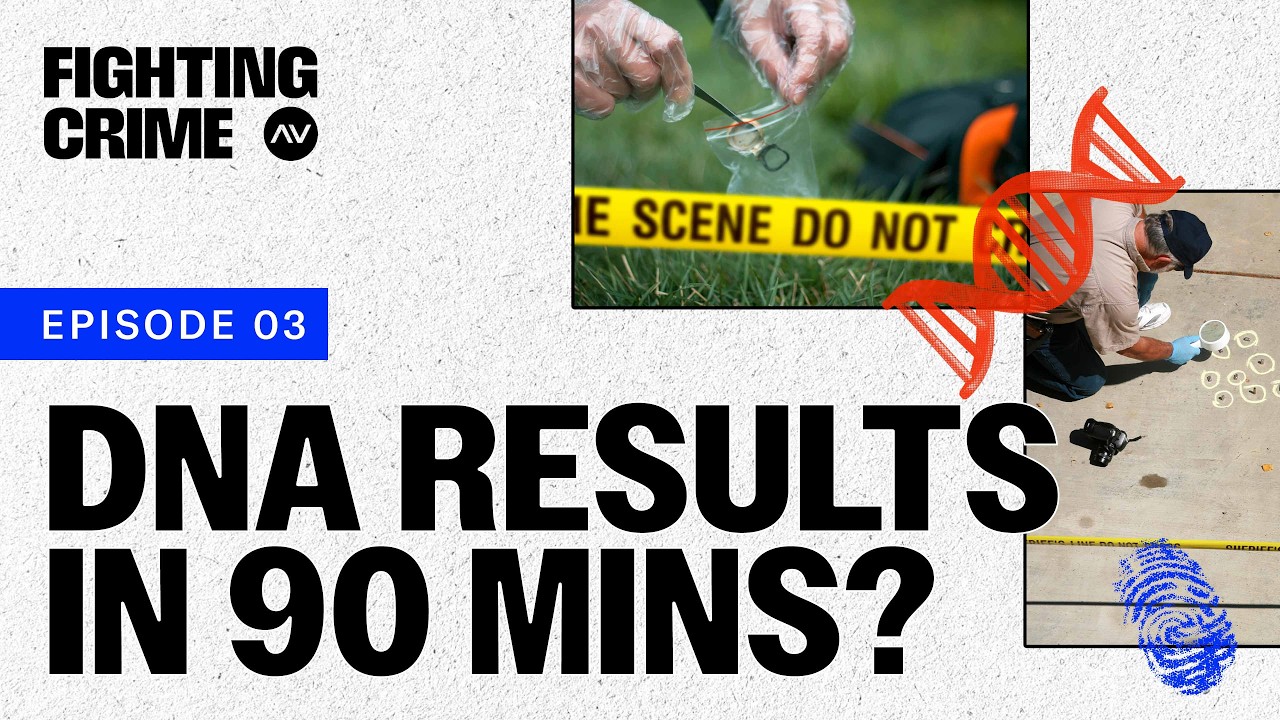
This can delay an investigation even further. Rausch says quicker analysis can identify victims and confirm or rule out suspects. That’s where the latest technology, Rapid DNA testing, comes in, a machine able to do all that extraction, quantification, amplification, and detection. These things are ordinarily done painstakingly in a lab, but with Rapid DNA testing, they’re done in a box the size of a microwave in a fraction of the time.
David Rausch: On the traditional method, uh, w- it would take a, a, a week, two weeks, um, as you get to that evidence and work that evidence. With Rapid, we have a profile within 90 minutes
Cristina Quinn: Did you get that? A profile within 90 minutes rather than weeks. What?
David Rausch: So Rapid DNA testing is a great new technology, and it is limited in what it can, uh, do and what it can test and, which is why, a- and, and it’s currently still not completely recognized, uh, by courts as a, as a source for, uh, anything more than an investigative lead.
We see those shows, 48 Hours, et cetera, you know, that they- Right … that, well, the reality is i- it’s, we’ve gotta be a lot faster. And so what, what Rapid does provide us is the opportunity to have identification early so that we can then find that individual. It doesn’t mean that they committed the crime. It just tells us that they were present.
At the location, or at least had been present at some point. So it gives us someone to go talk to. What we know from investigations is the sooner that we can talk to people and, and get focused on possible either witnesses or suspects, uh, the quicker we can solve a crime.
Cristina Quinn: David has countless stories of how Rapid DNA testing has accelerated investigative leads, even in the most dire scenarios.
David Rausch: We’ve had great success with it. We recently had a, a, a, a tragedy in Tennessee where a company, uh, had an explosion, and this company that makes, uh, uh, munition devices, and they had an explosion and, uh, tragically 16 people lost their lives. The purpose of our effort was to come in and to attempt to identify, uh, to confirm for those families, uh, the, the, the loss of their loved ones.
And so we, we came in, uh, worked closely with our partners with, uh, the ATF, uh, i- in the US, and we worked closely with them to, uh, gather samples. This explosion was extraordinary. It was really picking up pieces and parts, uh, to bring in and, and, and get them to a, a place where we could actually get some type of sample that we can test.
We collected, uh, a number of samples and, uh, and then went back and were able to type those, uh, for DNA, put them into the, uh, Rapid machines.
Cristina Quinn: Does the testing happen at a forensics lab, uh, or where does it happen?
David Rausch: It … So we, we had, we took the machines to the scene. Uh, we s- we set up a trailer with, uh, with our machines in them and, uh, and brought the samples to the machines, uh, right there at the scene.
And so through that effort, we, uh, uh, we were able to identify within a couple of days, 15 of the 16 were positively identified, which the critical nature of that is providing those answers to families of victims. Th- there is, there is one piece though that’s a challenge, right? And that is the database. To be able to get to that person, they have to be in the system.
Yeah. And so that then becomes the challenge is, uh, who can you collect from and when can you collect? That’s the current really big challenge that we have.
Cristina Quinn: David Rausch says his dream scenario is that everyone in the US’s DNA is in CODIS. I mean, yeah, it would make his job a lot easier, but also, say what?
But okay, I’ll play. Why do you want everyone’s DNA? What good would it serve me to voluntarily submit my DNA? If
David Rausch: you just happen to have been in a crime scene, right? If you had, you, you’d been at this location before and your DNA was left behind, right? You certainly want us to be able to discount you Right?
To be able to clear you, right? So that, that, that you’re not pulled into a situation that you want- don’t wanna be in.
Cristina Quinn: If that sounds like a hard sell, you’re not alone. Even his own staff was not into the idea.
David Rausch: It was interesting when I got here to the bureau to find out that most of our agents hadn’t submitted their DNA, uh, for our system.
And, and when I started to inquire and find out was they, they, they had some of these same fears that we hear from folks, uh, you know, in, in the general, uh, population. And so then, then when I started to explain to them, h- here’s the issue, right? When you’re investigating this crime, you’re leaving DNA at the scene, right?
And so as we’re collecting DNA to try to figure out, you know, who a potential suspect is, your DNA is there, and if yours isn’t in the system, we can’t … Well, then we have unidentified DNA that may c- that, that may complicate your case, right? Uh, because then a, a defense lawyer is gonna use that. They’re gonna say, “Well, you, you know, there may be another suspect because you have DNA that hasn’t been identified.”
If we’re able to discount immediately and say, “No, that was an investigator on the scene,” right? It, it, it clears it up quickly to be able to, to prevent, uh, the potential of, uh, of someone who has committed a crime from getting away with it.
Cristina Quinn: Is it now standard to have everyone who works in forensics or investigations to do that, to submit it?
Yes. It- Is that almost like, is that a policy? Is that just like a–
David Rausch: It is a- Yeah … it is a policy now that everyone must submit, uh, their, their, uh, their sample, uh, upon hire. Uh, so the- Is that
Cristina Quinn: standard across the country, do you know?
David Rausch: I don’t, I don’t believe it is. Not yet. [00:23:00] No. Uh- In
Cristina Quinn: Tennessee it is.
David Rausch: Yes, it is in Tennessee.
We, we need it to be that way. It’s, it’s critical for us to be able to avoid, uh, those, those issues that could rise.
Cristina Quinn: So Rapid DNA, as the name suggests, can speed up investigations. But what about those privacy concerns? We’ll get into that after a quick break, and we’ll also hear how databases can reduce crime.
Stay with us.
So by now we’ve heard some cool things about where forensic DNA technology like Rapid DNA is heading and how DNA databases helped Ashley Spence seek justice. But DNA can be used for so many other things, like genetic testing services that can offer more insight into your family’s genealogy. There are also DNA tests that can warn people about their predisposition to certain diseases like various cancers.
Exciting stuff. And some of these services have also been involved in massive data breaches. So should we be concerned about law enforcement taking our DNA and putting it in databases or potential laws that could make it easier for authorities to gather and store our DNA? I spoke to someone about these concerns.
Max Isaacs: People have sensitivities around their genetic information being held by the government. My name is Max Isaacs. I’m the Director of Technology Law & Policy at the Policing Project. What we try to do at the Policing Project is advance sound governance of emerging technologies in law enforcement. So that runs the gamut from license plate readers to face recognition.
Uh, and lately we’ve been turning some of our attention to DNA because there’s been a, a push to, uh, expand DNA collection to broader groups.
Cristina Quinn: Max Isaacs says there are people who have privacy concerns around DNA being taken and stored into a database like CODIS.
Max Isaacs: Well, I think that a lot of people have a worry about the government having access to their genetic information.
I, I think some people really don’t have a big problem with their DNA being collected, and then there are other people who have almost a visceral reaction. There’s something personal about it. It’s something unique about them that they didn’t expect that the government would collect.
Cristina Quinn: The debate is not about whether this technology is effective, but about how it’s being used.
Max Isaacs: I want to acknowledge that, that DNA has a, its reputation as a forensic gold standard for a reason. Um, you know, the science behind DNA analysis isn’t the issue. Uh, the question is whether you have procedures in place that, um, govern how the DNA is collected, uh, making sure that the analysis is done, uh, in a lab or using instrumentation that, uh, meets quality assurance standards, uh, making sure that there are audits of the databases so that if there are problems, they’re identified and remediated.
Uh, and so The problem is less about the, the science of DNA, but whether there are good procedures in place and then whether those procedures are being followed.
Cristina Quinn: But Max has some concerns about the future of DNA profiling.
Max Isaacs: And this is probably the most important aspect, uh, of, of the privacy question. A distinction has to be drawn between where DNA profiling is today, uh, and where things are potentially headed.
There has been a, a lot of attention to different, uh, forms of DNA profiling, which can profile the entire genome, meaning coding DNA that, uh, can reveal personal traits and characteristics. So one form of this is known as SNP or ‘snip’, uh, profiling. This is the type of DNA analysis often used in, um, uh, new techniques such as forensic, uh, uh, genetic genealogy.
So a distinction has to be drawn today CODIS does not include the, um, uh, SNP profiles. It doesn’t, um, include, uh, uh, any, uh, profiles that could potentially reveal tracing characteristics. There’s a future in which there’s gonna be a lot of pressure on law enforcement to adopt these different forms of DNA profiling.
One of the advantages of SNP profiling is that, uh, you can have a lot less DNA, and you can have more degraded DNA and still generate a profile. I think people look at that and, and they worry because now you’re moving from a technology that folks were told wouldn’t reveal anything personal, respected their genetic privacy, to one where that’s very much in question.
Cristina Quinn: But at this stage, it’s not something that can be used. Max Isaacs is more concerned about the current use of DNA. The FBI has stringent rules, but Isaacs is worried about the way that some non-FBI agencies are using Rapid DNA.
Max Isaacs: The FBI hasn’t validated any of the Rapid DNA cartridges for use with crime scene samples, and nevertheless, you have agencies today using Rapid [00:28:00] DNA instrumentation for crime scene samples, getting ahead of the FBI and, and what it has said, uh, which is that in order for, uh, these profiles to, to be on the national, uh, DNA database called NDIS, uh, they have to be from a validated machine.
So many of these agencies are setting up their own databases separate and apart from the national NDIS database.
Cristina Quinn: But even for Isaacs, he wants to monitor this use of technology rather than halt it.
Max Isaacs: Question in my mind isn’t whether to embrace advances in DNA technology or not. It’s not a do we want it, or do we wanna ban it?
The question is, how are we going to do it? So something like DNA phenotyping, uh, being able to, in an investigation, know certain characteristics about the person who committed a crime, one could imagine, uh, valuable uses for that technology, and one can also imagine it being used to generate a composite sketch that police use with face recognition, and the difference is whether there are rules in place that tell police what they can and can’t do.
And so this is why we need to be having a discussion right now about, uh, how to regulate DNA.
Cristina Quinn: Isaacs believes when and how we collect DNA needs to be carefully considered.
Max Isaacs: I think there are pros and cons to, um, collecting DNA at arrest. Many jurisdictions have decided that that’s the appropriate time to collect DNA, and I think, um, jurisdictions are entitled to reach different conclusions on that question Um, the hesitation that I have, uh, frankly, is that, uh, when you’ve arrested someone, uh, you don’t have any proof that they’ve done anything wrong.
They haven’t been adjudicated guilty, uh, by a court of law. Uh, there are, uh, there are, uh, false arrest, uh, stories that come out every day of people who’ve been arrested, uh, and, uh, and did, did no wrongdoing. Uh, and so, um, in a world in which expungement is very hard It, it gives me a lot of pause that we would, um, be, uh, systematically collecting DNA from people when they get arrested.
Now, the flip side of it, um, to be fair, is that sometimes people who have been arrested, uh, they might be wanted for other offenses. They might be connected with very serious crimes. Uh, being able to identify the fact that they were connected with an unsolved crime could have real public safety benefits as well.
Cristina Quinn: For Isaacs, he feels like there’s more work to be done.
Max Isaacs: I don’t think we have, uh, rules that are sufficiently strong to guard against, uh, the potential for, uh, misidentifications and, and people losing their liberty. Uh, and I think it’s incumbent on, it’s incumbent on lawmakers, uh, to take action.
Cristina Quinn: Wherever you stand on this issue, it’s clear that we as a society need to keep examining and questioning the space as DNA technology evolves.
We need to look at it both in terms of how new DNA technology is deployed, the ways that the technology is being rolled out, and the legal and societal effects of all that. But there is one more element to the use of DNA that we haven’t yet discussed, and that’s around whether it may actually be able to stop crime before it’s even happened.
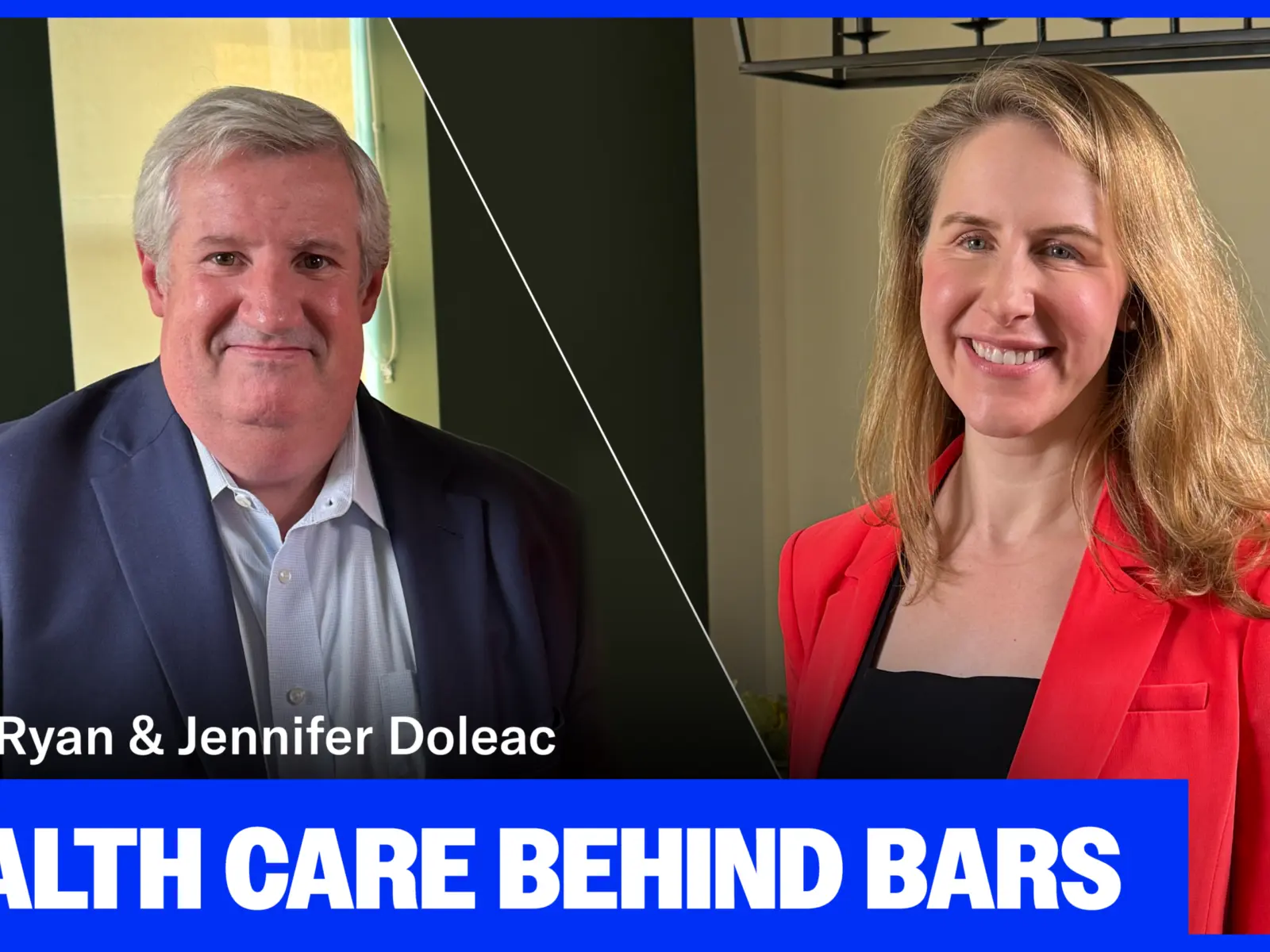
Jennifer Doleac: So for a very long time, we have focused on increasing sentences, making sentences longer as the way to increase costs. But it turns out that what is more effective is increasing the probability that you get caught.
Cristina Quinn: That’s economist Jennifer Doleac. She studies economic incentives in crime and has looked at a wide range of important topics in this area, from recidivism to which prison re-entry programs are most successful, to the impact of DNA databases on criminal activity.
So earlier, David Rausch was telling us how DNA can be used to solve cases. What’s interesting about DNA databases is that the DNA collected from one crime can be used to solve an entirely different one. Think back to Ashley Spence. Remember, her attacker was caught years later after DNA from a cheek swab was put into CODIS.
And it turns out having your DNA in a database can stop people from even committing crimes in the first place. This is something Jennifer Doleac has looked into.
Jennifer Doleac: So economists think a lot about how people respond to incentives. From an economist perspective, and, and this is in line with what we found in empirical work If we want to reduce crime and change behavior, we need to either increase the costs associated with, with committing crime or reduce the benefits associated with committing crime.
Cristina Quinn: But she says for too long we’ve been focused on the wrong levers to deter crime, that we’ve been too focused on longer sentences when it’s actually more effective if we increase the probability of being caught.
Jennifer Doleac: In practice, we know that most people who are committing crime are not thinking very far ahead, and so increasing the length of a sentence from one year to two years or five years or 10 years, none of that’s gonna change behavior if people aren’t thinking past this week.
But increasing the probability of getting caught, that does change behavior, that does register. So really what we’ve learned over time is that the most effective way to change behavior and reduce crime is increasing the swiftness and certainty of consequences, not so much what the consequences are.
Cristina Quinn: Doleac says one way to increase the probability of getting caught is by putting people who are at high risk of committing crimes into law enforcement DNA databases, like the one we heard about earlier, CODIS, the database that matched the DNA of Ashley Spence’s attacker.
Jennifer Doleac: And so the idea here is that DNA databases are constantly looking for matches between these two things, between the unsolved crimes and the people who we know are, you know, have been convicted of or arrested for crimes in the past, and, uh, looking for leads in the case that police might not have, um, have come up with themselves in, in some other way.
And the way that, um, cities and states and countries have operationalized this around the world is by passing laws that require people convicted of or charged with or arrested for particular offenses, uh, requiring that those, those individuals add their DNA to, to the law enforcement DNA database.
Cristina Quinn: She says increasing the probability of getting caught for a crime is more effective than other methods like increased sentences.
But what does the data show? She looked into a policy change that took place in Denmark for an answer. So in Denmark, you were only added to a criminal DNA database if you’d been charged with a very serious offense and if DNA was relevant to the case. But in 2005, that all changed. Anyone charged with an offense with a maximum penalty of 18 months or so would be added to this DNA database, and there was no requirement for DNA to also be relevant to the case.
This massive shift illustrated what happens when a group of high-risk offenders are put on a list, and the inverse, what happens when you’re left off the list. Dr. Doleac published these findings with Danish researchers Anne Sophie Anker and Rasmus Landersø in their paper, The Effects of DNA Databases on the Deterrence and Detection of Offenders.
Jennifer Doleac: And in this paper, we were interested in measuring what the impact of adding new groups of individuals con- uh, charged with, with felony offenses or with more severe offenses, what the impact of that was on their future criminal behavior.
Cristina Quinn: So they compared this group of individuals to a control group who were identical in every way except for not having their DNA added to a database.
Jennifer Doleac: And so overnight, on the implementation date, we went from having someone who was, say, convicted of robbery. The day before the database went into effect, they would, they would not be added to the database. But someone charged with the exact same crime the next day after the database goes, expansion goes into effect, they are added.
Cristina Quinn: So this means overnight there was a huge increase in the number of people being added to the DNA database.
Jennifer Doleac: So that date of the expansion serves as a coin flip where you have one person gets lucky and they just barely avoid going in the database, and one person gets unlucky and they do go in the database.
But everything else about them is the same. Everything else about the policing in the country, sentencing policy, the use of DNA more broadly, everything else is the same across these two individuals.
Cristina Quinn: And so what did they find? Did having your DNA on a database deter these people from committing crime again?
Jennifer Doleac: We found was that following them forward, people who were added to the database were over 40% less likely to reoffend. They were over [00:37:00] 40% less likely to have a new criminal charge in the future. And so that’s, that’s just a huge effect that is consistent with a large deterrent effect, right? The, the idea here is they now know they’re much more likely to get caught if they commit another crime, and so they are much less likely to commit new crime.
They, they change course.
Cristina Quinn: So she says being added to a DNA database not only reduces reoffending by up to 40%, but it also puts people on a better path to turning their lives around.
Jennifer Doleac: And we also have data on employment and education enrollment. And we see that those people who are now in the database are more likely to be working.
They’re more likely to be enrolled in school, consistent with this idea that they have, um, deliberately gotten themselves on a better path, um, to change their lives.
Cristina Quinn: There was another interesting detail to this study about a certain demographic.
Jennifer Doleac: So we were really focused on people who are ages 18 to 30.
Um, note that’s the most criminally active group of people around the world. Younger people are more likely to offend. And within that group, we actually found the biggest effects. Even that 40-something percent reduction in recidivism was the average. It was an even larger effect for people who were ages 18 to 24.
And so, so really trying to get people when they’re really young and earlier in their criminal careers has a, an especially big bang for your buck.
Cristina Quinn: So in this episode, we’ve heard about how DNA can be used to solve crime. But Dr. Doleac’s research makes the case that DNA can also prevent criminal activity, specifically DNA databases, which can deter people from re-offending.
DNA technology and the way it’s being deployed is constantly evolving, and there’s a lot happening on the ground in real time. In Tennessee, the state is currently utilizing Rapid DNA machines for burglary cases for an RCT. That’s a randomized controlled trial. So it’ll be interesting to see the results of that and how much Rapid DNA has helped solve those crimes.
And in May of this year, lawmakers led by a bipartisan team of Senators Kennedy and Booker introduced an act to speed up clearance rates for several types of violent crime. It’s called the VICTIM Act, that stands for Violent Incident Clearance and Technological Investigative Methods Act, which gives grants to the Department of Justice to help state and local law enforcement agencies improve clearance rates for crimes such as homicides.
This will allow police departments to apply for more funding for resources, and no doubt DNA-related technology will be used to solve many of these crimes. We’ll keep an eye on these as it continues to evolve. All right, so we’ve covered a lot in this episode. Let’s recap our main takeaways. Number one, advances like Rapid DNA testing can generate profiles in as little as 90 minutes, helping police respond faster during critical early stages of investigations.
But there is ongoing tension between public safety and privacy. Number two, supporters argue forensic DNA databases store identifying numerical profiles rather than full genetic or medical information. But critics worry about government collection of sensitive biological data. Number three, economist Jennifer Doleac makes the case that crime prevention is more effective when the likelihood of getting caught increases.
In a Danish study by Doleac and her colleagues, individuals added to a national DNA database after a 2005 policy expansion were over 40% less likely to re-offend compared with a nearly identical control group not in the database. The strongest effects were seen among people ages 18 to 24, who were also more likely to pursue employment and education afterwards.
That’s all for this week. Now, I gotta tell you, I really wanted to end this show on a solid DNA pun. I ended up going to the internet because I just couldn’t come up with one on my own, and there is a treasure trove of amazing DNA jokes, of course. So I tried to tell a DNA joke, but it just wouldn’t replicate.
Ah, thanks, internet. Okay.
Thanks for listening to Fighting Crime. Please subscribe to us wherever you listen to podcasts. That way you can easily keep up with all the exciting new ideas we’re covering. Our series producer is Nastaran Tavakoli-Far. Production by Benjie Guy and me, Cristina Quinn. Video production and editing by Mike Tamman and James Page.
Emily Owens is our resident expert. Our researcher is Ben Miley-Smith. Elliott Edwards is our production coordinator. The theme music is by Armen Bazarian. Marketing by The Podglomerate. Our executive producers are Meredith Peebles and Jonathan Coates. This was an Indio Media production for Arnold [00:42:00] Ventures.