Historically, only 20% of low-income students at 3 Ohio community colleges earned a degree within 3 years – a figure that tracks national statistics. That all changed when the colleges tried a new approach.
Starting in 2015, Lorain County Community College (LCCC), Cincinnati State Technical and Community College, and Cuyahoga Community College launched comprehensive student success programs modeled on proven practices. The programs were built on the premise that students leave community college for multiple, overlapping reasons, so support must address several issues at once. The program combined advising with financial support, including tuition waivers, textbook assistance, and monthly gas and grocery gift cards, all aimed at helping students stay enrolled.
The results were striking. The research firm MDRC conducted a randomized controlled trial involving 1,501 low-income students who had committed to full-time enrollment, comparing students in the programs with those receiving their college’s standard services. After 3 years, 35% of program students had earned a degree, compared with 19% of the control group, nearly double the rate. The advantage continued over time: at 8 years, 46% of program students had earned a degree, compared with 31% of the control group. Program students also earned an average of $27,934 in the eighth year after enrolling, compared with $24,596 for the control group, a 14% increase.
Izzy Torres is participating in the LCCC program, called Students Accelerating in Learning (SAIL). After initially enrolling with little traditional high school or college experience, Izzy withdrew when it became financially unsustainable. Her SAIL advisor reached out to her, saying, “There are still opportunities. We could still help you.” Encouraged, Izzy re-enrolled and is now pursuing a nursing degree, aiming to graduate in December 2027. The support she received came from multiple sources, including an advisor and financial help for gas and groceries. Izzy says, “You need a support system, a way to support it financially, and motivation. And the SAIL program hits all three.”
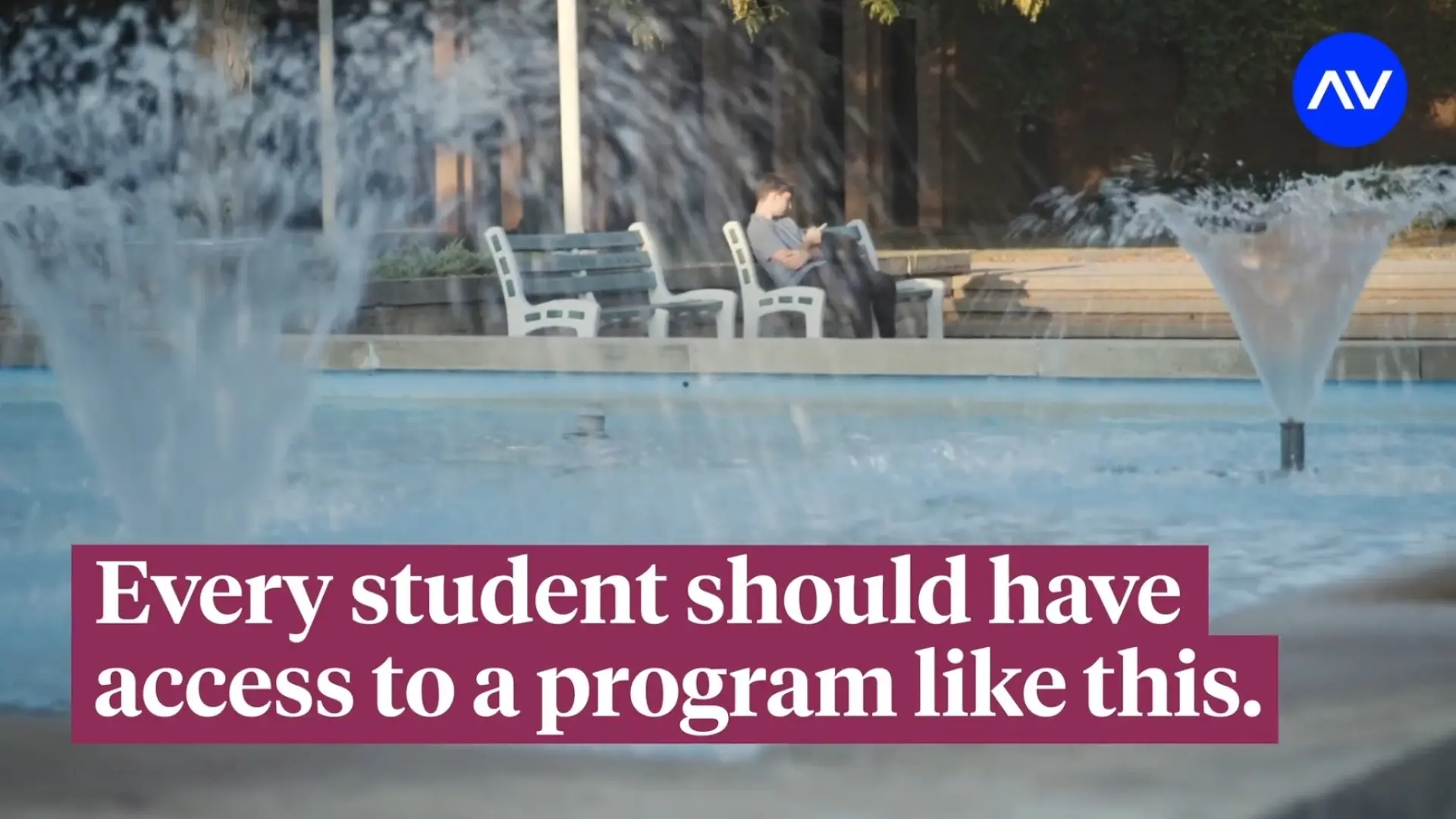
“I feel like every student should have an opportunity to have a program like this across the country.”Izzy Torres, LCCC nursing student.
While SAIL and the other support programs cost around $1,840 more per student annually, MDRC research found that because more students finished, the cost per degree was actually 22% lower. This encouraging evidence is part of the reason Arnold Ventures – which helped fund MDRC’s evaluation of the Ohio demonstration – is also supporting expansions of this proven practice in North Carolina and Colorado.
Though these programs reduce cost per degree in the long run, the college’s budget is spent years before the students graduate. Of the 3 Ohio demonstration colleges, 2 ended their programs after the demonstration funding ended; only LCCC kept going. Dedicated state funding for programs with this evidence behind them would let more colleges make that trade, and more students find the success Izzy is achieving.