As health care costs place an increasing burden on consumers, businesses, and taxpayers, voters demand lawmakers take action to address the key driver of rising costs for the privately insured — the high prices paid for health care. A new survey shows a majority think it is very important for Congress to take action to lower health care prices. Voters from across the political spectrum express support for a range of policies to lower prices, including 78% who support government limits on the prices that hospitals can charge.
The survey was conducted by a bipartisan polling team — Guy Molyneux and Geoff Garin from Hart Research Associates and Bob Ward from Fabrizio Ward — and supported by Arnold Ventures. The findings echo results from a survey released by the Purchaser Business Group on Health and KFF in late April that showed top executives in large employer organizations think health care costs are excessive. A large majority of employers (85%) think a broader government role is necessary to contain health care costs and ensure coverage. The survey released today shows that the public shares similar sentiments.
A large majority of voters say reducing health care prices is one of the most important priorities for Congress to address.
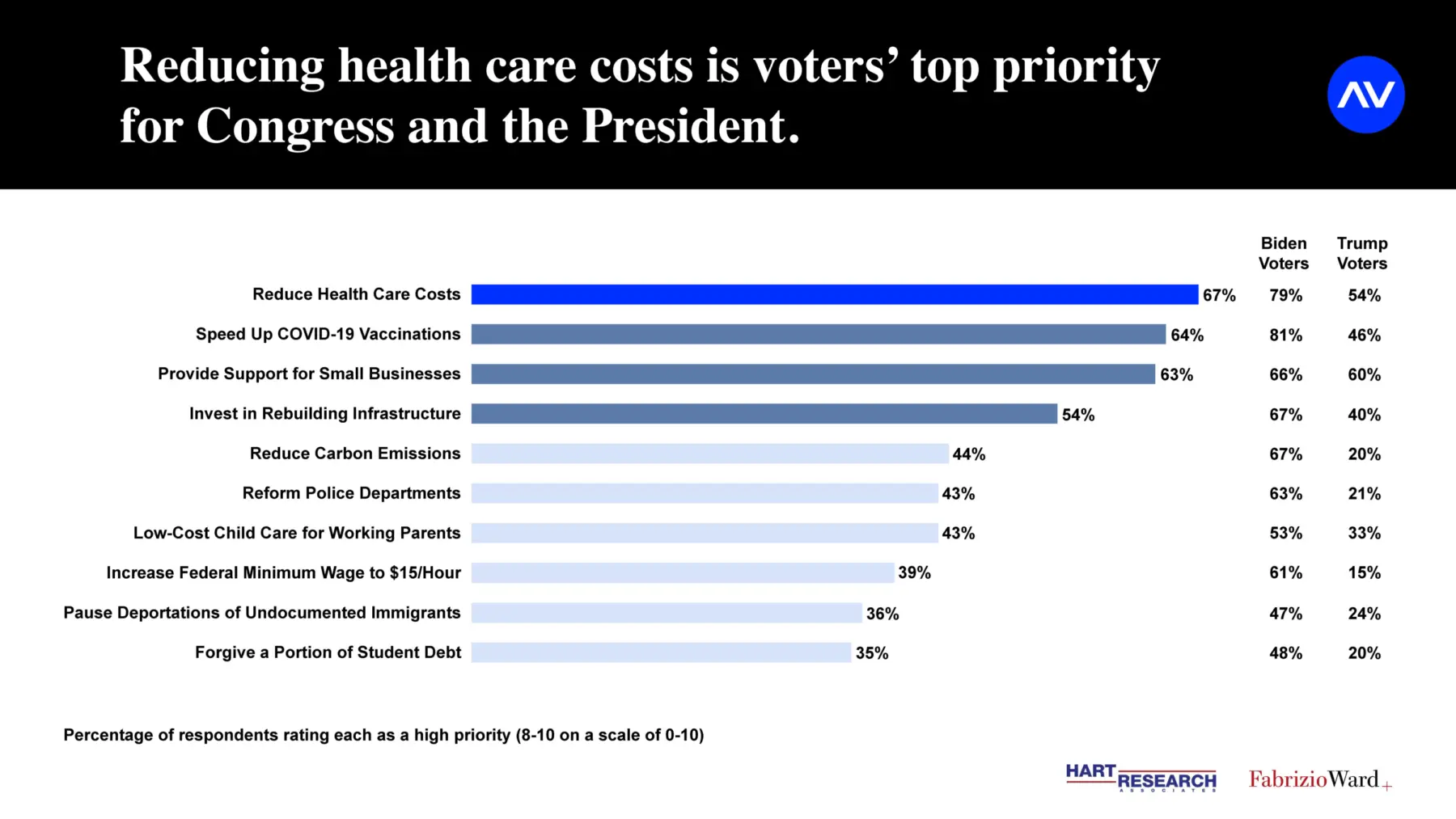
- More than two-thirds of voters (67%) rank reducing health care costs as their top priority for the President and Congress. It topped other high priorities including investing in rebuilding infrastructure and providing support for small businesses.
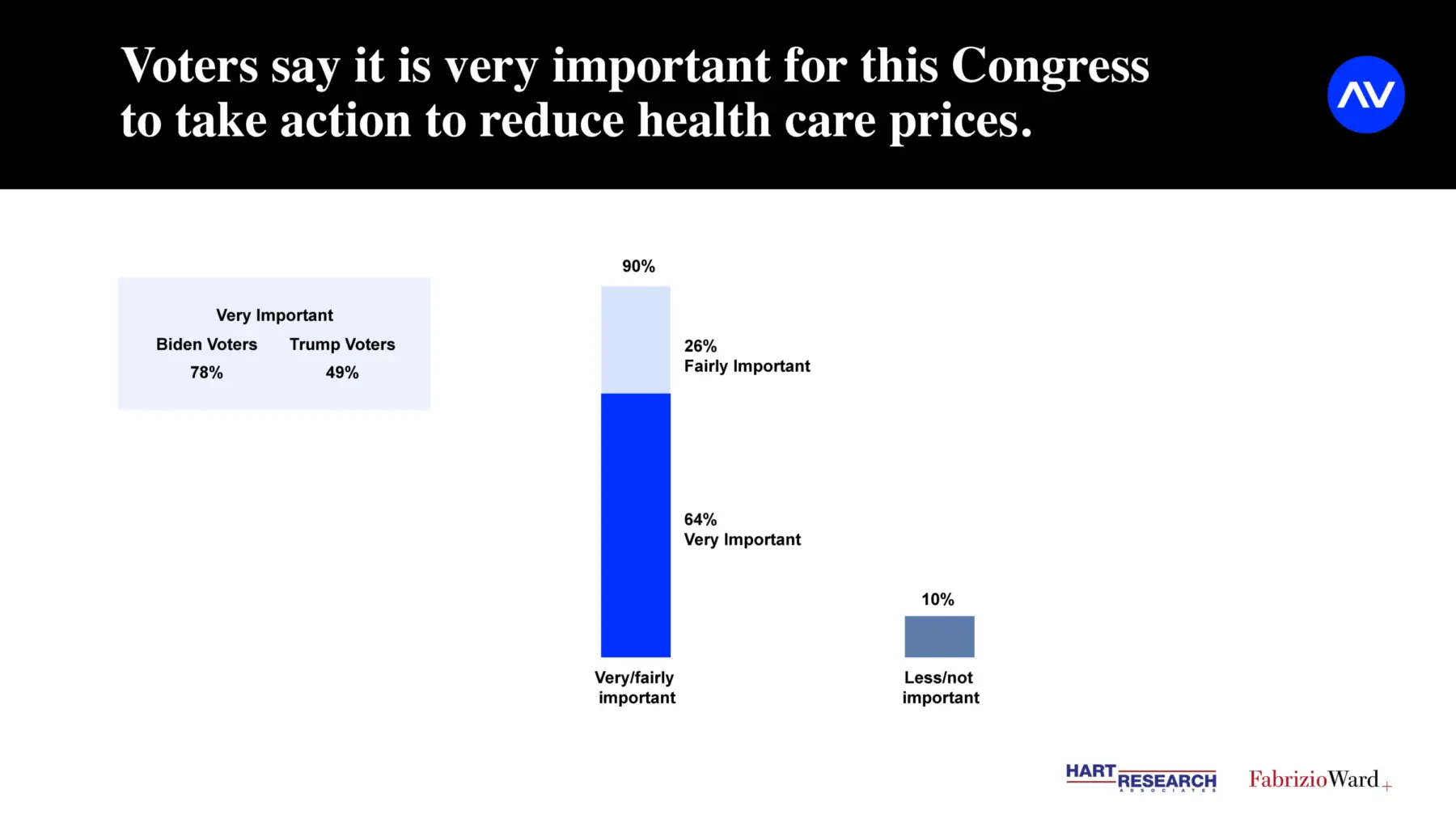
- 90% of voters say it is important for this Congress to take action to reduce health care prices. 64% say it is very important, including nearly 4 out of 5 Biden voters (78%) and half of Trump voters (49%).
- By a wide majority, more voters (64%) are concerned that Congress won’t do enough to limit prices than are worried Congress will get involved in setting prices (36%).
There is broad support for policymakers to take aggressive action to lower prices.
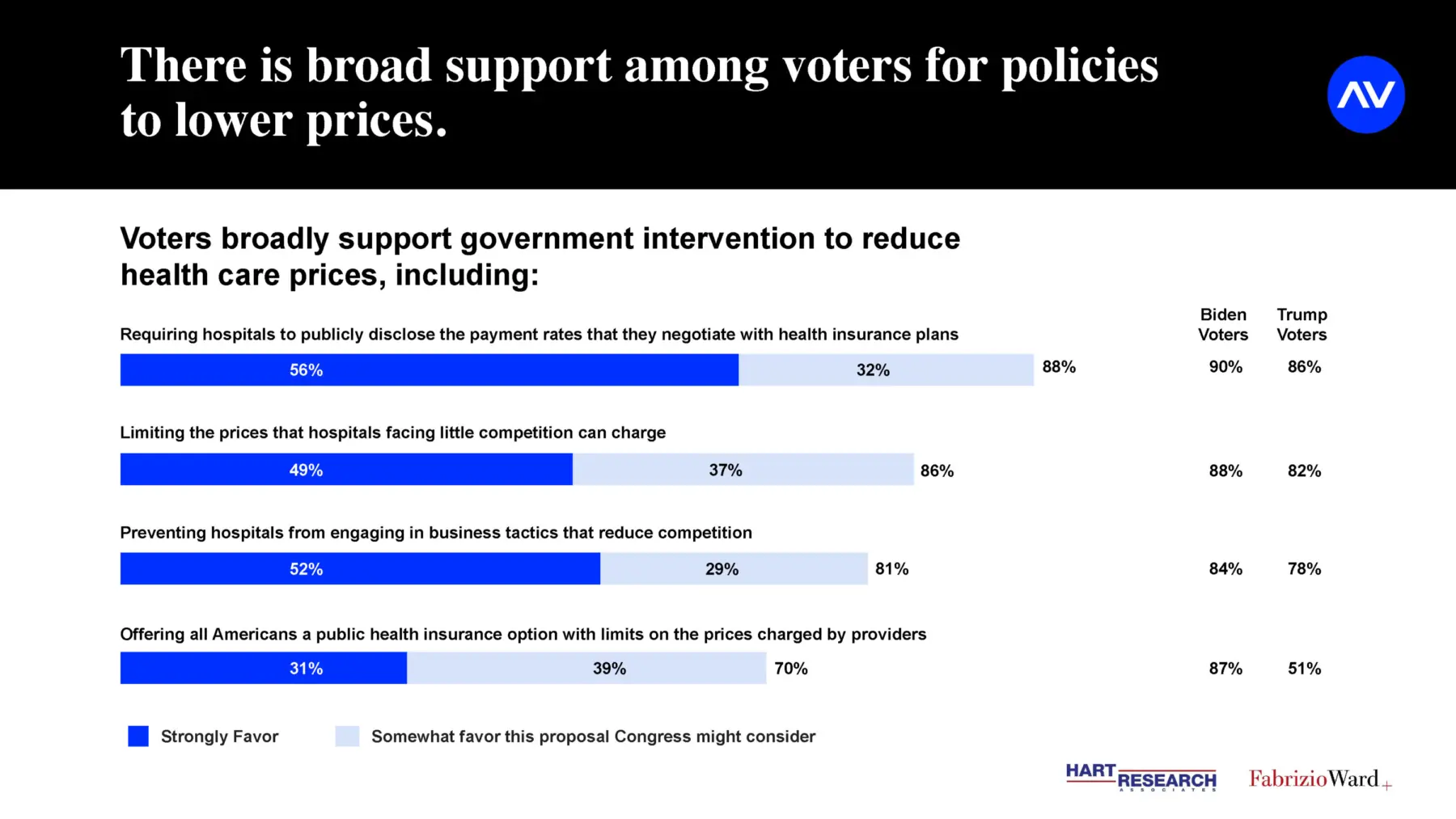
- Voters broadly support government intervention to reduce health care prices, including:
- Limiting the prices that hospitals facing little competition can charge (86%)
- Offering all Americans a public health insurance option with limits on the prices charged by providers (70%)
- Preventing hospitals from engaging in business tactics that reduce competition (81%)
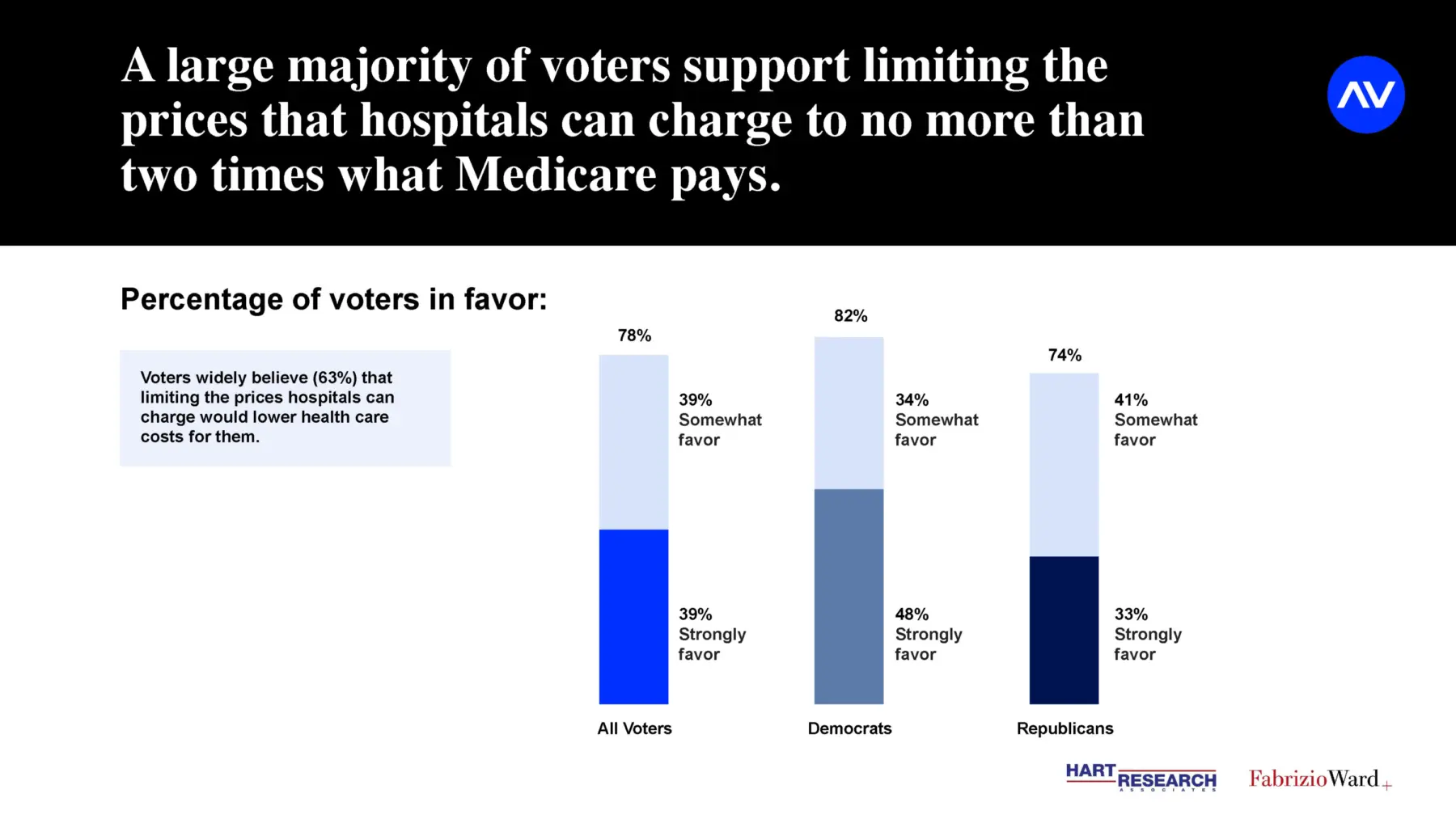
- More than 3 in 4 voters (78%) support limiting the prices that hospitals can charge to no more than two times what Medicare pays.
- Voters widely believed (63%) that limiting the prices hospitals can charge would lower health care costs for them.
- Notably, limiting hospital prices has broad support across party lines with 82% of Democrats and 74% of Republicans supporting it. About 1 in every 3 Republicans express strong support.
- When discussing limits on hospital prices, voters support multiple approaches including applying price limits to the hospitals that charge the highest prices in their market (82%) and hospitals that face little or no competition (81%).
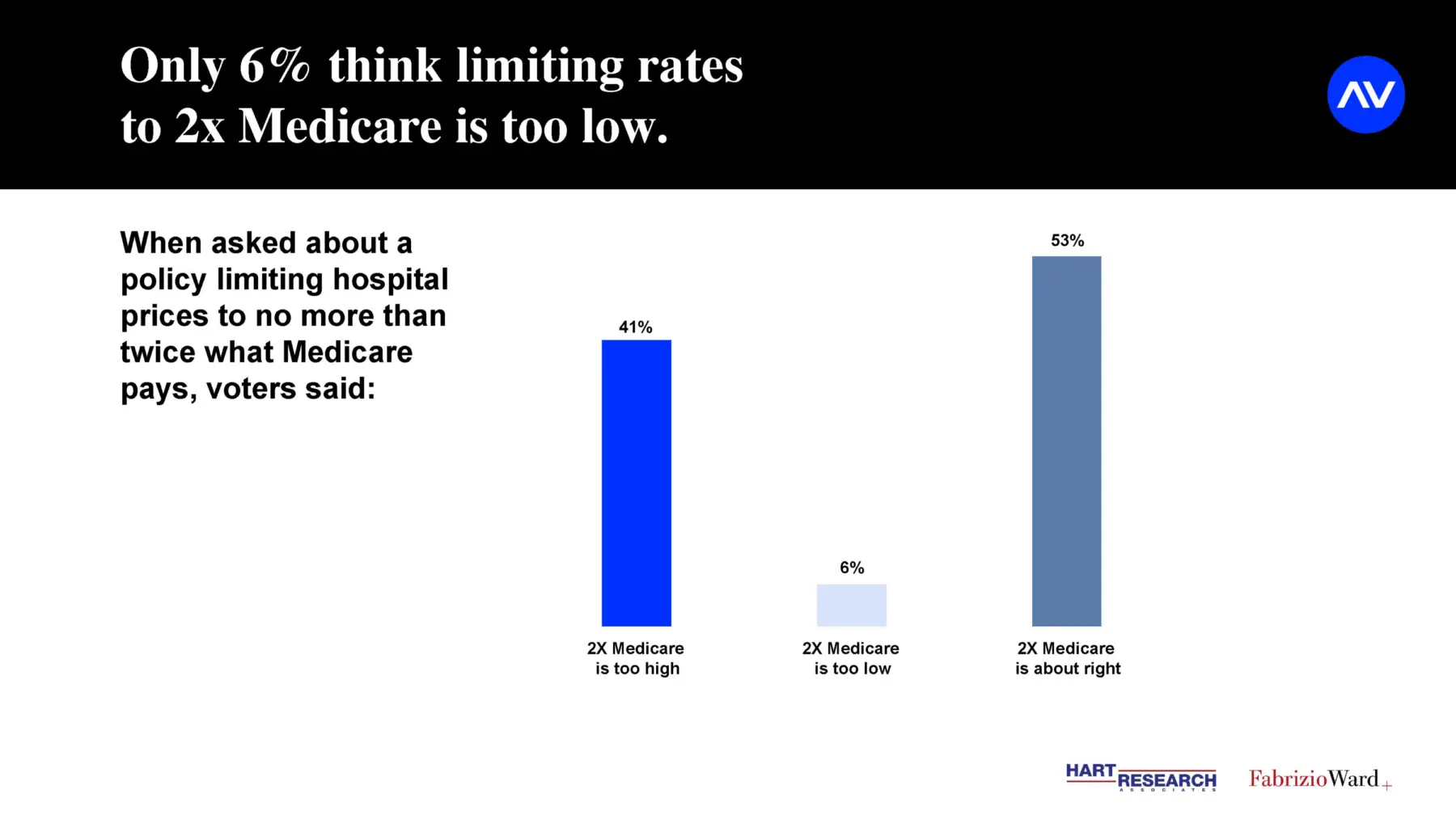
- Nearly 7 in 10 voters think the prices that hospitals and doctors charge privately insured patients for medical services are too high relative to Medicare.
- Fewer than 1 in 10 voters thought the much higher rates charged to people with private insurance were because Medicare payments are too low.
- Over 90% of voters think setting a limit on what providers can charge at twice what Medicare pays is reasonable.